

Converting a bike to disc brakes changes the feel of everyday riding in a very practical way. You’re looking for the right match for your frame, your riding style, and how much setup work you want to handle. Some picks are complete brake kits, while others cover alignment, adapters, or maintenance support, so the list makes sense for more than one kind of upgrade.
That mix matters. A commuter on a folding bike needs something different from a gas-motorized build, and a mountain-bike setup asks for a different balance of power, hose length, and mount style. The options below help you sort out the easy swaps, the more involved conversions, and the tools that keep everything lined up.
Quick Look At The Shortlist
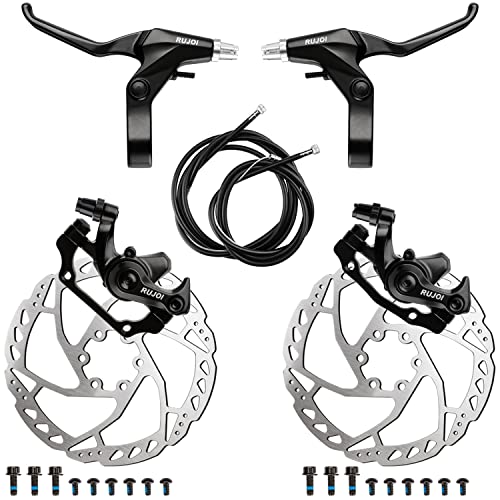
RUJOI Bike Disc Brake Kit Aluminum Front and Rear Caliper 160mm Rotor
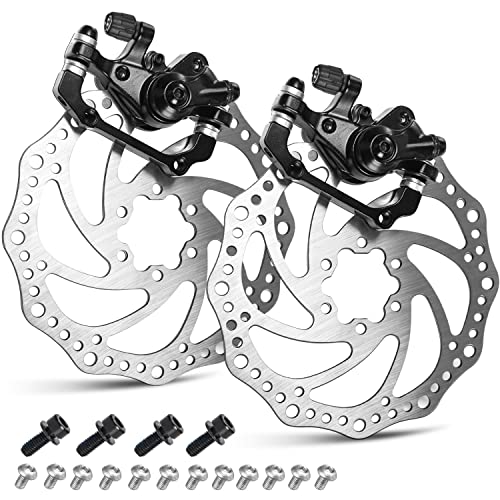
TOBWOLF MTB Cable Disc Brake Kit Front Rear Calipers 160mm Rotors

AIKESIWAY Rotor Truing Fork Bike Disc Alignment Tool Bicycle Brake Wrench

Farbetter Bike Disc Brake Kit Front and Rear Caliper 160mm Rotor Red

BlueSunshine BB8 Front and Back Disk Brake Kit 160mm for 80cc Gas Motorized Bicycle

TOBWOLF MTB Hydraulic Disc Brake Kit Dual Piston Calipers 160mm Rotors

BlueSunshine Front and Back Disk Brake Kit 160mm For 80cc Gas Motorized Bicycle

DYISLAND E-Bike Hydraulic Disc Brake Set 4-Pistons 2-Pistons Pre-Bled Mineral Oil

LOOEEL 1 Pair Bike Mechanical Disc Brake Universal Front and Rear Calipers

DQITJ 2 Pack Brake Bracket Adapter MTB Bicycle Mounting Holder Disc Brake Bracket
More Details On Our Top Picks
RUJOI keeps the format straightforward, which helps you get a front-and-rear disc setup without extra fuss. The aluminum lever and aluminum calipers suit everyday road use, light trail riding, and commuter bikes that need a cleaner braking feel than rim brakes usually provide.
The 160mm rotor size is a familiar middle ground, so it fits a lot of general-purpose builds without feeling extreme. You may still need to pay attention to frame and fork compatibility, because a complete kit only helps when your bike already supports the mount style and rotor size you’re working with.
Strong Points
- Aluminum parts keep the kit light and resistant to basic wear.
- Front and rear coverage simplifies a full conversion.
- The tool-free pad adjuster helps with routine pad wear as it builds up.
- 160mm rotors suit daily riding without feeling overly specialized.
Things To Consider
- You still need a frame and fork that accept the mount style.
- Mechanical cable feel is less immediate than hydraulic setups like the TOBWOLF B0B2NR8SXF.
- Pad and rotor alignment may take a little patience during installation.
Feature Snapshot
Who It Suits Best
You get the most from this kit on a standard bike build where you want a simple mechanical conversion and a tidy all-metal feel.
A Better Fit Elsewhere
TOBWOLF MTB Hydraulic Disc Brake Kit B0B2NR8SXF suits you better if you want a more forceful brake feel for an e-bike or harder-hitting mountain setup.
This TOBWOLF kit feels like a sensible middle path for mixed-use bikes, because it stays mechanical and still covers both ends with 160mm rotors. Post mount means the frame or fork needs that interface, so the appeal is strongest on bikes that already line up with that standard.
For mountain bikes, folding bikes, and BMX builds, that mix can be handy when you want broad compatibility without moving into hydraulic complexity. The trade-off is the familiar cable-brake feel, which is easier to live with for casual riding than for steep, aggressive descents.
What We Like
- Front and rear calipers come together in one kit.
- Two stainless steel rotors add a solid everyday hardware feel.
- Post mount design narrows the guesswork for compatible frames.
- Works across several bike styles, which helps one kit cover more garage projects.
Softer Spots
- Mechanical action needs more cable setup than hydraulic systems.
- Post mount fit is useful, but it also limits the bikes it suits.
- The finish is more utilitarian than polished, so style seekers may want a different route.
Core Details
Who Will Love This
You’re in the sweet spot here if you want a cable-actuated conversion for a mountain bike, folding bike, or BMX without stepping into a more complex hydraulic setup.
Another Choice May Suit
RUJOI Bike Disc Brake Kit B07TW7H3GX is the better fit for you if you prefer an aluminum-heavy kit with a simpler all-around road-to-trail focus.
Rotor alignment tools rarely get the spotlight, yet they matter the moment a fresh install rubs or the rotor sits slightly out of line. This AIKESIWAY set gives you a truing fork, a brake wrench, and two gap regulators, so a home garage setup has the basics needed to make small corrections.
For a commuter who maintains a bike at home, that can save time between rides, especially after wheel swaps or pad changes. It’s not a brake kit, though, so the value sits in setup and maintenance rather than a full conversion.
Upsides
- The compact shape stores easily in a toolbox or saddle bag.
- Three slot depths help with different adjustment needs.
- The included wrench and gap pieces make it more complete than a single-purpose fork.
Room For Improvement
- It solves setup problems, not braking performance on its own.
- Newer mechanics may still need some patience learning the feel of rotor truing.
- The tool is most useful alongside a full brake kit, such as the Farbetter B085HDQJBP or RUJOI B07TW7H3GX.
Details At A Glance
Built With In Mind
You’ll appreciate this most as a home mechanic or weekend tinkerer who wants a small, easy-to-stow alignment tool rather than a full workshop setup.
Where A Sibling Pick Shines
LOOEEL Bike Mechanical Disc Brake B0BW5NSYHZ is a better fit when you need the actual brake calipers, not just the setup tools.
Farbetter brings in a few useful extras, and that makes it feel more complete than the simpler RUJOI kit above. You get front and rear calipers, 160mm rotors, a rear cable, a rotor adjuster, and a bag of rotor screws, which suits a garage project where missing small parts can slow everything down.
The IMD-style fit range also helps here, since the front caliper works with 160 or 180mm rotors and the rear accepts 140 or 160mm discs. That flexibility matters for mixed bike types, though you still want to check the mount points carefully before assuming a drop-in install.
Bright Spots
- The included rotor adjuster helps you fine-tune rotor-to-caliper spacing.
- XTR disc brake pads are designed for responsive, quieter use.
- Front and rear hardware arrive together, which keeps sourcing simple.
- The reinforced base design should suit a bike that sees regular use.
Minor Gripes
- The extra pieces help, but they also add more parts to keep track of during installation.
- Mechanical cable braking needs periodic adjustment as pads wear down.
- The red finish is a style choice, so it may not suit every build.
Spec Overview
Right Fit For
You get the most from this set if you want a more complete mechanical disc conversion for a mountain bike, BMX, road cycling setup, or fixed-gear build.
Look Elsewhere When
TOBWOLF MTB Hydraulic Disc Brake Kit B0B2NR8SXF suits you better if you want a smoother hydraulic feel rather than a cable-driven system.
This BlueSunshine kit is aimed at motorized bicycle builds, not casual pedal bikes, and that focus shows in the way it leans into a 160mm front-and-back setup. For an 80cc gas bicycle, that targeted fit is the point, because a general bike brake kit often misses the details that matter on a powered frame.
The trade-off is obvious, though, since this is a specialized option rather than a broad all-rounder. If your project stays inside the gas-motorized lane, that narrow focus can actually make selection easier, especially for a frame that already matches the intended use.
Reasons To Buy
- Built specifically around 80cc gas motorized bicycle use.
- Front and rear coverage supports a complete conversion.
- The 160mm disc size matches a common motorized-bike setup.
Worth Noting
- It’s a niche choice, so it’s not the right fit for standard bicycles.
- You still need to verify hub and frame compatibility before planning the install.
- The feature list is narrower than the more general Farbetter B085HDQJBP.
Feature Card
Best Suited To
You’re the right match for this kit if your project is an 80cc gas motorized bicycle and you want parts aimed at that frame style.
Skip It When
RUJOI Bike Disc Brake Kit B07TW7H3GX makes more sense for a standard pedal bike that needs a broader, less specialized conversion.
This TOBWOLF setup moves you into hydraulic braking, which means the lever transmits force through fluid rather than a cable. That usually suits riders who want a steadier brake feel on MTB or e-bike builds, and the dual-piston calipers point to more controlled pad movement than a basic mechanical system.
The hose lengths are specific too, with 81cm on the left front and 147cm on the right rear, so the fit logic is easier to plan around. That’s helpful on larger frames or electric bikes, though it also means you should map your routing before you commit to the install.
Highlights
- Hydraulic action suits riders who want smoother lever feel.
- Dual-piston calipers help with more even pad movement.
- Front and rear hoses are already sized for separate routing.
- 160mm rotors keep the system in a common conversion range.
Areas To Watch
- Hydraulic systems ask for a more careful install than cable brakes.
- The hose lengths are fixed, so routing needs planning.
- For a simpler mechanical setup, LOOEEL B0BW5NSYHZ is easier to approach.
Technical Sheet
The Right Fit
You’ll get the most from this kit on an MTB or e-bike where hydraulic feel and a full front-rear system fit the way you ride.
A Better Fit Elsewhere
Farbetter Bike Disc Brake Kit B085HDQJBP suits you better if you want a mechanical system with more install-friendly parts in the box.
Compared with the BB8 version above, this BlueSunshine kit calls out a threaded-hub fit with a 48mm hole distance, so the setup is more specific from the start. That can be useful for an 80cc gas bicycle build where the hub layout is already known and you want fewer surprises during parts matching.
The narrower fit focus means less guesswork for the right project, but it also means less flexibility across random frames. For motorized-bike owners who already know their hub spacing, that precision is the main draw.
Best Bits
- Threaded hub focus helps narrow compatibility planning.
- The 48mm hole distance gives you a useful fit clue.
- Front and rear coverage keeps the conversion complete.
Points To Note
- It’s tuned to a specific motorized-bike setup.
- You need to verify hub and frame geometry before moving ahead.
- The more general BlueSunshine B076BV879V suits broader motorized-bike use.
Feature Rundown
Whose Shelf It Belongs On
This belongs with you if your gas motorized bicycle uses threaded hubs and you want the brake parts to line up with that setup.
Reach For A Different Pick When
BlueSunshine BB8 Front and Back Disk Brake Kit B076BV879V makes more sense when your powered-bike build needs a broader 160mm motorized-bicycle package.
DYISLAND is the premium-leaning option in this list, and the pre-bled hydraulic setup explains a lot of that appeal. Pre-bled means the fluid lines arrive filled and prepared, which can save setup time for an e-bike build where you’d rather spend less time at the workbench and more time riding.
The brake set also gives you two caliper configurations, 4-piston and 2-piston, plus 2-pin and 3-pin connector options. That level of choice is useful on electric bikes, though the added capability makes the install and compatibility check more demanding than with the simpler cable kits.
Positives
- Pre-bled lines simplify part of the setup process.
- Multiple caliper and connector options help with e-bike matching.
- 180mm rotors and 2.3mm thickness point to a more substantial brake package.
- Hydraulic operation suits riders who want consistent lever feel on heavier builds.
Small Caveats
- The more advanced setup can feel less beginner-friendly than a mechanical kit.
- Connector and caliper options still need careful matching to your bike.
- For a simpler first conversion, LOOEEL B0BW5NSYHZ is easier to approach.
Core Details
Perfect Match For
You’re the best fit here if your e-bike build needs a more advanced hydraulic brake package with rotors sized for heavier use.
Swap It Out When
TOBWOLF MTB Hydraulic Disc Brake Kit B0B2NR8SXF is the more approachable choice when you want hydraulics without the extra connector and caliper options.
LOOEEL keeps things plain and useful, which is exactly what many basic conversions need. The universal front-and-rear layout works across mountain bikes, folding bikes, and road bikes, so the appeal is less about flash and more about getting a workable pair of mechanical calipers in one package.
Compared with the TOBWOLF hydraulic options, this is the simpler path for a straightforward conversion or a first-time replacement. The honest trade-off is that mechanical calipers usually ask for more cable tuning over time, but that also makes them easier to understand and maintain.
Plus Points
- Universal fit language gives you broad use-case potential.
- The paired front-and-rear design makes a full swap easier to plan.
- Mechanical brakes are friendlier for routine home maintenance.
Areas To Watch
- You may spend more time tuning cable tension as pads wear.
- The finish is basic, so it’s more about function than polish.
- For a more feature-rich set, Farbetter B085HDQJBP gives you extra hardware.
Key Specs
Who Should Grab It
You’re in the right lane if you want a simple, universal mechanical disc brake pair for a mixed bike setup or a straightforward replacement job.
Another Choice May Suit
DYISLAND E-Bike Hydraulic Disc Brake Set B0CD7BTQQY suits you better if your e-bike needs a more advanced hydraulic upgrade.
DQITJ solves a very specific problem, because it’s a mounting adapter rather than a brake kit. That makes it valuable on frame conversions where you need a solid bracket, a bolt-adjustable layout, and a way to work around an existing v-brake frame that’s being turned toward disc use.
The 2-pack format is handy for a build that needs more than one point of mounting support, and the thick metal construction should suit a frame that sees regular use. The catch is simple: this part only helps when your frame and brake plan already call for an adapter, so it belongs near the start of the conversion checklist.
What We Like
- The adapter format helps convert a frame toward disc brake hardware.
- Adjustable bolting gives you more room to fine-tune the mount position.
- The metal build should feel steadier than a thin, flexible bracket.
Trade Offs
- You still need separate calipers, rotors, and levers for a full brake conversion.
- Frame-specific fitting matters, so this is not a universal cure-all.
- For a self-contained kit, RUJOI B07TW7H3GX gives you a more complete starting point.
At A Glance
Built With In Mind
You’ll want this if your mountain bike frame needs an adapter before any disc brake parts can sit where they belong.
Where A Sibling Pick Shines
Farbetter Bike Disc Brake Kit B085HDQJBP suits you better when you want front and rear brake hardware in one box instead of a conversion bracket by itself.
How To Choose The Right Bicycle Disc Brake Conversion Kits
Match The Brake Type To Your Riding
Mechanical disc kits use a cable, which keeps setup and maintenance familiar for many home mechanics. Hydraulic kits move force through fluid, so the lever action usually feels smoother and more controlled on heavier bikes or harder rides.
The right choice often comes down to how the bike gets used. A city commuter or folding bike can do fine with a cable system, while an e-bike or trail bike often benefits from the steadier feel of hydraulics.
Check Mount Style, Rotor Size, And Frame Fit
Disc brake conversion starts with compatibility, not features on the box. Post mount, freewheel threaded hubs, and bracket adapters all point to different frame or hub situations, and rotor size needs to line up with the bike’s available clearance.
That’s why a 160mm rotor is such a common middle ground in this list. It fits a lot of general conversions, but some bikes need a 180mm rotor or a specific adapter before anything else makes sense.
Think About Installation Work
Some kits arrive with small parts, adjusters, or pre-bled hoses that save time in the garage. Others keep things simpler, which is nice for a first upgrade, but they may ask for more fine-tuning after the first ride or two.
Tools matter as well. An alignment fork or truing tool may feel secondary until a rotor rubs, then it becomes the part that keeps the setup quiet and usable.
Choose For The Bike You Actually Ride
A gas motorized bicycle, a mountain bike, and a folding bike all ask for different priorities. The motorized-bicycle options in this list stay focused on hub and frame specifics, while the general mechanical and hydraulic kits serve broader day-to-day riding needs.
Start with the frame, then the mount style, then the brake feel you want. That order usually keeps you from buying a kit that looks right but lands awkwardly on the actual bike.
What To Weigh Before You Decide
Common Shopping Slip Ups
Many problems start with a mount mismatch. A post mount caliper, a threaded hub brake, and a frame that needs an adapter are very different situations, so the safest path is to match the kit to the bike’s actual hardware first.
Another easy miss is rotor size. A 160mm disc shows up often because it suits many builds, but a larger or smaller fit can change whether the brake aligns cleanly or needs extra pieces.
What The Higher Tier Buys
More expensive kits often bring hydraulics, pre-bled lines, extra connector options, or larger rotors. Those parts usually matter on e-bikes and heavier setups because they reduce some setup hassle and give you a more controlled brake feel.
Basic mechanical kits stay attractive for their simplicity. The upgrade is worth it when your bike carries more speed, more weight, or a ride style that benefits from smoother modulation and less frequent cable tuning.
Frequently Asked Questions
What’s the difference between mechanical and hydraulic disc brakes?
Mechanical brakes use a cable to move the caliper. Hydraulic brakes use fluid, which usually gives you a smoother lever feel.
Can you convert any bike to disc brakes?
No, frame and fork compatibility still matter. Some bikes need a specific mount style or an adapter before a conversion works.
Why do so many kits use 160mm rotors?
That size fits a lot of common conversion setups. It’s a practical middle point for many commuter and trail builds.
Do you need special tools for installation?
Basic hand tools are often enough for simple mechanical kits. Rotor alignment tools help a lot when spacing needs fine adjustment.
Which option suits a beginner best?
Mechanical kits like the RUJOI B07TW7H3GX or LOOEEL B0BW5NSYHZ are the easiest places to start. They keep the parts familiar and the setup less technical.
Final Thoughts
You’ve got a wide spread here, from complete brake kits to a small alignment tool and a frame adapter, so the best choice depends on where your bike starts. Mechanical options stay friendly for everyday conversions, hydraulic systems make more sense for heavier or harder-ridden bikes, and the motorized-bike picks fill a narrower but useful lane. Match the mount style, check rotor size, and think honestly about how much install work you want to take on. That’s the path that keeps the upgrade useful instead of frustrating.
