
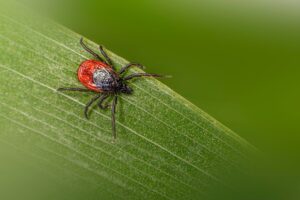

Ticks can bite during hikes and transmit diseases, so prevention matters. Wear light-colored, smooth fabrics and tuck pants into socks to keep ticks off skin. Apply a repellent containing DEET or picaridin to exposed skin and permethrin to clothing and gear. Stay in the center of trails and avoid brushing against tall grass or leaf litter. Check clothing, gear, and skin thoroughly after hiking and remove any attached ticks promptly with fine-tipped tweezers.
Where Ticks Are Most Likely on Trails
Provided you want to avoid ticks on the trail, start by paying attention to the places they like to wait. You’ll usually find them in cool, shaded spots, especially along trail edges where grass, brush, and low branches meet the path.
They also gather in leaf litter, where moisture hangs around and helps them stay active. Once you step off the packed trail, you get closer to their favorite hiding spots, and that’s when trouble starts.
Ticks might cling to plants and brush, then transfer onto you as you brush past. So stay centered on the trail whenever you can, and watch the ground ahead.
Should you notice thick vegetation, slow down and give it space. That small habit helps your group move with more confidence.
Wear Clothing That Keeps Ticks Off
Clothing is your initial real shield on the trail, and the right outfit can make a big difference in how many ticks get near you. Wear Layered clothing so you can cover skin without feeling trapped on warm climbs. Choose Light colored fabrics, because ticks show up faster on them, and that helps you spot hitchhikers before they settle in. Tuck your shirt into your pants, and your pants into your socks, so you close off easy paths. Pick long sleeves and long pants that fit close enough to block crawling bugs, but still let you move. Smooth fabric helps too, since ticks have a harder time grabbing on. With smart clothes, you can hike with more peace and feel part of the trail crew, not the tick buffet.
Use Tick Repellent Before You Hike
Before you hit the trail, choose a tick repellent that works well and matches the directions on the label.
Apply it before you reach the trailhead so you start your hike with solid protection.
In case the label says to reapply later, do it as directed so the coverage stays strong.
Choose Effective Tick Repellent
A good tick repellent can make your hike feel a lot safer and a lot less stressful. You belong on the trail, and the right formula helps you stay there with more peace of mind. Look for products that fit your plan and skin.
| Option | Best for |
|---|---|
| DEET sprays | Strong protection on busy trails |
| Picaridin lotions | Light feel and steady coverage |
| Natural oils | Short walks and lower-risk areas |
| Long lasting sprays | Long hikes with fewer reapplications |
Choose the one that matches your route, weather, and comfort. Read the label, check the active ingredient, and pick something you’ll actually use. Whenever you feel prepared, the whole hike feels easier. A smart choice now saves worry later, so you can focus on the trees, the views, and the company around you.
Apply Before Trailhead
Slip on your repellent before you leave the trailhead, because this small step can save you a lot of hassle once you’re in tick country. You’ll feel more ready whenever you start with it already on your skin and clothes. Add it to your pre hike checklist so it becomes as routine as packing water or lacing boots.
Put on the spray or lotion after your gear inspection, whenever you’ve checked socks, cuffs, and pack straps for easy access. This helps you protect the spots ticks like to reach initially.
Should you’re hiking with friends, remind each other before you head out, since a quick team check builds good habits and keeps everyone in the loop. A few calm minutes now can spare you an itchy souvenir later.
Reapply As Directed
Ticks don’t wait for a perfect moment, so it helps to reapply your repellent exactly as the label says.
You’re not being overly careful; you’re staying in step with the trail crew.
Set timer alerts on your phone so you don’t guess at what point it’s time.
In case you sweat a lot, wash your hands, or notice the protection fading, check the directions and refresh it right away.
Keep it close to sunscreen reapplication, so both habits become one easy routine before you head back out.
That way, you won’t scramble at the trailhead or forget in the middle of a climb.
With a quick reapply, you keep your shield strong and your hike a lot more comfortable.
Stay on the Trail and Avoid Brush
One of the simplest ways to lower your risk of tick bites is to stay on the trail and keep away from brush, tall grass, and leaf piles.
Whenever you stay centered on the path, you help your group move with confidence, and you avoid detours that lead you into tick-heavy spots.
That small choice can make the hike feel easier and safer.
- Walk where the ground is open and clear.
- Keep your steps steady on marked paths.
- Let friends know whenever you want to skip a side trail.
- Choose wide routes instead of squeezing through plants.
- Treat overgrown edges like a no-go zone.
You don’t have to miss the fun to protect yourself.
Just stay with the trail, and let the wild stay a little farther away.
Check for Ticks During and After Hiking
Even though you stay on the trail, ticks can still hitch a ride, so it helps to check yourself as you hike and again after you finish. Make periodic inspections part of your rhythm, especially after you brush past grass or sit on a log.
A quick pause lets you catch a tiny tick before it settles in. Use mirror checks on your legs, waist, neck, and hairline, and ask a hiking buddy to look at spots you can’t see. That teamwork can make your group feel safer and more prepared.
After the hike, change clothes soon and check your gear too. The sooner you look, the easier it’s to stay calm and keep your outing on track.
Remove a Tick the Right Way
In case you spot a tick, remove it right away with fine-tipped tweezers, grip it close to your skin, and pull straight out with steady pressure.
Don’t twist, squeeze, or use heat, because that can make things worse.
Afterwards, clean the bite area well and watch it for a rash, redness, or any flu-like signs over the next few days.
Safe Tick Removal
A steady hand makes all the difference whenever you find a tick on your skin, and the positive news is that safe removal is simple once you know the steps.
You can handle this calmly with proper technique and sterile tools, so you stay in control.
- Use fine-tipped tweezers, not fingers.
- Grip the tick close to your skin.
- Pull straight up with steady pressure.
- Don’t twist, crush, or jerk it.
- Wash the bite area and your hands.
If the tick feels tiny or stubborn, pause and breathe.
You’re not alone, and lots of hikers deal with this exact moment.
After you remove it, check your gear and clothing too.
That small habit helps your trail crew stay comfortable, confident, and ready for the next mile.
Aftercare And Monitoring
After you remove the tick, your job isn’t quite done yet, and that next step matters more than most hikers realize. Clean the bite with soap and water, then do wound care through drying it gently and covering it whenever it rubs on your pack or clothes. | Step | What you do |
| — | — |
|---|---|
| Clean | Wash the area well |
| Protect | Keep it dry and covered |
| Watch | Check for redness or swelling |
| Track | Note the date and site |
Stay with your hiking group, and help each other recall daily monitoring for the next two weeks. You’re not alone in this. Should you spot a rash, fever, joint pain, or feeling off, get medical help quickly. A small bite can fade fast, but your attention keeps the trail safer for everyone.
Watch for Tick Bite Symptoms
Tick bite symptoms can show up quietly, so it helps to keep an eye on your body in the days and weeks after a hike. You’re not overreacting whether you notice a weird rash, tiredness, or achy joints. These signs can feel small initially, but they matter.
- Watch for fever patterns that come and go.
- Notice localized swelling near a bite.
- Check for a red ring or expanding patch.
- Pay attention to headache or neck stiffness.
- Track chills, muscle pain, or unusual fatigue.
In case something feels off, trust that feeling and get checked. You know your body best, and your hiking crew would want you to speak up, too.
Make Tick Prevention Part of Every Hike
Make tick prevention part of every hike, not just the “buggy” ones, because a few simple habits can save you a lot of worry later. During trip planning, check trail reports, choose lighter clothing, and pack repellent so you’re ready from the start.
Whenever you hike with friends, use group habits that help everyone stay safer, like staying on the trail, brushing off pant legs, and doing quick tick checks at breaks. You’ll feel more at ease once these steps become second nature, almost like lacing your boots.
Before you head home, look over socks, waistbands, and hairline, then shower soon after. Small actions like these fit easily into your routine and help your whole crew enjoy the trail with less stress and more confidence.
Frequently Asked Questions
Can Ticks Survive in Cold Weather?
Yes, ticks can survive cold weather by using cold tolerance and overwintering behavior. You can still go outdoors if you stay aware, since some ticks hide in leaf litter and wait for warmer days.
Do Ticks Jump From Trees Onto Hikers?
No, ticks don’t leap from trees like tiny assassins. You’re more likely facing the tree borne myth: they use vertical questing on grass and shrubs, then grab you as you brush past—welcome to the hiker’s club.
Are Some People More Attractive to Ticks?
Yes, you can seem more appealing to ticks because body odor and immune response vary. You do not control everything, but you can protect yourself, check together, and feel confident outdoors with your group.
Can Pets Bring Ticks Into My Home?
Yes, your pet can be a tiny hitchhiker, bringing ticks inside. Check pet bedding and do an indoor inspection after walks. You’ll help protect your home and feel like you’ve got a safer, shared space.
How Long Can a Tick Live Without Feeding?
Ticks can live months to years without feeding, depending on species and development stage. You will fit in better whenever you check yourself often, because hungry ticks wait patiently for a nearby host.