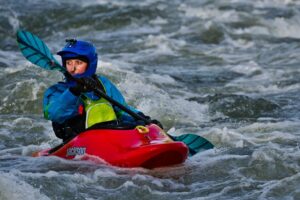

A windy morning can push a kayak off course even with strong paddling, signaling small setup or stroke adjustments. Sit upright, hold the paddle lightly, and let the torso drive most of the stroke to make each pull more efficient and powerful. Align blade entry and exit for cleaner catches and reduced drag. Time strokes to body rotation so momentum carries through the hull instead of fighting the water. Small technique tweaks and proper posture turn resistance into forward motion and make paddling feel easier.
Why Kayak Paddling Efficiency Matters
Whenever you paddle efficiently, you save energy and keep more control over your kayak, which can make the whole trip feel smoother and a lot less tiring. That matters because you want to enjoy the water, not fight it.
Good stroke economy helps you travel farther with less effort, so your arms and shoulders stay fresher. With better energy conservation, you can handle wind, waves, or a longer route without feeling worn out too soon.
You also move with more confidence, which makes you feel like you belong out there with every other paddler. As your strokes work well, your kayak responds better and your mind stays calm. That calm can turn a stressful paddle into a steady, rewarding one.
Set Up Your Kayak for Better Balance
Start by adjusting your seat so you sit upright and steady, since a small change can make your kayak feel much more stable.
Then place your gear low and even on both sides, so the boat stays balanced instead of pulling you off center.
Once you arrange it this way, you’ll paddle with less wobble and more control, which makes every stroke feel a lot easier.
Adjust Seat Position
A small seat adjustment can make your kayak feel much steadier, and that extra balance can take a lot of stress out of your paddling. Start with your seat padding and set the recline angle so you sit tall without straining. Whenever you feel supported, you move with more confidence, and that calm steadiness helps you belong on the water, not fight it.
- Slide your hips back until you feel centered.
- Raise or lower the backrest for firm support.
- Trial a short stroke, then fine-tune again.
Should your knees feel cramped, shift slightly until you can brace lightly. In case your lower back gets tired, add a touch more recline. Small changes matter because your body stays relaxed, your strokes stay smooth, and your kayak responds like part of you.
Balance Gear Placement
Tucked into the kayak, your gear can either help you feel steady or make every stroke feel a little off. Start by placing the heaviest items low and near the center, so your load distribution stays even and your kayak tracks well.
Then use gear pockets for small essentials like snacks, keys, and sunscreen, because loose items can shift and throw you off balance. Keep what you need most within easy reach, but avoid piling everything behind your seat.
Should one side feels heavier, move a dry bag or water bottle to the other side. You’ll feel the difference fast. A balanced kayak responds better, so you can paddle with less wobble and more confidence. Whenever your setup feels right, you’re free to settle in and enjoy the water.
Grip Your Kayak Paddle Correctly
Hold the paddle with your hands a little wider than shoulder width, and keep each knuckle lined up so the blade stays easy to control.
Next, set the blade angle so it enters the water cleanly instead of splashing around like it forgot its job.
Then keep a loose but firm grip, because that lets you stay relaxed while still steering with confidence.
Hand Placement Basics
Your grip can make or break your paddle stroke, so start placing your hands just a little wider than shoulder width on the shaft. This gives you control without feeling stiff, and it helps you stay relaxed with the group on the water. Keep your wrists in line with your forearms, because good wrist alignment cuts strain and keeps each stroke smooth. Also, leave enough finger spacing to hold the paddle firmly without squeezing too hard.
- Rest your thumbs lightly on the shaft.
- Keep your knuckles loose, not white.
- Match both hands so your strokes feel even.
When you settle into this hold, you’ll feel more steady and more at home in the kayak. Small changes here can make paddling feel natural fast.
Blade Angle Position
Once you’ve settled your hands, the next step is to angle the blade so each stroke catches the water cleanly. You want the face to enter without twisting, so your kayak feels steady and your effort stays useful. Whenever you keep shaft alignment straight, the paddle tracks better and you waste less energy. That small adjustment helps you move with the group instead of fighting the current alone.
| Blade Angle | Water Contact | Effect |
|---|---|---|
| Slightly open | Smooth entry | Less splash |
| Neutral | Direct pull | Better control |
| Blade feathering | Wind-aware edge | Cleaner recovery |
Check both sides often, because one tilted wrist can throw off the stroke. With a calm setup, you’ll fit right in on the water.
Loose But Firm Grip
Relax your hands, then let the paddle sit naturally in your grip. Keep a relaxed grip so your wrists stay loose and your stroke feels smooth. You’re not holding on for dear life; you’re guiding the paddle like a trusted teammate. Use fingertip control, not a tight squeeze, and let your lower hand steer while the top hand stays steady.
- Hold the shaft lightly
- Keep knuckles soft
- Readjust whenever your forearms tense
When you move from one stroke to the next, this small shift helps you save energy and avoid strain. In case the paddle twists, your hands should correct it fast, not fight it hard. That balance makes you feel more confident on the water, and your whole kayak crew benefits from the cleaner rhythm.
Master the Forward Stroke
Drive the paddle into the water with a clean, confident forward stroke, and you’ll feel your kayak start to glide instead of fight you.
Keep your foot placement steady so your legs can support each pull, and match your breath timing to each stroke so you stay relaxed.
Reach forward only as far as you can keep control, then plant the blade near your toes and pull it back beside the boat.
Lift the paddle smoothly, then switch sides without rushing.
You don’t need to muscle through it; smooth strokes help you move with your group and feel more at home on the water.
Whenever you stay calm and steady, your kayak answers better, and every stroke starts to feel more natural.
Rotate Your Torso for More Power
A strong forward stroke feels even easier as you let your torso do more of the work.
You don’t have to muscle every pull. Instead, turn your chest with each stroke and let hip rotation start the motion. This shared effort helps you stay steady and feel like part of the rhythm, not a solo act fighting the water.
- Keep your shoulders relaxed.
- Drive the stroke with oblique engagement.
- Match each reach with a smooth twist.
As you rotate, your arms guide the paddle while your core adds power. That teamwork saves energy and gives you a cleaner stroke. Should you feel tired fast, check that you’re twisting through the middle, not just yanking with your arms.
With practice, your body learns this flow, and paddling starts to feel more natural and welcoming.
Keep Your Paddle Close to the Kayak
Keep your paddle close to the kayak so each stroke stays short and strong.
As you keep a more vertical stroke path, you waste less energy and get better control.
You’ll also cut down on water resistance, which helps you move smoothly without fighting the water.
Short Paddle Arc
Most of the power in your kayak stroke comes from a short paddle arc that stays close to the boat, and that small change can make paddling feel smoother right away.
You don’t need a huge swing to feel strong. Instead, keep your strokes compact so your body works with the kayak, not against it. That helps you stay relaxed and connected to the rhythm around you.
- Use a short arc to keep each stroke efficient.
- Let your quick recovery bring the paddle back with less strain.
- Stay near the hull so you waste less energy and keep control.
When you paddle this way, you’ll feel less tired and more in sync with the water.
That confidence matters, and it helps you belong out there.
Vertical Stroke Path
Reaching for a stronger stroke can tempt you to sweep the paddle wide, but that usually works against you. Keep your blade close to the kayak so your stroke stays tall and steady. Whenever you lift the paddle, use a vertical recovery, then place it near the hull again. That keeps you in rhythm with the boat and helps you feel more connected to every pull.
| Cue | Action |
|---|---|
| Hands near body | Stay relaxed |
| Blade close | Track straight |
| Recovery upright | Lift cleanly |
| Catch beside hull | Enter smoothly |
| Angled exit | Slip out fast |
You’ll fit right in with paddlers who move with control, not force. This path feels simple, and that’s the point. A close stroke keeps your timing honest and your confidence high.
Reduced Water Resistance
A close paddle path does more than look neat, because it also cuts down drag and lets you move through the water with less effort.
Whenever you keep your blade near the kayak, you help the boat stay steady and let your strokes work with, not against, the water.
Consider it like those streamlined hulls you admire, built to slip ahead smoothly.
You’re aiming for laminar flow, not splashy chaos.
That’s how your crew feels whenever you paddle with control.
- Keep the blade close during the power phase.
- Enter and exit the water beside your hip.
- Avoid wide, sweeping arcs that waste energy.
As you stay compact, you’ll notice each stroke feels cleaner, calmer, and more connected.
Time Each Stroke for Smoother Motion
Timing each stroke can turn your paddling from choppy to smooth almost right away. You’ll feel more in control once you set a steady rhythm and let the kayak move between pulls instead of rushing.
Try matching your breath timing with each stroke so your body stays calm and your arms don’t tense up. This simple habit helps you glide with less effort and makes the water feel friendlier.
Should you want extra consistency, use cadence training through counting your strokes in a relaxed pattern. That keeps you from speeding up whenever you get excited.
As you settle into this rhythm, you’ll notice your boat working with you, not against you, and that feels pretty good on any trip.
Adjust Your Stroke for Water Conditions
As the water changes, your stroke should change with it, too. You’re part of the river or lake now, so stay relaxed and read each shift. Use current driven adjustments by shortening your reach in fast flow and planting your blade a bit sooner. In rough chop, keep your torso steady and let your core do more work.
- Pull harder on a headwind and keep your hands low.
- Ease your cadence whenever the water feels calm.
- Angle your paddle to match crosswind push.
These wind compensating techniques help you stay on line without fighting every gust. Once waves build, take cleaner, quicker strokes and keep your rhythm soft. Should the water settles, breathe easier and let your boat glide. That’s how you move with your crew, not against the water.
Avoid Common Kayak Paddling Mistakes
Even skilled paddlers slip into habits that waste energy and throw off control. You can fix most of them by watching your posture, grip, and rhythm. Sit tall, keep your shoulders relaxed, and let your core do more work than your arms. A death grip on the paddle drains power fast, so hold it lightly and stay loose. Also, match each stroke to your kayak gear, because the wrong setup can make every move feel clumsy.
Should you be unsure, try group lessons to spot small errors before they become frustrating habits. You’ll learn faster whenever you paddle beside others who share your goals. And whenever you breathe steadily, you’ll feel calmer, steadier, and more at home on the water, too.
Use Sweeps and Draws for Better Control
Small paddle moves can make a big difference provided you want better control in your kayak. Whenever you use sweep strokes, you turn the boat smoothly without fighting it. Reach forward, then arc the blade wide from bow to stern on the side you want to turn away from.
For tighter moves, use draw strokes to pull your kayak sideways toward the paddle. That helps whenever you need to dock, line up, or slip past a rock with confidence.
- Keep your torso relaxed and rotate, not just your arms.
- Plant the blade cleanly so it catches water fast.
- Practice both sides so you feel balanced and included.
With a little practice, these moves start to feel natural, and you’ll trust your hands more whenever the water gets tricky.
Build Endurance for Longer Trips
Building endurance for longer trips starts with pacing yourself before you ever feel tired. You’ll stay stronger when you keep a steady stroke, breathe in rhythm, and save bursts for rough water.
Next, add interval training to your weekly routine so your body learns to recover while you keep moving. Short hard efforts, then easy paddling, build the stamina your group needs on long days.
Also, pair your training with nutrition planning. Eat a balanced meal before launch, sip water often, and pack snacks that give quick energy without burdening you down.
On the water, check in with your body promptly. Should your shoulders tighten or your form slips, ease off and reset. That way, you’ll finish feeling ready to paddle with your crew again.
Frequently Asked Questions
How Do I Choose the Right Kayak Paddle Length?
Pick a paddle length that matches your kayak width and your height. Choose a blade shape and shaft material you trust, then trial fit on water. You will feel confident, connected, and ready.
What Clothing Is Best for Paddling in Cold Water?
You’ll stay warm like a firebank in frost with layered insulation, moisture wicking base layers, and waterproof outerwear. Wear neoprene gloves, booties, and a snug hat, so you paddle confidently with your crew, not against the cold.
How Do I Safely Re-Enter a Kayak After Capsizing?
You safely reenter by staying calm, performing a wet exit, then using an assisted reentry or paddle float method. You will feel supported, keep your weight low, and climb back in with your group’s help.
What Foods Help Maintain Energy on Long Paddling Trips?
You’ll stay energized with trail mix, energy gels, bananas, and whole grain bars. You may suppose snacks slow you down, but they don’t; your crew will feel stronger together once you eat small, steady bites.
How Do I Transport a Kayak on a Car Roof Rack?
Secure your kayak on the roof rack with foam blocks, then tighten roof tie downs around the hull and rack. You will fit right in at the launch, and you will drive with confidence.