

Keep a tent cool in hot weather by choosing shade, placing it for cross-breeze, opening vents, lifting the rainfly slightly, and clearing the ground for airflow. Pick a shaded spot near trees or rock outcrops and orient the door and long side toward prevailing wind. Open mesh panels and vents fully to promote ventilation and lift the rainfly a few inches to create an air gap. Remove debris and level the ground so air can circulate beneath the floor. Use breathable bedding, a small battery fan, or a shade sail for extra cooling.
Choose a Tent That Stays Cooler
A well-chosen tent can make a huge difference whilst the sun is beating down. You want a shelter that helps you feel calm, not sticky and trapped.
Start with double wall tents, because they let hot air move out more easily than single-wall designs. Look for mesh panels too, since they encourage airflow while still giving you privacy and a cozy feel. A lighter rainfly can also help the tent breathe better, so you don’t wake up in a sweaty cloud.
Whenever you choose smart features like these, you give yourself a cooler base camp and a better night’s rest. That small decision can make your whole trip feel easier, and you’ll be glad you picked a tent that works with you instead of against you.
Pitch Your Tent in the Shade
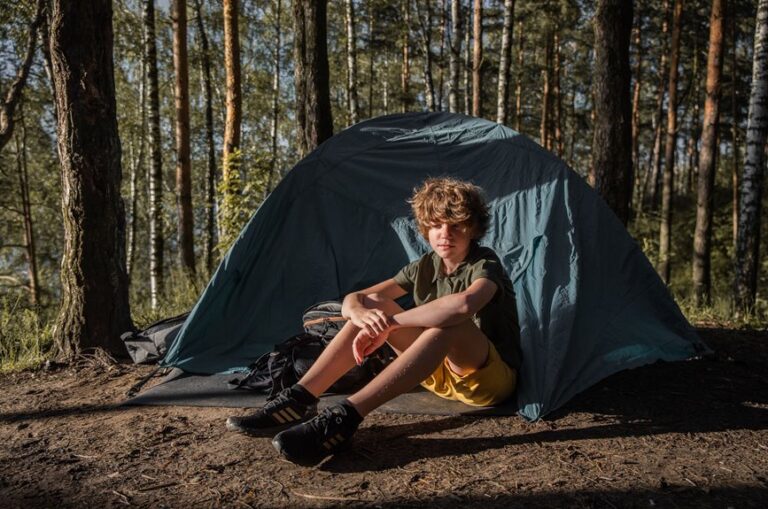
Shade can turn a sweltering campsite into a much kinder place to sleep, so it’s worth spending a few extra minutes finding the right spot.
You’ll feel the difference fast whenever you place your tent under a tree canopy that blocks the strongest afternoon sun.
Check the ground slope too, because a gentle rise helps rain drain away and keeps low spots from trapping heat.
Look for shade that lasts until evening, not just a quick patch that disappears at noon.
Then clear away sharp sticks and rocks so your tent sits flat and safe.
Should you be camping with friends, share the search and compare spots together.
A little teamwork here can make your whole camp feel cooler, calmer, and much more welcoming.
Orient Your Tent for Airflow
Once you’ve found some welcome shade, turn your tent so the breeze can move through it instead of bouncing off the walls. Check the wind direction, then angle the longest side into the moving air. Good door placement matters too, so set the entrance where air can sweep in and out easily.
| Quick check | What you do |
|---|---|
| Feel the breeze | Face the tent into it |
| Watch the trees | Notice which way they sway |
| Pick the door | Place it toward moving air |
| trial the setup | Zip and unzip to feel flow |
| Adjust slightly | Shift the tent if needed |
When you camp with others, this simple step helps everyone stay more comfortable. You’ll feel less trapped, and your space will seem calmer. A smart turn can make a hot night feel much more manageable.
Block Morning Sun Before It Hits
Should you can, block the morning sun before it reaches your tent, because those initial rays can turn the inside into a warm box fast. Set an early awning over the east side, or lean shade sails between trees and poles so you catch the light initially. You’ll feel the difference once your camp stays calm while everyone else starts fanning themselves.
In case you use a tarp, keep it a little higher than the tent roof, so air can move and the fabric won’t trap heat close to you. Also, place your tent where a nearby tree or vehicle can soften sunrise. As soon as you build that small wall against the sun, you give your group a cooler start and a much happier morning.
Open Vents and Rainfly Gaps
Open the vents that sit high and low on your tent so warm air can move out while cooler air slips in.
Should your rainfly leave a small gap, you give trapped heat a way to escape instead of building up inside.
This simple setup can make the tent feel less stuffy, and you’ll notice the difference fast whenever the sun stays strong.
Vent Placement Matters
As soon as the air starts to feel heavy inside your tent, vent placement can make a real difference in how comfortable you stay through the night. You want cool air to move where your body needs it most, so open the highest vents initially and keep lower openings clear. That simple setup helps stack airflow and lets mesh valves work like a quiet assist from the inside.
- You feel less trapped.
- You breathe easier.
- You wake up less sticky.
- You share the space better.
- You settle in with confidence.
When vents sit across from each other, your tent feels more alive and less stale. Should you and your campmates adjust them together, you’ll build a small comfort zone that feels thoughtful, calm, and shared.
Rainfly Gap Benefits
A small gap between your rainfly and tent body can help a lot as the heat hangs in the air. You give hot air a place to rise and slip out, while cooler air moves in through the mesh gap below.
That steady flow helps you feel less sticky and more settled whenever the night stays warm. It also supports condensation control, so you won’t wake up under a damp ceiling that feels like nature’s prank.
Keep the rainfly snug enough to block sun and light rain, but leave room for breathing space. If you pair open vents with that gap, your tent works with you, not against you. And that little win can make your camp feel calmer, cooler, and more like your own cozy spot.
Use a Camping Fan to Move Air
As soon as the tent starts feeling stuffy, a camping fan can make a huge difference fast. You join your crew in relief once air starts moving and the heat feels less heavy.
Pick a battery powered oscillating fan should you want broad, steady airflow, or try a solar powered misting fan whenever the sun stays strong. Set it near the doorway or above head height so it can stir the whole tent.
- You’ll breathe easier.
- You’ll sleep less sweaty.
- You’ll feel calmer.
- You’ll laugh more with your campsite crew.
- You’ll wake up ready for the day.
Keep the fan pointed where people gather, and use low speed at night. That small breeze can turn a sticky tent into a place that feels welcoming.
Use Reflective Tarps to Keep Heat Out
After the fan has helped move the hot air around, the next step is to stop that heat from getting in at all. You can drape a reflective tarp over the tent’s sunny side or set it up as a shade roof a few feet above the top.
That air gap matters, because it keeps the tent from soaking up heat like a camp mug in July. Use cords or clips so the tarp stays secure when the breeze picks up.
Should you have reflective paint on nearby gear, it can work with the tarp and bounce light away, too. Consider these solar reflectors as your little team on duty. Together, they help you stay cooler, calmer, and far more comfortable inside.
Leave Heat-Absorbing Gear Outside
Keep the gear that holds heat outside the tent, because every warm item you leave inside makes the space feel smaller and stuffier fast.
As soon as you leave boots by the door, they stop baking your sleeping area and smelling like a swampy camp legend.
Next, stash fuel, cookware, and packs under shade, so your tent can stay a friendlier place for rest and laughter.
- Your shoulders can relax sooner.
- The air feels less heavy.
- You fit better with your camp crew.
- You’ll notice less sticky discomfort.
- You protect shared comfort for everyone.
If you keep hot gear out, you give your tent a calmer, cooler feel that helps everyone breathe easier.
That small habit can make camp feel more welcoming after a long, sun-swept day.
Reduce Body Heat at Night
Before you sleep, drink enough water so your body can cool itself better through the night.
Then wear lightweight sleepwear that lets heat escape instead of trapping it against your skin.
These small choices can help you rest more comfortably while the tent still feels warm.
Stay Hydrated Before Sleep
A cool, steady drink of water can make a big difference while you’re trying to sleep in a hot tent. Whenever you practice pre sleep hydration, you help your body settle down instead of trapping extra heat. Sip earlier in the evening, then slow down close to lights out so you don’t keep waking up. Should you’ve been hiking hard, pay attention to electrolyte timing too, because a little balance can help you feel steady and calm.
- You’ll feel less drained at bedtime.
- Your mouth won’t feel so dry.
- Your body can cool off faster.
- You might drift off with less fuss.
- You’ll wake up feeling more like part of the crew.
Use Lightweight Sleepwear
Often, the clothes you wear to sleep can make the difference between tossing all night and getting real rest.
Whenever you slip into lightweight pajamas, your body can release heat instead of trapping it. Choose breathable nightwear made from cotton, bamboo, or moisture wicking fabric so your skin stays drier and calmer.
In case your tent feels sticky, this small choice helps you settle in faster and feel more at home with your camp crew.
Skip thick socks, heavy sweatshirts, and anything tight around your waist or chest. Instead, wear loose layers that move with you and let air flow.
Should the night cool down, you can always add a thin blanket. That way, you stay comfortable without waking up sweaty, annoyed, or squished in the dark.
Bring in Cool Air at Night
As the sun drops and the heat finally starts to fade, you can use the cooler night air to help your tent recover from a sticky day. Open the door wide and let the night breeze move through the space.
Should your tent have mesh panels or window screens, keep them clear so fresh air can flow in and stale heat can slip out. You’ll feel the change fast, and it can make bedtime feel like the group campfire finally got quiet.
- You breathe easier.
- You stop feeling trapped.
- You share the cool air together.
- You wake up less sweaty.
- You sleep with a calmer mind.
Were the air to feel good, keep both sides open a bit. That small shift can make your tent feel like a safer, friendlier place to rest.
Use Cooling Bedding and Liners
You can make your sleeping setup feel much cooler by choosing breathable bedding that lets air move and keeps heat from building up around your body.
Moisture-wicking tent liners help pull sweat away, so you stay drier and more comfortable through the night.
In case you still feel warm, a cooling pad can add one more layer of relief without making your bed feel bulky or stiff.
Breathable Sleeping Materials
A few smart layers can make a hot tent feel far more livable at night, and the right sleeping materials play a big part. You’ll sleep easier whenever your bed feels dry, soft, and cool against your skin.
- Choose moisture wicking sheets that pull sweat away fast.
- Pick natural fibers like cotton or linen for extra airflow.
- Use a thin blanket so you can stay covered without trapping heat.
- Swap heavy pads for lighter ones that breathe better.
- Keep a clean pillowcase close, so you feel fresh and settled.
Whenever your bedding works with the heat, you feel less sticky and more at home. That small comfort can turn a rough night into one you can handle with confidence, even whenever the tent stays warm.
Moisture-Wicking Tent Liners
Moisture-wicking tent liners can take a hot tent from sweaty to much more bearable, especially whenever the air feels heavy and still. You’ll feel the difference whenever wicking fabrics pull dampness away from your skin and help your bedding stay drier through the night.
Choose mesh liners should you want extra airflow without giving up a cozy layer. They slide under your sleeping setup and help reduce that sticky feeling that can make everyone grumpy come midnight.
Also, pick liners that fit your tent well, so they stay put and don’t bunch up as you move around. Whenever you match breathable bedding with these liners, you build a cooler sleep space that feels easier to settle into, even after a long, sun-soaked day.
Cooling Pad Options
Cooling pads can make a tent feel much kinder on a hot night, especially as the air barely moves and sleep starts to slip away.
You don’t have to tough it out alone. Try these options:
- Gel pads stay cool longer and feel soothing.
- Quilted liners add a soft, dry layer.
- Moisture-control pads help you stay fresh.
- Lightweight mats pack easily for camp trips.
- Evaporative coolers pair well with breathable bedding.
Put the pad under your sheet or sleeping bag, then let air flow around it.
Should you share your tent, pick the same cool setup so everyone feels included. You’ll notice less sticky heat and fewer restless turns.
Whenever you build your sleep space this way, your tent starts to feel like a small, calm group hug.
Vent Your Tent for Better Airflow
Opening every vent you have can make a big difference fast. You help hot air escape, and your tent starts feeling less like a sauna and more like a shared retreat.
Open the mesh vents initially, since they let air move while still keeping bugs out. Then create cross ventilation through opening vents on opposite sides. That steady flow pulls cooler air through and pushes stale air away.
Should your rainfly has vent flaps, lift them too, so the top of the tent can breathe. You can also loosen the door a little for extra movement, as long as privacy and weather allow.
Small changes matter here, and you don’t need fancy gear. Whenever you use every opening well, you give yourself and your campmates a more comfortable night.
Try Extra Cooling Tricks for Hot Weather
Should the tent still feels warm, a few extra tricks can make the night much easier. You’re not stuck sweating alone, and small add-ons can help your camp feel like a cool team effort.
- Hang shade sails over your tent site.
- Set up portable misters near the doorway.
- Place a frozen water bottle inside.
- Wet a light towel and drape it nearby.
- Swap to breathable, loose sleep clothes.
These moves work best after you’ve already opened vents and caught a breeze. In case you share camp with friends, let everyone pitch in, because a little teamwork can turn a rough, sticky night into a calmer one. With the right extras, you can rest easier and feel more at home under the stars.
Frequently Asked Questions
How Can I Tell if My Tent Fabric Is Heat-Resistant?
Check the label and manufacturer specs for heat ratings, then look for fabric evaluation results and UV and heat degradation resistance. Isn’t peace of mind worth it? You’ll feel confident camping with gear that belongs.
What Tent Size Helps Reduce Heat Buildup Most?
A smaller footprint tent usually traps less heat, and a smart ventilation design helps you feel part of a cooler crew. You’ll want enough room to breathe, but avoid oversized space that warms up slowly.
Are Ground Tarps Useful for Keeping Tents Cooler?
Yes, you’ll find ground tarps help by adding ground insulation and acting as a moisture barrier, so you stay drier and feel cooler. Choose a tarp slightly smaller than your tent to keep you comfortable together.
How Do Campsite Humidity Levels Affect Tent Temperature?
Higher humidity makes your tent feel warmer because you lose less body heat and sweat evaporates more slowly. You will want good air circulation; if humidity nears the dew point, condensation can add extra warmth.
Can Tent Color Really Make a Noticeable Cooling Difference?
Yes, it can, if you choose the right shade. You’ll notice light colors and reflective coatings bounce more sun away, so your tent stays cooler; it’s like everyone in camp getting the same lucky break.