

Trailer travel leaves little room for loose gear, especially when bikes need to come along. You need a rack that matches your receiver, bike count, bike weight, and the way you access the rear of your vehicle or RV. This shortlist covers hanging racks, tray-style carriers, ladder-mounted options, and heavy-duty e-bike setups for everything from family campground weekends to longer RV routes. Check your trailer or tow vehicle documentation before mounting any hitch accessory.
The Shortlist at a Glance
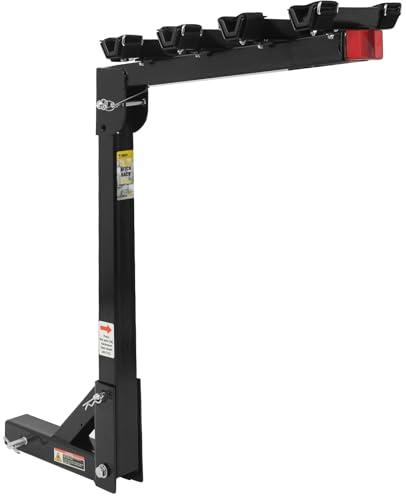
MAXXHAUL Hitch Mount 4 Bike Rack 150 lb

Camco RV Ladder Mount Bike Rack 2 Bikes 60 lbs

MAXXHAUL Platform Bike Rack 2 Bikes Adjustable Tire Cradles

Yakima DoubleDown 4-Bike Hitch Rack Tilting Rear Mount

Trimax RMBR4 Road-MAX Hitch Mount Tray 4 Bike Rack

TANX Ebike Fat Tire Tow Hitch Rack 2-Bike 160 lbs Smart Tilting Folding

Wildroad Hitch Cargo Carrier Bike Rack 60 x 24 x 14 500 LBS

PAULINN Ebike Tow Hitch 2 Bike Folding Rack 200 LBS

XtraEzzy Hitch-Mount Ebike Rack 2 Electric Fat-Tire Bikes
More Details On Our Top Picks
This four-bike MAXXHAUL is built around a hitch-mounted hanging layout, with a stated 150 lb overall capacity and a swing-down design. A swing-down rack pivots away from its upright position, which can make rear-area access less awkward during a family trailhead stop.
The stated fit includes cars, trucks, SUVs, and minivans, so it suits households moving several standard bicycles rather than two especially heavy electric models. For most weekend outings, its straightforward format is enough, though bike-to-bike spacing deserves attention during loading.
Strong Points
- Holds up to four bicycles for group rides.
- The 150 lb stated capacity gives useful headroom for several conventional bikes.
- Swing-down positioning can make unloading bags from the rear more manageable.
- A safety reflector adds rear-facing visibility hardware.
- Easy-install positioning suits occasional rack users.
Things To Consider
- Hanging designs need careful frame placement to limit contact between bicycles.
- Owners commonly find that removing the rack between trips keeps a hitch area easier to clean and access.
Key Specs
Who It Suits Best
You benefit most from this rack with up to four standard bicycles and a vehicle-based camping routine.
Where Another Pick Suits Better
The TANX Ebike Fat Tire Tow Hitch Rack suits you better with two heavier electric bikes or wide tires.
Camco takes a different route from the MAXXHAUL hitch rack by mounting on an RV ladder instead of occupying a receiver. Its heavy-duty steel construction carries two bikes with a stated maximum of 60 lb, leaving your hitch area available for other trailer equipment.
The foldable shape matters at a campsite, where an unused rack can sit closer to the ladder rather than protruding behind the RV. You may find this arrangement most practical with lighter bicycles and a ladder designed to accept this style of accessory.
What We Like
- Ladder mounting leaves the hitch receiver open.
- Folds for more compact RV storage.
- Heavy-duty steel suits regular campground travel.
Worth Noting
- The 60 lb maximum limits its fit for many electric bicycles.
- Installation depends on your RV ladder configuration and its stated accessory limits.
- Road grime can gather around ladder-mounted hardware, so periodic wiping helps preserve moving sections.
At A Glance
Made For
You get the most from this Camco rack with an RV ladder and two lightweight bikes for campground rides.
Consider Something Else When
The MAXXHAUL Platform Bike Rack 2 Bikes Adjustable Tire Cradles better suits you with a 2-inch Class III or IV receiver and varied frame shapes.
A tray carrier supports bikes at their wheels rather than suspending them from upper tubes, and that distinction helps with varied frame designs. This MAXXHAUL platform rack carries two bicycles on adjustable tire cradles, with foam-padded hooks that hold the bikes in place.
Compared with the four-bike hanging MAXXHAUL, you trade passenger capacity for a more bike-specific support layout. The 2-inch Class III and IV hitch fit makes it a natural match for appropriately equipped SUVs, vans, and trucks.
Highlights
- Adjustable tire cradles accommodate different bicycle lengths.
- Wheel-based support can suit unconventional frame geometry.
- Foam padding adds a buffer where hooks contact the bicycle.
- Two-bike format keeps loading less crowded than four-bike hanging racks.
Trade Offs
- It requires a 2-inch Class III or IV receiver.
- The tray structure takes more storage room than Camco’s folding ladder rack.
- Owners commonly clear grit from the tire cradles after wet or dusty routes.
Technical Sheet
Right Fit For
You benefit from this rack with two bikes of different frame styles and a compatible 2-inch hitch.
Not Your Match When
The Yakima DoubleDown 4-Bike Hitch Rack Tilting Rear Mount suits you more with a 1.25-inch receiver and a need for four-bike capacity.
The DoubleDown’s useful distinction is receiver flexibility: it fits both 2-inch and 1.25-inch receivers. That gives you more vehicle options than the MAXXHAUL Platform Bike Rack 2 Bikes Adjustable Tire Cradles, which is limited to 2-inch Class III and IV hitches.
Its anti-sway cradles are designed to reduce bicycle movement, while folding arms help the rack sit more compactly between outings. For a household carrying standard bikes on different vehicles, that flexibility can be the deciding detail.
Upsides
- Fits 2-inch and 1.25-inch receivers.
- Accommodates up to four bicycles.
- Anti-sway cradles address bike movement during travel.
- Tilting rear mount supports rear access needs.
- Folding arms make garage storage easier.
Minor Gripes
- Hanging cradles still require thoughtful spacing for mixed bicycle shapes.
- Folding-arm joints benefit from occasional cleaning after muddy journeys.
Feature Snapshot
Best Suited To
You will appreciate this Yakima rack with multiple standard bikes and either common receiver size.
Look Elsewhere When
The PAULINN Ebike Tow Hitch 2 Bike Folding Rack 200 LBS fits you better for two especially heavy electric bicycles.
Trimax combines four-bike capacity with a tray-style hitch mount, a format that can appeal when hanging-frame contact is not your preference. The RMBR4 uses a 2-inch receiver and includes folding construction plus locking arms.
Compared with Yakima DoubleDown’s dual-size receiver fit, this is a more focused option for vehicles with a 2-inch hitch. The honest read is that a four-bike tray rack asks for more room behind your vehicle, but it makes sense for regular group rides.
Standout Traits
- Four-bike capacity suits larger riding groups.
- Tray layout supports bicycles from below.
- Locking arms add a securing feature for loaded bikes.
Room For Improvement
- Only fits a 2-inch receiver.
- Its four-bike tray form needs substantial room in storage.
- Owners commonly keep locking-arm mechanisms clear of road dust for smoother operation.
- Loading four bicycles takes more time than loading a two-bike carrier.
Quick Facts
Who Will Love This
You get the strongest fit from the RMBR4 with four standard bikes and a 2-inch receiver on a roomy vehicle.
A Better Fit Elsewhere
The Camco RV Ladder Mount Bike Rack 2 Bikes 60 lbs works better for you when hitch space must stay open on an RV.
Heavy e-bikes change the rack conversation quickly, and TANX addresses that with a stated 160 lb capacity for two bikes. It is presented for electric, fat-tire, and standard bicycles, with a wobble-free design, tilting function, folding form, and 2-inch receiver fit.
That stated capacity gives this a very different role from Camco’s 60 lb ladder solution. You may find the folding and tilt functions especially welcome on a daily driving vehicle, though lifting heavy bikes into position remains a real part of ownership.
Bright Spots
- Stated 160 lb capacity targets heavier two-bike setups.
- Designed around electric, fat-tire, and standard bicycles.
- Tilting structure supports access around the rear area.
- Folds down to reduce its profile between rides.
- Wobble-free design focuses on steadier hitch connection.
- Uses the common 2-inch receiver size.
Points To Note
- It requires a 2-inch receiver.
- Heavy bikes still need deliberate lifting and positioning during loading.
- Hinge and fold points benefit from a quick debris check after gravel-road travel.
Feature Rundown
Who Should Grab It
You benefit most from TANX with two heavy e-bikes or fat-tire bikes and a 2-inch receiver.
Skip It When
The MAXXHAUL Hitch Mount 4 Bike Rack 150 lb makes more sense for you with four lighter bicycles.
Wildroad is the unusual choice here because it pairs bicycle carrying with a folding cargo basket. The basket measures 60 by 24 by 14 inches and has a stated 500 lb capacity, while the rack is described for standard, fat-tire, and electric bicycles.
For camping trips with coolers, bins, and riding gear, that dual-purpose layout can reduce the need to choose between cargo and bikes. Compared with TANX, it makes more sense for equipment-heavy trips, provided your 2-inch receiver and vehicle limits support the planned load.
Reasons To Buy
- Combines cargo-carrier and bike-rack roles.
- 60 by 24 by 14-inch basket provides a defined storage area.
- Stated 500 lb basket capacity suits substantial camping gear.
- Folding construction can reduce rear extension while parked.
Softer Spots
- The larger basket shape needs more parking and garage clearance.
- A loaded cargo basket can make rear access more involved.
- Owners commonly rinse and dry basket corners after wet travel to limit trapped dirt.
- You need to total cargo and bicycle weight carefully against vehicle and hitch limits.
Spec Overview
Built With In Mind
You get the most from Wildroad on camping trips that combine bikes with bulky cargo bins and outdoor gear.
Another Choice May Suit
The Trimax RMBR4 Road-MAX Hitch Mount Tray 4 Bike Rack suits you better when four-bike transport matters more than cargo space.
PAULINN is aimed squarely at heavy two-bike transport, with a stated 200 lb capacity and fit for electric, fat-tire, and standard bicycles. It uses a 2-inch hitch receiver and folds, a sensible combination for owners who switch between riding trips and ordinary driving.
Its stated capacity exceeds TANX’s 160 lb figure, making it worth a close look for especially weighty paired e-bikes. One thing worth considering is that capacity alone does not remove the need to verify your own hitch and vehicle limits.
Plus Points
- Stated 200 lb capacity serves demanding two-bike loads.
- Designed for e-bikes, fat-tire bikes, and standard bikes.
- Folding shape helps reclaim rear space between excursions.
- Two-bike format keeps the loading task focused.
- 2-inch receiver fit matches many truck and SUV hitches.
Small Caveats
- It is limited to a 2-inch hitch receiver.
- Heavy electric bicycles remain cumbersome to lift without assistance.
Details At A Glance
The Right Fit
You benefit from PAULINN with two heavy e-bikes and a 2-inch receiver on a suitably rated vehicle.
Reach For A Different Pick When
The Wildroad Hitch Cargo Carrier Bike Rack 60 x 24 x 14 500 LBS suits you more when camping cargo is central to the trip.
XtraEzzy focuses on a direct job: carrying two electric or fat-tire bikes from a 2-inch receiver. The stated fit includes cars, SUVs, trucks, RVs, and minivans, giving it broad vehicle-category relevance for a two-bike setup.
Compared with PAULINN, the source details here do not state a weight figure, so you need the listing details and your bike weights before deciding. For riders with two compatible e-bikes and a standard 2-inch receiver, its category focus is appealing without unnecessary complexity.
Best Bits
- Designed for two electric or fat-tire bicycles.
- Fits a 2-inch receiver.
- Listed for cars, SUVs, trucks, RVs, and minivans.
Areas To Watch
- You need to confirm bicycle weights against the listing before loading.
- Heavy-duty rack hardware can collect road debris, so inspect attachment points after long travel days.
- It does not suit vehicles with a 1.25-inch receiver.
Feature Card
Whose Shelf It Belongs On
You get the right fit from XtraEzzy with two electric or fat-tire bikes and a compatible 2-inch hitch vehicle.
Where A Sibling Pick Shines
The Yakima DoubleDown 4-Bike Hitch Rack Tilting Rear Mount suits you better with lighter standard bikes and a 1.25-inch receiver.
How To Choose The Right Bicycle Racks For Trailer
Start With Your Receiver and Trailer Limits
A hitch receiver is the square tube opening that accepts a hitch accessory, and its size determines which rack can mount. Several picks here require a 2-inch receiver, while the Yakima DoubleDown also fits a 1.25-inch receiver. Your trailer, RV, or tow vehicle documentation sets the limits that matter, including receiver capacity and any restrictions on rear-mounted accessories.
A rack that physically slides into the hitch is not automatically appropriate for every trailer arrangement. Check rear clearance, spare-tire position, exhaust location, and whether a folded rack interferes with doors, ladders, or stabilizing equipment.
Match the Rack to Bike Weight and Shape
Standard bicycles, fat-tire bikes, and electric bikes place very different demands on a carrier. Total the actual weight of every bike, including accessories that remain attached, then compare that figure against the rack’s stated capacity. Heavy e-bike pairs point toward TANX or PAULINN, while lighter two-bike RV use may align with Camco’s 60 lb ladder option.
Frame shape matters too. Hanging cradles support bikes at the frame, while tray racks use wheel cradles or platforms. A tray carrier can be easier to fit around step-through frames, unusual tube designs, or mixed bike collections.
Think Through Access, Storage, and Daily Use
Tilting and swing-down mechanisms matter most for people opening a tailgate or rear hatch during a trip. Folding arms and folding platforms help during parking and storage, but they still add length and weight to the rear of your setup. A cargo basket such as Wildroad’s expands what you can carry, though it also demands more clearance.
For long-haul travel, plan a brief walk-around before departure and after stops. Check that bicycles remain positioned as intended, straps and cradles stay clear of moving parts, and no gear has shifted into contact with the rack.
A Few Details That Prevent Regret
Common Shopping Slip Ups
A frequent mistake is focusing only on the number of bikes. You also need bike weight, tire width, receiver size, and the physical clearance behind your trailer or vehicle. A four-bike hanging rack can suit lightweight family bikes, while two heavy e-bikes may need a very different format.
Another missed detail is storage. Measure your garage depth and parking space with the rack installed or folded, especially with a large cargo carrier.
Where The Extra Money Goes
Higher-tier designs often add features that address ownership friction: tilting access, folding structures, adjustable tire supports, anti-sway cradles, and heavier stated load capacities. Those details matter more during frequent use than during an occasional short trip.
Spending up is sensible for heavy electric bikes, repeated highway travel, or a vehicle that needs frequent hatch access. For occasional rides with two lightweight bikes, a simpler layout may fit your routine without extra hardware.
Frequently Asked Questions
Can You Put a Bike Rack on a Trailer Hitch?
You can use a hitch rack only where your trailer or vehicle documentation permits that accessory type. Confirm the receiver size, capacity, and rear-clearance requirements before mounting.
What Is the Difference Between a Tray Rack and a Hanging Rack?
A tray rack supports bicycles at the wheels or a platform beneath them. A hanging rack holds bikes by their frames in cradles.
Are E-Bikes Suitable for Every Hitch Rack?
No, e-bikes can weigh substantially more than standard bicycles. Match the combined bike weight to the rack’s stated capacity and your hitch limits.
Why Does Receiver Size Matter?
The receiver opening determines whether a rack can mount correctly. Many heavy-duty racks use a 2-inch receiver, while some models also fit 1.25-inch receivers.
Can a Folded Rack Stay on Your Vehicle?
A folded rack can remain mounted when it does not interfere with your vehicle, trailer, or parking arrangement. Regularly inspect the mount and keep moving joints clear of dirt.
Closing Remarks
Your strongest choice depends less on flashy extras and more on the bikes and trips already on your calendar. Choose a four-bike hanging or tray rack for group rides, a ladder-mounted model for light RV use, or a higher-capacity two-bike carrier for electric bicycles. Cargo needs can shift the decision toward a basket-and-bike combination such as Wildroad. Measure your receiver, add up bicycle weights, and think through rear access before settling on a rack.