

Gas containers are less about flashy features and more about fit, shape, and how you actually move fuel or other liquids. A long weekend on the water, a garage shelf with limited room, or a truck bed that gets bounced around all ask for different designs. That’s why this roundup leans on capacity, venting, material choice, and handling details that matter after the box is opened. You’ll see marine tanks, safety cans, a jug for non-fuel liquids, and a rugged off-road pack, so you can match the container to the job instead of forcing one shape to do everything.
Quick Look At The Shortlist

Scepter 12 Gallon Portable Marine Gas Can (Tall Profile)

Scepter 9 Gallon Portable Marine Gas Can (Rectangular)

VP Racing 35221-CA 5.5 Gal. Square Motorsport Jug

Flame King YSN-201 20-Pound Steel Propane Tank Cylinder

North Mountain Supply Vented Plastic Hedpak Carboy 5 Gallon
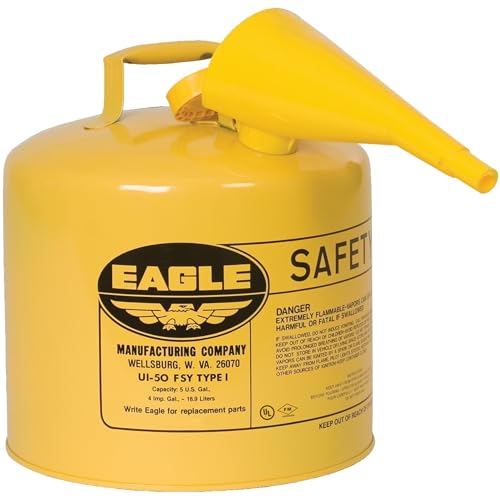
Eagle 5 Gallon Type I Yellow Safety Gas Can for Diesel

Eagle 1 Gallon Type I Red Safety Gas Can for Gasoline

RotopaX 3 Gallon Gasoline Pack, Red
More Details On Our Top Picks
The tall 12-gallon shape suits boat owners who want more fuel in a single tank and don’t mind a larger footprint. The built-in gauge and pick-up add day-to-day convenience, especially on longer outings where you’d rather keep an eye on supply than guess at it. The 2-way vented cap should help with smoother flow and pressure management, though that same tall profile can feel bulky in tighter storage lockers.
Compared with the 9-gallon Scepter below, this one gives you more capacity at the cost of extra height. For a weekend dock setup or a skiff that runs longer stretches, that trade feels sensible. The handles help with handling, but the shape asks for more careful placement in a garage or compartment.
What We Like
- 12-gallon size reduces refill frequency on longer boating days.
- Built-in fuel gauge gives you a quick visual check.
- Pick-up hardware supports easier fuel drawing during use.
- Two-way venting helps the tank breathe more naturally.
- Handles make lifting and repositioning less awkward.
Room For Improvement
- Tall profile takes more vertical storage room than the 9-gallon Scepter.
- The larger body can feel unwieldy in small lockers or compartments.
- Wiping down a broader tank surface takes a bit more effort after use.
Feature Snapshot
Whose Shelf It Belongs On
Boat owners who want a larger-capacity tank with gauge visibility and a vented cap will get the most from this pick.
Swap It Out When
The Scepter 9 Gallon Portable Marine Gas Can makes more sense for smaller craft or tighter storage bins.
The 9-gallon body trims size without giving up the same marine-minded details as the larger Scepter. That makes it appealing for smaller boats, dock boxes, or garage setups where every inch matters. The rectangular profile usually stores a little more neatly than a tall tank, and the built-in gauge helps you keep tabs on fuel without extra guesswork.
Compared with Item 1, this version is easier to place in tighter spaces, though you trade away some capacity. That smaller footprint can be the smarter call for day trips or backup fuel storage. It still asks for a clean, level place to sit, so cramped, cluttered storage can make it annoying in the same way any wider tank can.
Bright Spots
- 9-gallon capacity keeps it manageable for smaller setups.
- Rectangular shape tends to store more neatly than a tall tank.
- Built-in gauge supports faster fuel checks.
- Pick-up hardware helps make transfer use more straightforward.
Minor Gripes
- Less capacity than the 12-gallon Scepter means more frequent refills.
- It still needs a stable, level storage spot.
- The broader shape can feel awkward in narrow cubbies.
Feature Rundown
Made For
Boat owners with smaller storage areas or shorter fuel runs should find this shape easier to live with.
A Better Fit Elsewhere
The Scepter 12 Gallon Portable Marine Gas Can suits longer outings better because it carries more fuel in one tank.
This one moves away from pure fuel storage and into multipurpose liquid handling, so it fits garages, farms, and workshops better than a marine can. The square body can sit more securely on a shelf, and the reinforced stress points matter for rougher day-to-day handling. The included 14-inch filler hose and close-trimmed cap and neck are useful touches, though the jug is built for non-fuel use only, so that boundary matters.
Compared with the Scepter tanks, you get a more utility-minded container rather than a boat-specific fuel setup. That makes it handy for recyclable automotive fluids, non-potable water, or feed-related storage, where a simple jug format is enough. The honest read is that it’s more flexible than a basic can, but only inside the uses the listing spells out.
Reasons To Buy
- Square shape helps the jug sit more steadily in storage.
- Reinforced corners are useful in high-stress handling spots.
- 14-inch filler hose supports cleaner pouring and mixing tasks.
- Works for several non-fuel storage jobs around a garage or farm.
- Close-trimmed neck and cap help the opening feel more controlled.
Points To Note
- It is built for non-fuel use, so it is not a substitute for a fuel can.
- The specialized shape may be more container than some households need.
- After messy liquids, the square corners can take a little extra rinsing.
Core Details
Built With In Mind
Garage, farm, and workshop setups benefit most from this jug’s non-fuel, multi-use layout.
Look Elsewhere When
The North Mountain Supply Vented Plastic Hedpak makes more sense for food-safe liquid storage at home.
Propane storage asks for a different kind of container, and this steel cylinder fits that lane cleanly. The white finish keeps the look simple, while the Type 1 OPD valve, an overfill prevention device, is there to manage fill limits during standard use. That makes it a sensible match for grill setups, outdoor cooking rigs, and other propane jobs where a standard 20-pound cylinder is the norm.
Unlike the Scepter marine tanks, this is not about liquid fuel for engines, so category fit matters more than shape alone. Steel construction gives it a sturdy feel, though steel also means more weight to handle than a plastic jug. For a fixed backyard station, that trade-off is usually easier to accept than for someone moving containers constantly.
Highlights
- 20-pound size fits common propane setup needs.
- Steel body brings a solid, traditional cylinder build.
- Type 1 OPD valve supports safer fill control during use.
- Simple cylinder shape stores neatly beside grills or patio gear.
Softer Spots
- Steel construction adds weight compared with plastic containers.
- It is a propane cylinder, so it does not replace a gasoline can.
- Moving it often can feel less convenient than lighter options.
At A Glance
The Right Fit
Home cooks and grill owners who use a standard 20-pound propane setup will get the cleanest match here.
Skip It When
The Eagle 5 Gallon Type I Yellow Safety Gas Can for Diesel is the better choice for liquid fuel transfer and storage.
This Hedpak sits in the useful middle ground between rigid storage and easy dispensing. The semi-rigid HDPE body, HDPE meaning high-density polyethylene, gives you a light but sturdy feel for home storage, and the vented cap helps liquid move out without the awkward glugging that can happen with sealed containers. For kitchens, brewing shelves, or water storage areas, that makes routine pours feel less fussy.
Compared with the VP Racing jug, this one leans more toward home liquid storage than workshop rough use. The BPA-free, food-grade construction matters for water or other food-safe liquids, though the source wording also points to FDA requirements rather than broad universal uses. In most home setups, that focus is enough, but the container still asks for sensible cleaning and careful filling like any 5-gallon vessel.
Plus Points
- Semi-rigid HDPE body balances light handling with useful structure.
- Vented cap supports smoother pouring and dispensing.
- 5-gallon size works well for common home liquid storage jobs.
- BPA-free, food-grade design fits water and other food-safe liquids.
- Simple carboy form stores well in kitchen or brewing spaces.
Areas To Watch
- It is still a 5-gallon container, so full loads are not light.
- Cleaning around the neck takes normal care after sticky liquids.
- Food-safe use matters here, so it is not the right pick for fuel.
Details At A Glance
Who It Suits Best
Home brewers and households that want a vented, food-safe 5-gallon container will find the layout especially practical.
Another Choice May Suit
VP Racing 35221-CA works better for garage and farm tasks that need a more rugged, non-fuel jug.
This is the more traditional safety-can style in the group, and the yellow finish keeps diesel use easy to identify at a glance. The flame arrester, self-closing lid, and included F-15 funnel give it a very practical setup for transfer jobs in a garage or shop. That kind of hardware matters most when you want a container that behaves predictably rather than looking sleek.
Compared with the RotopaX pack, this Eagle can is more about stationary storage and safe dispensing than off-road travel. The galvanized steel body should appeal to anyone who wants a hard-wearing container for regular shop use, although steel also means you’ll feel the weight more than with plastic. For diesel chores, that trade-off is usually acceptable.
Standout Traits
- Flame arrester adds a useful safety-oriented design element.
- Self-closing lid helps reduce spills during routine handling.
- Included funnel makes filling and pouring more convenient.
- Galvanized steel body suits regular workshop storage.
Honest Caveats
- Steel construction brings more heft than plastic alternatives.
- It is tuned for diesel storage, so the use case is narrow.
- Metal surfaces can need occasional wiping to stay tidy in a shop.
Technical Sheet
Perfect Match For
Diesel users who keep fuel in a garage, shop, or equipment area will appreciate the straightforward safety-can layout.
Where A Sibling Pick Shines
RotopaX 3 Gallon Gasoline Pack is a better fit for truck beds and off-road trips where compact travel matters more.
Small storage areas are where this one makes immediate sense. The 1-gallon size is easy to stash in a garage, trailer, or shed, and the Type I layout gives you a single opening for filling and pouring. The included funnel and gasketed spout cap add convenience, while the self-closing cap and automatic venting setup aim to keep handling more controlled.
Compared with the 5-gallon Eagle, this version favors portability over volume, which is useful for light-duty gasoline storage. You may find the smaller capacity handy for equipment that does not need a larger reserve, though it also means more frequent refills. For quick jobs and tight spaces, that compactness is the whole point.
Best Bits
- 1-gallon size stores easily in compact spaces.
- Type I single-opening design keeps filling and pouring simple.
- Included funnel adds convenience for everyday handling.
- Self-closing spout cap supports cleaner storage behavior.
Small Caveats
- Small capacity means more refills than larger containers.
- Better for short jobs than heavy fuel use.
- The compact body may not suit users who want a reserve supply.
Key Specs
Who Should Grab It
Shoppers with limited storage space and light gasoline needs will get the most value from this small can.
Reach For A Different Pick When
The Scepter 9 Gallon Portable Marine Gas Can is a better match for boat use and larger fuel reserves.
This pack is aimed squarely at travel-heavy use, especially off-roading, overlanding, camping, ATVs, UTVs, and trucks. The seamless construction and secure sealing are the main story here, because a portable fuel container earns trust by staying closed and stable in rough conditions. The three-layer rotational molding process adds another durability angle, though that rugged build usually comes with a more specialized feel than a simple can.
Compared with the Eagle safety cans, this one is the more mobile-minded option for trail vehicles and overland rigs. The 3-gallon size keeps it manageable, but the design still feels purpose-built rather than casual. For weekend trips where you want something compact, tough, and easy to carry along, that specialization is exactly the appeal.
Standout Traits
- 3-gallon size fits trail and travel fuel needs well.
- Seamless construction supports a more sealed container design.
- Three-layer rotational molding adds a sturdy build approach.
- Works well for off-road and camping vehicle setups.
Areas To Watch
- The specialized design may be more container than casual users need.
- Three gallons may be short for longer trips or larger engines.
- Cleaning and storage are easier when you keep it dedicated to its role.
Feature Card
Who Will Love This
Drivers and campers who need a rugged fuel pack for trail use will appreciate how purpose-built this one feels.
Not Your Match When
The Eagle 1 Gallon Type I Red Safety Gas Can for Gasoline suits tiny storage spaces and very small fuel needs better.
How To Choose The Right Gas Containers
Match The Container To The Liquid
The first choice is simpler than most people expect, because the container has to fit the substance, not just the shelf space. Marine fuel tanks, propane cylinders, diesel safety cans, and non-fuel jugs each serve a different job, and mixing those roles leads to annoyance fast. A 5-gallon home-brewing carboy and a 20-pound propane cylinder may look equally practical on a page, but they belong in very different spaces.
Pay Attention To Shape And Handling
Capacity matters, yet shape often decides whether the container feels easy or awkward every time you move it. Tall tanks can be fine in a boat locker, while rectangular bodies usually sit better in a garage corner or storage bin. Handles, funnels, gauges, and vented caps also change how pleasant the day-to-day experience feels, especially during repeated fills.
Think Through Venting And Sealing
Venting is what helps a container breathe during pouring or storage, and sealing is what helps it stay contained when it’s not in use. A vented cap can make transfer smoother, while a tighter seal can matter more in rough travel or on a bouncing trailer. The trade-off is plain, stronger sealing often asks for more deliberate opening and closing.
Size The Container To Your Routine
A larger can makes sense for longer outings or equipment that drinks fuel often, but too much capacity can be a burden in a cramped shed or truck bed. Smaller containers are easier to stash and carry, though they’ll need refilling more often. The right answer usually comes from your routine, not from the biggest number on the label.
What To Weigh Before You Click Through
Mistakes Worth Dodging
A common slip-up is buying for capacity alone and forgetting the liquid type. Another is overlooking dimensions, especially when a tall profile or broad base has to fit inside a locker, cabinet, or trailer compartment. You also want the right accessories from the start, since a funnel or pick-up can save frustration later.
Where The Extra Money Goes
Higher-tier containers usually spend their cost on thicker materials, better venting hardware, reinforced construction, or purpose-built fittings. That matters most in rough travel, frequent handling, or jobs where a messy pour creates a real headache. Paying more makes sense when the container will see regular use, harsh movement, or storage where leaks and wear are annoying to deal with.
Final Thoughts
The right gas container feels almost invisible in daily use, which is usually the sign you chose well. Boat owners will likely lean toward the Scepter marine tanks, diesel users have a clear fit in the Eagle safety can, and trail drivers get more value from the RotopaX pack. For home liquid storage, the North Mountain Supply Hedpak and VP Racing jug cover very different needs without crowding each other. Match the container to the liquid, the space, and how often you’ll move it, and the rest gets much easier.