
Canoeing asks a lot from a handheld GPS, especially once shorelines start bending and landmarks stop looking familiar. You want clear positioning, a body that can handle wet hands, and controls you can trust while balancing in the boat. This roundup focuses on gear that fits quiet lakes, river day trips, and marine use where basic navigation matters more than flashy extras.
The Shortlist At A Glance

Garmin eTrex 32x, Rugged Handheld GPS Navigator

Garmin eTrex SE, GPS Handheld Navigator

Garmin Striker Vivid 7cv, U.S. with GT20-TM Transducer

Garmin Striker Cast, Castable Sonar with GPS

Garmin GPS 73, 2.6 inches, Model:010-01504-00
Garmin GPSMAP 65s, Button-Operated Handheld with Altimeter and Compass

Lightning GPS GL300 Tracker Device for Vehicles
Garmin GPSMAP 79sc, Marine GPS Handheld Preloaded with BlueChart g3 Coastal Charts
More Details On Our Top Picks
The eTrex 32x fits canoe trips that call for a simple, rugged handheld rather than a screen-heavy setup. Its shape feels suited to wet hands, and the format makes sense for shorelines, portages, and day routes where you want a quick position check more than a full chartplotter.
Compared with the touch-linked gear later in this list, this one keeps the focus on the unit itself. That makes it a steady match for paddlers who want fewer moving parts, though the smaller handheld style can feel basic beside the larger display units.
Strong Points
- Rugged handheld format suits damp conditions.
- Compact body stores easily in a dry bag.
- Good match for route checks between paddle strokes.
- Less setup than the screen-led marine units.
Things To Consider
- Smaller handheld styling leaves less room for data at a glance.
- The simpler layout may feel modest beside the GPSMAP models.
- Button navigation can take a little getting used to.
Feature Snapshot
Who It Suits Best
Weekend paddlers and casual route checkers will get the most from this style of handheld.
Where A Sibling Pick Shines
Garmin eTrex SE suits longer outings better, since its battery focus and Bluetooth pairing feel more modern for day-long use.
The eTrex SE brings a more modern feel to the same compact-handheld idea, which helps on longer paddling days. The 2.2-inch display keeps the footprint small, while Bluetooth pairing with Garmin Explore gives you a cleaner way to move trip info in and out of the unit.
That up-to-168-hour battery claim is the detail that stands out most for canoe travel, because long weekends and multi-day routes can stretch a small device quickly. The trade-off is that the screen remains compact, so it suits glanceable navigation better than deep map browsing.
Highlights
- Long battery figure fits extended river trips.
- Bluetooth pairing helps with trip planning.
- Multi-GNSS support broadens satellite access.
- IPX7 water resistance suits wet-deck use.
- 2.2-inch display keeps the device pocketable.
Room For Improvement
- The smaller display can feel cramped for map detail.
- Less screen space means less room for data-rich views.
- Handheld navigation still asks you to manage buttons, not touch gestures.
Core Details
Built With In Mind
Solo paddlers and trip planners who want a compact unit with strong endurance will feel at home here.
A Better Fit Elsewhere
Garmin GPSMAP 65s makes more sense for route-heavy explorers who want a built-in compass and altimeter in the same handheld.
This pick shifts away from plain GPS navigation and into canoe-friendly fishing support. The 7-inch color display gives you room to read sonar imagery without squinting, and the vivid color palettes help separate fish from structure in a way that feels more immediate on the water.
Because it includes a GT20 transducer, it brings traditional CHIRP sonar and ClearVü scanning sonar together, which is a lot of capability for a small boat setup. The honest trade-off is that this belongs on a canoe only when fishing is part of the trip, since it asks for more gear and more space than the handheld units above.
Bright Spots
- Large 7-inch screen is easy to read.
- Vivid palettes make sonar interpretation quicker.
- Built-in GPS marks waypoints and routes.
- Quickdraw Contours adds mapping support.
- Included transducer means you have the core sonar hardware in the box.
Points To Note
- Better suited to fishing canoes than plain touring use.
- Screen size and accessories take up more deck space.
- Extra setup is part of a marine-style unit.
Details At A Glance
Right Fit For
Canoe anglers who want a display-first fishfinder will get the most from this setup.
Look Elsewhere When
Garmin eTrex 32x suits paddlers who want a lighter navigation tool and no sonar hardware in the boat.
The Striker Cast takes a very different path from the handheld units, because it sends sonar data straight to a phone or tablet. That keeps the main setup light in the canoe, and the castable form can feel handy on trips where you want occasional fish-finding without mounting a full display.
Its 200-foot range and 10-hour battery window matter most on short to medium outings, especially from shore or from a small craft with limited space. The catch is that you now depend on your mobile device, so this feels less self-contained than the eTrex models.
What We Like
- Phone or tablet display keeps the console simple.
- Castable format works without a fixed mount.
- 200-foot range gives useful working distance.
- 10-hour battery suits day trips.
Minor Gripes
- Relies on a separate mobile device for viewing.
- Less suitable for paddlers who want an all-in-one handheld.
- Battery window is shorter than the long-life eTrex SE.
Core Details
The Right Fit
Paddlers who like a low-profile fishfinder setup and already carry a tablet or phone will appreciate this approach.
Swap It Out When
Garmin Striker Vivid 7cv is the smarter move for anyone who wants a built-in screen and a more complete sonar station.
GPS 73 keeps things stripped back in a way some canoeists will really appreciate. The 2.6-inch screen gives you enough room for basic navigation without turning the deck into a dashboard, and that restraint makes it easy to stash and pull out as needed.
Compared with the more capable GPSMAP models, this one is clearly about simple guidance rather than extra sensors or chart layers. That simplicity is a strength for calm-water paddling, though you may find the smaller interface less satisfying for long map sessions.
Best Bits
- Simple handheld design keeps operation straightforward.
- 2.6-inch display stays compact in a pack.
- Works well for basic navigation checks on the move.
- Less clutter than the sonar-focused picks.
Areas To Watch
- Minimal feature set may feel plain for advanced route planning.
- Screen size is modest for detailed viewing.
- Shines most in simple navigation roles, not layered chart work.
Feature Rundown
Whose Shelf It Belongs On
Beginners and casual paddlers who want a no-fuss handheld will feel comfortable with this one.
A Better Fit Elsewhere
Garmin eTrex SE suits longer outings better, since its battery focus and wireless pairing give you more breathing room.
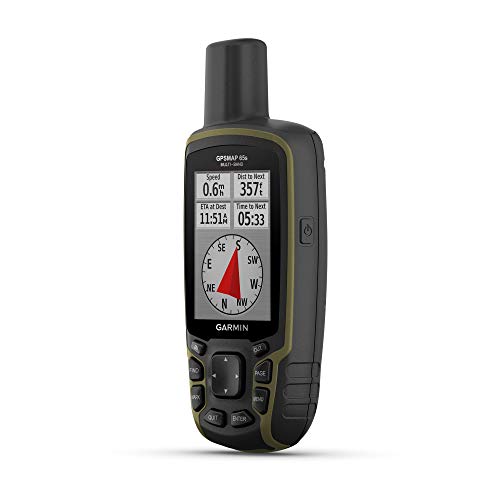
The GPSMAP 65s feels built for paddlers who want more navigational confidence from a handheld. The button layout keeps operation steady in wet weather, and the added altimeter and compass help you read terrain and direction without leaning only on the screen.
Its expanded satellite support and multi-band technology make it the most feature-dense handheld in this roundup. The trade-off is obvious, though, because more capability usually means more setup and more menu depth than a simple canoe day trip requires.
Positives
- Altimeter helps you read elevation changes on shore crossings.
- Compass adds another layer of orientation.
- Multi-band technology strengthens its navigation toolkit.
- Button operation suits damp conditions well.
- 2.6-inch color display keeps the unit compact.
Softer Spots
- More features can mean more menu work.
- It feels more advanced than a casual paddling day usually needs.
- Small-screen handheld styling still limits how much you see at once.
Technical Sheet
Made For
Route-focused paddlers and backcountry trip planners will get the most value from this level of detail.
Where Shoppers Go Wrong
Garmin GPS 73 is the easier match for canoeists who only want basic navigation and do not need extra sensors.
This one sits outside the usual canoe GPS lane, but it can still make sense for transport or storage tracking around your paddling setup. The magnetic case and battery make it easy to place on a vehicle or trailer, which is useful for keeping tabs on gear while you’re moving between launch points.
The subscription requirement changes the value equation, so this is less about water navigation and more about ongoing tracking. That makes it a niche choice for people who want monitoring rather than route guidance, and it pairs poorly with the handheld units above for actual canoe use.
Reasons To Buy
- Magnetic case helps with quick placement.
- Real-time tracking supports vehicle or trailer monitoring.
- Waterproof housing is useful around wet outdoor gear.
- Geofencing and speed alerts add monitoring detail.
Trade Offs
- Subscription adds an ongoing ownership layer.
- Not a canoe navigation tool in the usual sense.
- Best suited to tracking gear, not planning a river route.
Feature Card
Perfect Match For
Paddlers who also want to monitor a trailer, vehicle, or stored gear will find a narrow use case here.
Not Your Match When
Garmin eTrex SE is the clearer choice for anyone who wants a true handheld navigation device for canoe trips.
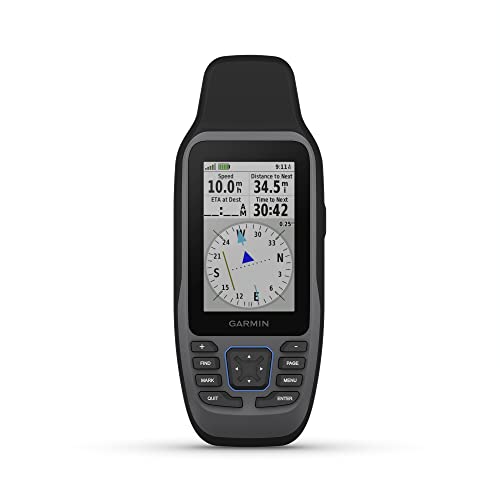
The GPSMAP 79sc leans hard into marine use, and that gives it a clear place in canoeing for coastal paddles, big water crossings, and chart-heavy trips. It comes preloaded with BlueChart g3 coastal charts, which helps you move from basic location awareness into something closer to route reading.
Its rugged body and float-friendly design suit wet outdoor work, but the marine focus can feel more specialized than the plain handheld eTrex line. For canoeists who split time between open water and shoreline navigation, that specialization is useful, though not everyone will need this much chart support.
Standout Traits
- Preloaded coastal charts help with marine route awareness.
- Floats in water, which is comforting around the boat.
- Rugged design suits wet outdoor handling.
- Feels well matched to coastal canoeing.
Honest Caveats
- Marine focus may be more than casual lake paddling needs.
- Chart-heavy design can feel specialized.
- Not as streamlined as the simpler handheld options.
Spec Overview
Who Will Love This
Coastal canoeists and paddlers who cross exposed water will appreciate the marine chart focus most.
Consider Something Else When
Garmin GPS 73 fits better for simple lake or river trips where you only need basic handheld guidance.
How To Choose The Right Gps For Canoeing
Screen Size Versus Deck Space
A canoe rarely gives you much flat real estate, so screen size matters more than it would on a bigger boat. A compact handheld like the Garmin GPS 73 or eTrex SE keeps clutter down, while a 7-inch unit like the Striker Vivid 7cv asks for more room and more attention. The right answer depends on whether you want quick location checks or a display you can read from across the boat.
Button controls usually make sense in wet conditions because you are not relying on a slick touchscreen. That is why the eTrex and GPSMAP handhelds feel natural for paddling, while the Striker Cast works better when your phone or tablet is already part of your setup. Small gear can feel a bit like a pocket compass beside a wall map, but that simpler shape is often exactly what canoe travel needs.
Battery Life And Trip Length
Day paddles and weekend loops call for very different endurance. The eTrex SE stands out here with its up-to-168-hour figure, while the Striker Cast’s 10-hour battery makes more sense for a short fishing session than a multi-day route. You want the device to outlast your trip, not become another thing you manage mid-paddle.
Longer trips also reward units that are easy to power and easy to stash dry. A smaller handheld slips into a pack pocket more cleanly than a larger marine display, and that matters once you’re carrying across portages or reorganizing gear on shore. For most canoe routes, steady endurance matters more than extra visual flair.
Navigation, Sonar, Or Tracking
Not every GPS here serves the same job, and that distinction matters before you spend money. The eTrex and GPSMAP handhelds handle general navigation, the Striker Vivid 7cv and Striker Cast add fishfinding support, and the Lightning GPS GL300 shifts into vehicle tracking instead of canoe guidance. Choosing the wrong category is the fastest way to feel underwhelmed.
For calm-water canoeing, a simple GPS with waypoint support usually covers the basics. Fishing-heavy trips benefit from sonar, while coastal paddling can justify chart support like the GPSMAP 79sc’s BlueChart g3 preload. Match the tool to the trip, not to the longest feature list.
Things Worth Knowing First
Common Shopping Slip Ups
Many paddlers overbuy display size and end up with more hardware than the canoe really needs. Others choose a tracker like the Lightning GPS GL300 and then realize it solves a different problem entirely. Start with the water you paddle most, then decide whether you need basic navigation, sonar, or marine charts.
Another common miss is ignoring handling in wet conditions. Button-based handhelds are usually easier to live with than devices that want a dry, careful touch. Storage also matters, because a unit that tucks neatly into a dry bag tends to get used more often.
The Upgrade Payoff
Higher-tier models cost more because they pack in extra sensors, larger screens, chart support, or more advanced satellite handling. The Garmin GPSMAP 65s, for example, adds an altimeter, compass, expanded satellite support, and multi-band technology, which is useful when route detail matters. That extra capability takes space and menu depth, so the payoff shows up most on complex routes.
You feel the upgrade most on longer trips, exposed water, or fishing outings where position detail and onboard tools save time. A simpler pick like the GPS 73 may be enough for easy lake paddling, while the GPSMAP 79sc earns its place on coastal water with preloaded charts. Pay up for features you will actually use, not for a longer spec sheet.
Final Thoughts
The best Gps For Canoeing choice depends on how much your trip asks of the device. A compact handheld suits casual lakes and river days, while the marine and sonar options make more sense once fishing or coastal navigation enters the picture. The Garmin eTrex SE and GPSMAP 65s cover the strongest handheld ground, and the GPSMAP 79sc fills a clear marine role. Pick the tool that fits your water, then let the rest stay simple.