
Outdoor antenna shopping gets easier once you separate true range claims from the details that affect daily use. You’re usually balancing roof or attic placement, coax length, mounting hardware, and how many TVs you want to feed from one setup. The right choice can mean steadier local channels with less fuss, while the wrong one can leave you climbing back up a ladder for a small fix. That’s why this list focuses on the practical stuff that matters at home.
Quick Look at the Shortlist
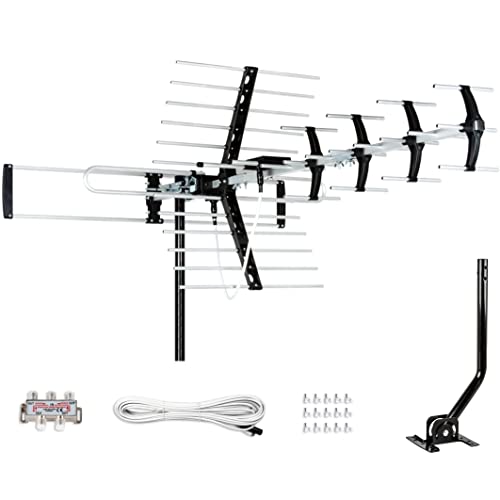
Five Star Outdoor HDTV Antenna 200 Mile Range

Five Star Outdoor HDTV Antenna 200 Mile Range

GE Outdoor HD Digital TV Antenna 33685

CeKay Outdoor Yagi HD Antenna with 40FT Cable

PIBIDI Outdoor TV Antenna UHD-8903

2026 Long Range Outdoor TV Antenna for Smart TV
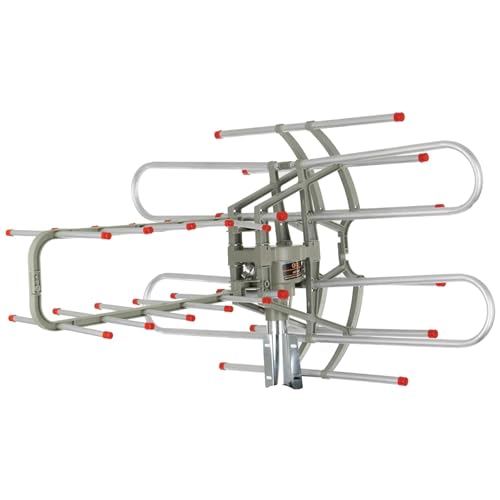
QFX ANT 106 HD DTV Outdoor Antenna
Tendodo HD Smart TV Antenna 33ft Cable
More Details On Our Top Picks
Five TVs from one antenna setup is the detail that makes this Five Star model feel more practical than the usual roof-only option. The included J mount and installation kit matter for anyone dealing with an attic line or a cleaner rooftop run, and that matters even more in a house where you don’t want a separate antenna for every screen.
The trade-off is that a broad reach claim still depends on your local broadcast layout, so the real value shows up in areas with decent tower access. For a family room plus bedrooms, that bundled approach can save a lot of extra hardware hunting, though the larger setup also asks for a little more planning during installation.
Strong Points
- Supports a shared setup for up to four TVs, which helps a whole house use one antenna feed.
- Includes the mounting pieces, so you’re not piecing together a roof or attic install from scratch.
- The attic-or-roof placement flexibility gives you more freedom around line of sight and cable routing.
- ATSC 3.0 readiness gives you a newer broadcast path for homes with compatible equipment.
- The 4K and 1080P support keeps it aligned with modern sets without adding extra complexity.
Things To Consider
- A larger outdoor install takes more care than a small indoor antenna, especially on a sloped roof.
- Long-range claims still depend on terrain, tower direction, and nearby obstructions.
- The bundle is helpful, but you still need to be comfortable with basic mounting work.
Feature Snapshot
Who It Suits Best
You’ll get the most from this pick in a home where several TVs share one antenna and attic or roof placement is already part of the plan.
A Better Fit Elsewhere
Five Star Outdoor HDTV Antenna 200 Mile Range with 40 ft cable is the cleaner choice for anyone who needs a longer pre-cut run between the antenna and the television.
This Five Star version keeps the same broad placement idea but swaps in a 40-foot RG6 coaxial cable, which is useful in homes where the TV isn’t close to the mounting point. RG6 means a common shielded coax type used for TV signal runs, and the extra length gives you room to route around corners instead of forcing a cramped setup.
That added cable makes it friendlier for attics and longer interior paths, though the longer run also means you’ll want to keep the cable path tidy. In practice, this is the more convenient sibling to Item 1 for a room that sits far from the roofline.
What We Like
- The included 40-foot cable helps in homes with awkward antenna-to-TV distances.
- Attic or roof placement keeps your options open around signal strength and visibility.
- The package is simple to understand, which helps first-time installers.
- Four TV support works for a household that wants one antenna to serve multiple sets.
Worth Noting
- Long cable runs can be neat and useful, but they also need careful routing.
- The stronger use case here is convenience, not a dramatic feature jump over Item 1.
- Outdoor mounting still asks for more effort than a compact indoor antenna.
Details At A Glance
Who Will Love This
You’ll appreciate this version most in a larger home or attic run where the antenna sits far from the main television.
Where A Sibling Pick Shines
Five Star Outdoor HDTV Antenna 200 Mile Range with J mount and installation kit is the better fit for a cleaner hardware bundle and a more complete mounting package.
The GE model leans on a Yagi-style layout, which means a directional antenna shape built to focus on a particular signal path instead of listening in every direction at once. That design can suit suburban setups where broadcast towers sit in a known direction, and it often feels less cluttered than bulkier multi-piece rigs.
Because the J mount is included, you can place it on the attic side or outside without gathering separate hardware first. It sits in the middle ground between the larger Five Star kits and the more weather-hardened CeKay pick, so it feels easy to recommend for a standard home install.
Highlights
- The Yagi shape helps concentrate reception toward the broadcast source.
- The included J mount keeps the install path simpler.
- Outdoor or attic placement gives you flexibility with appearance and signal direction.
- Support for 4K and 1080P makes it easy to pair with modern televisions.
Points To Note
- Directional antennas work best when you already have a rough idea where towers sit.
- Less flexible placement can be a drawback in homes with signal coming from several directions.
- Weather-resistant housing helps, but outdoor gear still benefits from periodic inspection.
Core Details
Whose Shelf It Belongs On
You’re a strong match for this pick when you want a straightforward directional antenna for a typical house with one main tower direction.
Skip It When
PIBIDI Outdoor TV Antenna UHD-8903 is the better route for anyone who wants a more generic long-range option with less concern about directional setup.
CeKay’s all-metal build is the kind of detail that matters more than flashy marketing language. Metal construction tends to suit rooflines and exposed mounts because it feels better matched to heat, rain, wind, and snow, and the 40-foot RG6 cable with J mount gives the package a more complete start.
You may find it especially useful in an RV or on a roof where the antenna needs to stay steady through changing weather and movement. Compared with the GE model, this one reads as more rugged and a bit more purpose-built for outdoor exposure, though that extra metal also means less of a lightweight feel.
Bright Spots
- All-metal construction suits outdoor placements that face more weather.
- The 40-foot RG6 cable gives you real room for routing.
- The included J mount helps turn the package into a ready-to-install kit.
- Support for several HD formats keeps it useful with modern televisions.
- Its RV-friendly positioning broadens the use case beyond a fixed home roof.
Room For Improvement
- The sturdier feel can come with a slightly less forgiving install.
- Outdoor hardware still needs occasional checking for wear at connection points.
- It’s more about durability than compact convenience.
Spec Overview
Best Suited To
You’ll like this most when weather exposure and a more solid-feeling build matter as much as signal reception.
Look Elsewhere When
QFX ANT 106 HD DTV Outdoor Antenna is the better match for anyone who wants a rotating head instead of a fixed directional setup.
PIBIDI keeps the formula simple, which is useful when you want a long-range outdoor antenna without a lot of extra parts or unusual mounting ideas. The main appeal here is a broad, standard-use shape for homes that want to catch local signals from outside the walls and roofline.
Compared with the feature-heavy Aimto-Pro pick, this one feels like the quieter option for a straightforward setup. That can be a strength for someone who wants a clean install and less fuss, though the trade-off is fewer distinct extras to lean on.
Reasons To Buy
- Broad long-range design fits typical outdoor OTA use.
- Support for 4K and 1080P keeps it current with modern sets.
- Works across VHF and UHF, which covers the common broadcast bands.
- The simple package suits people who want a no-drama install.
Softer Spots
- It does not bring the extra hardware bundle seen on some rivals.
- Outcome still depends on tower direction and surrounding obstacles.
- Less information in the listing can make planning a little harder.
Feature Card
Who Should Grab It
You’re a good match for this antenna when you want a simple outdoor option and do not need a bundle full of extras.
Another Choice May Suit
2026 Long Range Outdoor TV Antenna for Smart TV is a stronger fit for homes that want support for two televisions from one installation.
This Aimto-Pro setup is the most modern-feeling item in the group because it pairs outdoor mounting with ATSC 3.0 support and two-TV use. ATSC 3.0 is the newer over-the-air broadcast standard, so that part matters most in homes that want to stay closer to current broadcast gear rather than buying for only today’s setup.
The complete set wording also makes it easier to picture the install, since you’re getting a mount pole and bracket in the package. Compared with PIBIDI, this one has a clearer multi-TV angle and a more future-facing broadcast note, though that extra feature set only matters where your local signal and equipment can use it.
Standout Traits
- ATSC 3.0 support gives it a more current broadcast profile.
- Support for two TVs helps keep one antenna central to the house.
- The included mount pole and bracket simplify planning.
- UHF and VHF compatibility covers the usual local channel mix.
Areas To Watch
- Newer broadcast support helps most when your local market uses it.
- Sharing one antenna between TVs still depends on proper placement.
- The larger bundle asks for a bit more install space than a bare antenna.
Technical Sheet
The Right Fit
You’ll appreciate this pick most in a home that wants a newer broadcast-ready antenna and plans to feed two TVs from one location.
Not Your Match When
Five Star Outdoor HDTV Antenna 200 Mile Range with J mount and installation kit is the cleaner choice for a household that needs support for up to four TVs.
The rotating head is the reason this QFX model stands apart from the fixed-angle antennas above it. A 360-degree swivel helps you aim toward different tower directions without redoing the whole mount, which can be useful in areas where local stations do not sit neatly in one line.
That flexibility has a catch, because a rotating outdoor antenna usually asks for a little more manual adjustment than a set-and-forget design. For a house with mixed signal directions, though, that trade-off is often worth it.
Plus Points
- The 360-degree rotation helps with tower aiming.
- UHF, VHF, and FM support widens the use case.
- The silver finish keeps the hardware visually simple.
- Outdoor placement gives you more freedom than a small indoor antenna.
Small Caveats
- Rotation adds flexibility, but it also adds another step during setup.
- People who want a fixed direction may prefer a simpler Yagi-style unit.
- As with any exterior antenna, weather exposure means occasional maintenance.
Core Details
Made For
You’re a good match for this antenna when your local stations come from more than one direction and you want to fine-tune aim by hand.
Reach For A Different Pick When
GE Outdoor HD Digital TV Antenna 33685 is the easier match for a more traditional directional setup with less moving adjustment.
Tendodo takes a slightly different path by pairing a 33-foot coax cable with signal-boosting hardware and an omnidirectional design. Omnidirectional means it can listen in all directions rather than needing a precise aim, which helps in homes where walls, trees, or odd roof angles make placement tricky.
The listing also calls out a strong magnetic base for metal surfaces, so you’ve got another mounting option beyond the usual bracket approach. Compared with QFX, this one feels more forgiving about placement, though the number of channels you get still depends on tower reach in your area.
What We Like
- The omnidirectional design cuts down on fuss during placement.
- The 33-foot coax cable gives more freedom around where the TV sits.
- The magnetic base can help on suitable outdoor metal surfaces.
- The signal-processing chip and dual boosters are useful in tougher layouts.
- Support for 8K, 4K, and 1080P keeps it broad in format support.
Honest Caveats
- More signal help doesn’t erase local tower limits or heavy blockage.
- Magnetic mounting works only where a metal surface is available.
- The broad feature set makes it a bit more involved than a bare-bones antenna.
Feature Rundown
Built With In Mind
You’ll get the most from this antenna in a tricky installation spot where broad reception and a longer cable help more than a narrow directional aim.
Where Shoppers Go Wrong
Five Star Outdoor HDTV Antenna 200 Mile Range with J mount is the better fit for homes that want a more traditional roof or attic package with a bundled install kit.
How To Choose The Right Hd Outdoor Antennas
Signal Reach Starts With Your Location
Range claims matter, but they do not work alone. Hills, trees, neighboring roofs, and the distance to the towers all shape what shows up on your screen, so a long-range label should be treated as one piece of the plan. A directional model such as the GE or CeKay style usually suits a known tower direction, while an omnidirectional unit like Tendodo gives more flexibility in messy layouts.
Mounting Style Changes Daily Use
Roof mounts, attic mounts, and all-metal outdoor builds each solve a different problem. An attic install looks cleaner and keeps hardware sheltered, but a roof mount often has a clearer shot at the signal, especially in dense neighborhoods. Kits that include a J mount, bracket, or pole save you from piecing together extra parts, and that matters most for first-time installers who want fewer moving pieces.
Cable Length And TV Count Affect Convenience
A short antenna cable can box you into awkward room layouts, while a longer coax run helps when the TV sits far from the mount point. RG6 coax is the common shielded cable used for TV signal paths, and it’s especially useful when the antenna is outside and the television is deep inside the house. Multi-TV support is another real convenience, because feeding several sets from one antenna often feels better than mounting separate units around the property.
Broadcast Features Are Worth A Closer Look
ATSC 3.0 support, 4K and 1080P compatibility, and VHF UHF coverage all speak to how well the antenna lines up with current broadcasts. Newer tuner support matters most in homes that want to stay current for a while, while the basic band coverage matters everywhere local stations still live on mixed frequencies. For most setups, the best fit is the model that matches your towers, your house layout, and how many screens you want to serve.
A Quick Reality Check Before You Choose
Common Shopping Slip Ups
A lot of people focus on the biggest range number and skip the rest. That’s where trouble starts, because a strong outdoor antenna still needs the right direction, the right mount, and enough cable to reach the TV without strain.
Another common miss is underestimating install effort. A roof setup with a J mount or pole is more involved than a small indoor stick, so the cleaner-looking option is not always the easier one.
The Upgrade Payoff
Higher-tier antennas usually cost more because they add better mounting hardware, stronger build materials, longer cables, or multi-TV support. In this category, that extra spend often makes sense for homes with harder signal paths, exposed rooflines, or several televisions sharing one source.
You also pay for flexibility. A rotating model, an ATSC 3.0-ready unit, or a bundled kit can save a second trip to the hardware store, and that convenience has real value when the install sits on a high roof or in a cramped attic.
Frequently Asked Questions
What makes outdoor antennas better than indoor ones?
Outdoor antennas usually clear walls, windows, and appliances that can weaken reception. That extra placement freedom often matters more than raw range claims.
Do I need a directional antenna?
Directional antennas suit homes that know where the broadcast towers sit. They can be a better fit than omnidirectional models when signal direction is fairly consistent.
What does ATSC 3.0 mean?
ATSC 3.0 is a newer over-the-air broadcast standard. It matters most if you want an antenna that lines up with newer broadcast gear and compatible televisions.
How many TVs can one antenna support?
That depends on the model. Some picks here are built for one or two TVs, while the Five Star model is set up to serve up to four.
What should you check before mounting outside?
You should check roof access, cable length, tower direction, and the hardware included in the box. A tidy install starts with knowing where the antenna will sit and how the cable will reach the TV.
Final Thoughts
The best Hd Outdoor Antennas for your home come down to layout, tower direction, and how much install work you’re willing to handle. A bundled Five Star kit suits a multi-TV house, the GE and CeKay picks make sense for traditional outdoor installs, and Tendodo helps when placement is awkward. Shortlist the model that fits your roofline and your room count, then match the cable and mount to the path you already have. That usually leads to a smoother setup and fewer surprises later.