

You want local channels without paying for a stack of monthly subscriptions, and you also want the setup to make sense in a real room, on a roof edge, or beside a living room window. That’s the space these Hdtv Antenna Indoor Outdoors picks cover. Some are simple indoor options, others lean outdoor and need better placement, and a few help clean up signal noise instead of acting like a full antenna on their own.
The mix matters because location shapes reception more than flashy wording does. A strong amplifier, a long coax cable, an omnidirectional pattern, or an LTE filter can make the difference between a stable channel list and a frustrating scan that keeps coming up short.
Quick Shortlist For Cleaner TV Reception

Fronguld 2025 TV Antenna Indoor Antenna
BEIMQN 2026 TV Antenna for Digital TV
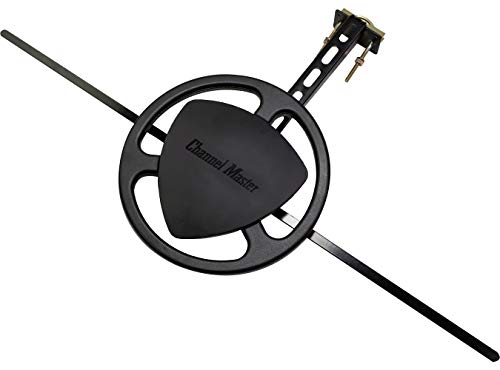
Channel Master Omni+ 50 HDTV Antenna

Saillong 4G 5G LTE Filter for TV Antenna
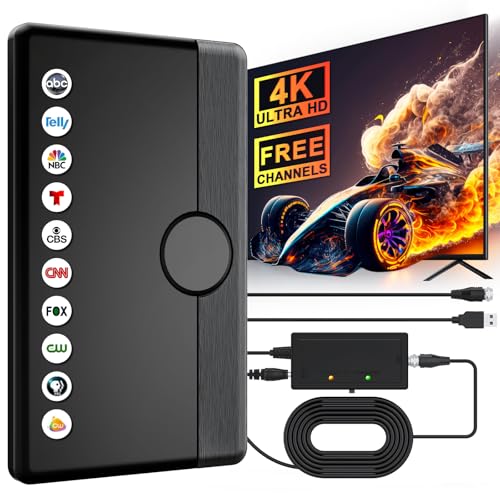
iGENJUN TV Antenna Indoor Outdoor 2025
Tendodo TV Antenna for HD Smart TV
nelapsano 2026 TV Antenna 5000+ Miles
Tegnat 5000+ Miles Range TV Antenna
More Details On Our Top Picks
Fronguld leans hard into reach, which makes sense for homes that sit farther from the broadcast source. The built-in amplifier, or signal booster, is meant to strengthen the incoming TV signal before it reaches your set, and that matters most in a house with split rooms or a window-only placement. The 16.5-foot cable gives you room to move the antenna around instead of forcing a fixed spot.
The claim about 360-degree reception points to broader signal pickup, so placement is less fussy than with a directional antenna. That said, very long-range marketing still depends on local terrain and tower distance, so a tall building, thick walls, or stormy weather can change real results. You benefit most when you want a simple indoor-outdoor option and don’t want a complicated install.
Highlights
- Amplifier support helps in tougher reception spots.
- 16.5-foot cable gives you better placement freedom.
- 360-degree pickup suits rooms where tower direction changes.
- Indoor and outdoor use adds flexibility across seasons.
- Wall, window, or desktop placement keeps setup simple.
Things To Consider
- Very distant towers can still limit channel counts.
- Outdoor placement usually means more attention to mounting.
- Performance can vary in areas with heavy signal clutter.
Feature Snapshot
Who It Suits Best
People in mixed-reception homes, especially where the TV sits away from the clearest window, are the best match for this pick.
A Better Fit Elsewhere
Channel Master Omni+ 50 suits you better when you want a more installation-focused outdoor setup with a mounting bracket for roof, attic, or RV use.
This BEIMQN model stands out as the most flexible kind of antenna, the sort that works whether your setup stays indoors or moves outside later. Its wider-reach framing suggests a design aimed at broader pickup, which helps in suburban homes where channels are present but not always easy to lock in. You’ll likely appreciate that adaptability more than any flashy claim.
Compared with Fronguld’s cable-first approach, this one reads as a simpler all-purpose option for people who want fewer moving parts. The trade-off is plain enough: broader reach language does not erase the usual limits of distance, walls, and tower layout. It fits best for a straightforward TV corner, especially when you want one antenna to cover a few different placements over time.
Strong Points
- Indoor-outdoor design gives you placement flexibility.
- Wider signal reach suits homes with moderate distance from towers.
- Supports modern TV resolutions up to 8K and 4K by source listing.
- Simple format works well for plain setups.
Room For Improvement
- Broader reach claims still depend on local broadcast strength.
- Source details are light, so mounting and cable specifics are unclear.
Core Details
Built With In Mind
Space-conscious households that want one antenna for multiple placement options will get the most out of this model.
Skip It When
Channel Master Omni+ 50 is the better fit for you when a fixed roof, attic, or RV mounting setup matters more than broad indoor flexibility.
Channel Master takes a more installation-ready route than the simple indoor picks above. The omnidirectional design means it gathers signals from around the antenna rather than asking you to point it carefully, and that can be a real relief for attic or rooftop mounting. For RV use, that less-fussy layout makes travel setups easier to live with.
The included bracket is the practical part here, since you can attach it to a wall, mast pole, or an existing satellite mount. Compared with Fronguld or BEIMQN, this one feels more anchored to permanent placement than casual room hopping. You may find the 50-plus-mile range useful, though actual channel access still depends on where towers sit relative to your home.
Positives
- Omnidirectional pickup reduces the need for fine aiming.
- Mounting bracket supports wall, mast, and satellite mount setups.
- Indoor and outdoor compatibility covers more install styles.
- Works with HDTV and 4K televisions.
- Good fit for attic, roof, and RV use.
Softer Spots
- Mounting takes more planning than a tabletop antenna.
- Range claims still depend on your local terrain and tower map.
- Less portable than the cable-heavy indoor models.
Technical Sheet
Right Fit For
Homeowners or RV travelers who want a more permanent antenna setup will get the cleanest match here.
Where Shoppers Go Wrong
iGENJUN is the better pick for you when you want a longer coax run and a more room-friendly indoor-outdoor layout.
This Saillong filter is not a full antenna, and that distinction matters. It sits in the signal path to help trim down 4G and 5G LTE noise, which is useful in neighborhoods where wireless traffic or nearby devices can muddy reception. For a finicky setup, a small filter like this can feel like tidying a messy cable drawer, not dramatic, just useful.
Because its job is narrow, it pairs well with another antenna from this list rather than standing alone. The 5 to 608 MHz frequency span gives you a clear sense of the signal window it works within, but the real value shows up only when interference is the problem you are trying to solve. It suits cable-conscious owners who want to clean up an existing setup instead of replacing everything.
Upsides
- Targets LTE noise rather than forcing a full antenna swap.
- Works indoors or outdoors in a small inline role.
- Useful for homes near busy wireless environments.
- Compact form keeps installation simple.
Points To Note
- Needs an existing antenna setup to matter.
- Won't help much when tower distance is the main issue.
- Best used as a support piece, not a standalone fix.
Feature Rundown
Who Will Love This
Owners who already have a decent antenna but keep seeing noisy reception are the best match for this filter.
Another Choice May Suit
Fronguld 2025 TV Antenna Indoor Antenna suits you better when you need a full antenna with amplifier support instead of a signal filter alone.
iGENJUN brings together a 26.2-foot coax cable, indoor-outdoor use, and 360-degree reception, which makes it a comfortable fit for rooms where the TV and the best antenna spot are far apart. That longer coax cable, meaning the line that carries the signal from the antenna to the TV, helps you place the antenna where reception is stronger without crowding the screen area. It also helps older TV rooms where furniture blocks the obvious window spot.
The source notes about scanning and tuner compatibility are useful because they reflect the real setup path. Most TVs made after 2007 include an HDTV tuner, but a quick channel scan still matters, and older sets may need a digital converter box. Compared with BEIMQN, this one gives you more concrete cable length, which is handy when the room layout is awkward.
Bright Spots
- 26.2-foot coax cable gives you real placement flexibility.
- 360-degree reception works well in less predictable rooms.
- Indoor-outdoor use suits changing placement needs.
- Source guidance on scanning helps you set expectations.
- Supports 8K, 4K, and 1080p by listing.
Areas To Watch
- Setup still depends on local broadcast availability.
- Older TVs may need a separate converter box.
- Long cable runs can take more tidy cable management.
At A Glance
Made For
Apartment setups, spare rooms, and mixed-generation TV spaces are the strongest match for this antenna.
Look Elsewhere When
Channel Master Omni+ 50 suits you better when a roof, attic, or RV bracketed installation matters more than a long indoor cable run.
Tendodo reads like the pick for harder-to-reach signal conditions, especially where walls, hills, trees, or metal frames get in the way. The magnetic base is a useful touch because it lets the antenna attach to an outdoor metal surface, which can open up a cleaner line to the broadcast source. That sort of placement flexibility matters more than flashy range wording.
The dual low-noise boosters and digital signal processing chip are aimed at trimming loss from minor obstructions, so the antenna is trying to preserve usable local channels rather than relying on luck. Compared with iGENJUN, this one feels more outdoor-minded and better suited to a sturdier mounting spot. You may find the 33-foot coax cable especially helpful in larger homes where the clearest spot sits far from the TV.
Reasons To Buy
- Magnetic base helps you secure it to metal surfaces.
- Dual low-noise boosters support steadier reception in cluttered spots.
- Outdoor mounting can bypass walls and other shielding barriers.
- 33-foot coax cable gives you generous routing room.
- Indoor-outdoor use keeps placement options open.
Minor Gripes
- Outdoor mounting may take extra planning and cable care.
- Reception still depends on how blocked your location is.
- The strongest results usually need a thoughtful setup spot.
Details At A Glance
The Right Fit
Homes with blocked windows, outdoor mounting options, or long cable routes are where this antenna makes the most sense.
Swap It Out When
BEIMQN 2026 TV Antenna for Digital TV is a better fit for you when you want a simpler all-purpose antenna without the more outdoor-leaning setup.
nelapsano takes the broad-compatibility path, which is useful when your house has more than one kind of screen or digital device in play. The signal booster is the key piece here, since it aims to help the antenna collect and shape incoming channels for smart TVs and older displays alike. That makes it appealing for households that don’t want to keep separate setups for every room.
Compared with Tendodo, this one sounds more general-purpose and less focused on outdoor mounting tricks. The 5000-plus-mile claim is clearly marketing language, so the better way to judge it is by the practical parts, like support for indoor and outdoor placement and the wide device compatibility. For a mixed-media living room, that broad fit can matter more than a single spec headline.
Standout Traits
- Works with smart TVs and digital devices.
- Indoor and outdoor installation gives you placement choice.
- Signal booster support may help in weaker spots.
- Supports 8K, 4K, and HDTV use cases.
Honest Caveats
- Range wording is more promotional than practical.
- Source details are thin on cable and mounting specifics.
- General-purpose design may feel less specialized than roof-ready models.
Spec Overview
Whose Shelf It Belongs On
Households with several TVs and mixed device needs are the clearest match for this model.
Reach For A Different Pick When
Channel Master Omni+ 50 is the smarter fit for you when you want a more mounting-oriented antenna for roof, attic, or RV placement.
Tegnat closes the list with the longest coax cable in the group, which gives you serious placement freedom in a bigger room or an awkward layout. The 360-degree reception and strong amplifier framing suggest a pick built for people who want more room to experiment with placement without moving the TV itself. That’s especially useful in family rooms where the best wall and the best screen location are never the same spot.
Compared with nelapsano, this one feels a bit more focused on practical indoor-outdoor placement than broad device talk. The 38-foot cable makes it easier to separate the antenna from the television, and that can help in real homes where windows, furniture, and wall spacing all fight for space. It suits you best when signal hunting feels more like arrangement than simple plug-and-play.
Best Bits
- 38-foot coax cable gives you the most room in this group.
- 360-degree reception helps with flexible placement.
- Strong amplifier support suits tougher reception environments.
- Indoor-outdoor design handles changing setup needs.
- Works with smart and older TVs by listing.
Small Caveats
- Long cable runs may need neater routing.
- Large-reach wording still depends on your local broadcast map.
- Best results usually come from a careful placement pass.
Core Details
Perfect Match For
Large rooms, split-floor homes, and setups that need a long cable are the best fit for this antenna.
Where A Sibling Pick Shines
iGENJUN TV Antenna Indoor Outdoor 2025 is the better fit for you when a slightly shorter cable and a more value-focused setup feel easier to manage.
How To Choose The Right Hdtv Antenna Indoor Outdoors
Signal Reach Starts With Geography
Broadcast towers, hills, trees, metal siding, and nearby buildings shape reception more than marketing language does. A home in a flat suburb has different needs than a place tucked behind tall trees or a dense apartment block. That’s why long-range claims should be treated as a rough guide, not a promise.
Direction matters too, unless you’re leaning toward an omnidirectional design that gathers signals from around the antenna. Omnidirectional means it does not need precise aiming, which helps in homes where the best placement spot changes from room to room. Directional models can still be useful, but they ask more from installation.
Placement Is Often The Real Upgrade
Indoor-outdoor flexibility sounds simple, yet the practical benefit comes from placement freedom. A longer coax cable, a wall mount, or a rooftop bracket can move the antenna closer to a cleaner signal path while the TV stays where it belongs. That matters in living rooms, attic installs, RVs, and spare bedrooms alike.
Think about the room first, then the antenna. A window-facing setup may be enough in one house, while another needs outdoor mounting to get past thick walls or a metal frame. The right choice is the one that fits your space without turning setup into a weekend project.
Noise, Boosters, And Filters Have Different Jobs
An amplifier or signal booster strengthens the signal before it reaches your TV, which can help in weaker reception areas. An LTE filter works differently, trimming wireless noise from nearby mobile signals so the antenna line stays cleaner. Those are not the same fix, and it helps to know which problem you’re actually solving.
That distinction saves money and frustration. A weak signal usually calls for better placement or a stronger antenna, while noisy reception may respond better to filtering. In some homes, you’ll end up using both.
Set Expectations Around TV Compatibility
Most modern televisions include a built-in HDTV tuner, which is the part that receives over-the-air channels. Older sets may need a digital converter box, and a quick channel scan after setup is still part of the process. That scan matters because it stores whatever channels the antenna can actually pull in.
Also watch the resolution language, since 4K, 8K, and 1080p support on an antenna listing doesn’t create those broadcasts. It simply means the antenna is built to work with today’s TV formats. For most homes, a clean channel list matters more than a dramatic range claim.
Before You Click Buy
Mistakes Worth Dodging
One common slip-up is choosing a long-range antenna without checking the tower map first. Another is placing an indoor antenna behind thick walls or a metal window frame, then assuming the antenna itself is the problem. A careful look at the room usually saves a lot of guesswork.
Another trap is buying a filter when the real issue is placement, or buying a full antenna when the setup only needs noise cleanup. The fix should match the problem. That sounds obvious, but it’s where a lot of installs go sideways.
Where The Extra Money Goes
Higher-tier models tend to cost more because of better mounting hardware, stronger signal processing, longer cable runs, or broader placement flexibility. You’re also paying for convenience in stubborn spaces, where a small upgrade can save time and trial-and-error. In practical terms, that means less fuss when your TV sits far from the best window.
The upgrade makes sense for larger homes, attic installs, RV use, or places with weak but usable local signals. For a simple apartment near a strong broadcast area, a modest model often does enough. The key is matching the hardware to the room, not to the loudest wording on the page.
Frequently Asked Questions
Do indoor-outdoor antennas work better outside?
Outside placement often clears away walls, metal frames, and furniture that can block signal paths. That said, an outdoor setup still depends on tower distance and mounting location.
What does omnidirectional mean?
Omnidirectional means the antenna can gather signals from many directions instead of needing a precise aim. That helps in homes where the strongest signal path is not easy to predict.
Do you need a special TV for these antennas?
Most newer TVs already include an HDTV tuner, which is the key part for over-the-air reception. Older sets may need a digital converter box before channel scanning will work.
Why would you use an LTE filter with an antenna?
An LTE filter helps reduce wireless signal noise that can muddy reception near busy mobile networks. It works as a support piece, not as a replacement for an antenna.
Why does coax cable length matter so much?
A longer coax cable lets you place the antenna in a better spot without moving the TV. That extra reach is especially handy in large rooms, attic setups, and awkward layouts.
Final Thoughts
The right Hdtv Antenna Indoor Outdoors choice depends less on hype and more on your space, your tower distance, and how much placement freedom you need. Fronguld and iGENJUN suit flexible home setups, Channel Master feels more installation-ready, and Saillong fills a different role by cleaning up interference rather than acting as the antenna itself. For bigger rooms or more stubborn signal paths, Tendodo and Tegnat give you extra cable length and stronger placement options. Pick the model that matches your room first, and the channel list usually follows.