
You want shade that stands up to gusts, shifting sand, and a day that runs longer than planned. The right heavy-duty beach umbrella does more than block sun, it keeps your setup calmer, cooler, and less fussy to manage. This roundup focuses on sturdy frames, carry-friendly designs, and the details that matter once you’re hauling gear across a hot lot or settling in for a long afternoon by the water.
The Shortlist At A Glance

Tommy Bahama 6′ UPF 50+ Tilt Beach Umbrella

AMMSUN Shade Umbrella, 6.5ft Portable Canopy
Tempera Heavy Duty High Wind Beach Umbrella

Solbello Shade, Wind-Driven Beach Umbrella

Midtown Umbrellas 9 Ft Patio Umbrella, Cobalt Blue

Midtown Umbrellas 9 Ft Patio Umbrella, Forest Green

Midtown Umbrellas 8 Ft Patio Umbrella, Ivory White

Ayge Patio Umbrella 9 FT Outdoor Table Umbrella, Red
More Details On Our Top Picks
A 6-foot canopy keeps this Tommy Bahama pick on the more portable side, which helps when you’re carrying chairs, coolers, and everything else across soft sand. The tilt feature matters because it lets you angle shade without dragging the whole setup around, and the integrated sand anchor gives it a more grounded feel than a plain pole-only umbrella.
That smaller span is the trade-off, so it suits solo beach trips or two-person setups better than a crowd. The carry bag also makes storage simpler, though the narrower canopy means you’ll want to keep expectations realistic for long, wide patches of shade.
Strong Points
- Integrated sand anchor adds setup confidence in loose beach sand.
- Wind vent helps air move through the canopy instead of piling up underneath.
- Tilt adjustability gives you more control as the sun shifts.
- 6-foot size stays manageable for transport and packing.
Things To Consider
- The canopy size is modest for family-sized setups.
- Smaller coverage means you may need to reposition during the day.
- Light carry convenience usually comes with less shade real estate.
Feature Snapshot
Who It Suits Best
You’re the right fit for this one if you want a lighter beach umbrella for day trips, quick packing, and simple shade over a chair or towel.
A Better Fit Elsewhere
Tempera Heavy Duty High Wind Beach Umbrella suits you better when you want a more wind-focused setup and a larger-feeling presence on open shoreline.
AMMSUN takes a different route from the sand-anchor style umbrella above, because the included stand makes it feel more at home beside sporting events and hard-packed outdoor spots. The 6.5-foot canopy gives you a touch more coverage than Tommy Bahama’s smaller profile, and the free-standing design means less dependence on digging into the ground.
That convenience helps in mixed-use settings like sidelines, picnic areas, or paved edges near the beach. The honest trade-off is that a freestanding setup usually asks more from its base than a sand-anchored pole, so this one rewards calm conditions and steady placement.
What We Like
- Freestanding design gives you more placement flexibility.
- 6.5-foot canopy adds a bit more covered space.
- Lightweight build makes transport easier across parking lots and fields.
- Works well for sporting games and similar daytime setups.
- Easy carry profile suits quick-moving outings.
Softer Spots
- The stand-based format depends on a solid setup surface.
- Less beach-specific than the sand-anchor options in this roundup.
- In breezier spots, you may want to place it with extra care.
Core Details
Made For
You’ll like this most for sporting sidelines, park meetups, and outdoor spots where a stand matters more than a beach anchor.
Where A Sibling Pick Shines
Tommy Bahama 6′ UPF 50+ Tilt Beach Umbrella fits you better for loose sand and a simpler carry-to-shade routine.
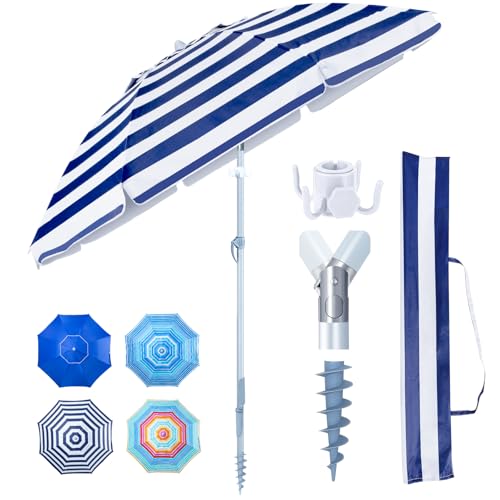
Tempera leans harder into wind-focused beach use than the first two picks, with an aluminum frame, a push-button tilt mechanism, and a sand anchor that helps it settle in more securely. UPF 60+ is also a step up in stated sun protection from the Tommy Bahama and Solbello entries, which matters for long, open stretches where shade has to work all afternoon.
The carry bag keeps the package practical, though the trade-off with a sturdier build is usually a bit more weight or bulk in transit. For most shoreline setups, this is the kind of umbrella that makes sense when wind is part of the plan, not just an occasional annoyance.
Bright Spots
- High-wind focus makes it a strong fit for breezier beaches.
- Aluminum frame keeps the structure light relative to heavier metal builds.
- Push-button tilt lets you angle shade without much fuss.
- UPF 60+ gives the canopy a strong stated sun shield.
- Carry bag helps the setup stay manageable between outings.
Small Caveats
- Sturdier beach gear can take up more room in the car.
- Push-button parts are handy, but they add another moving piece to maintain.
- The more wind-ready build may feel like extra umbrella for calm, short trips.
Feature Rundown
Whose Shelf It Belongs On
You’re the right match for this one if your beach days often involve open sand, steady wind, and longer stretches under shade.
Look Elsewhere When
AMMSUN Shade Umbrella, 6.5ft Portable Canopy suits you better for sidelines and hard-packed spots where a stand matters more than a beach anchor.
Solbello is the most unusual shape in the group, and that’s exactly why it stands apart. Its wind-driven idea is meant to be simpler to set up and less prone to the usual beach-umbrella struggle, while UPF 50+ keeps it grounded in everyday shade duty.
That design may appeal most to you when you want less fiddling and a lighter carry from car to shore. The trade-off is straightforward: a more distinctive system can feel less familiar than a classic pole umbrella, so it suits practical experimenters more than traditionalists.
Reasons To Buy
- Wind-driven concept gives it a different approach from standard pole umbrellas.
- Lightweight setup keeps hauling simpler.
- UPF 50+ gives you solid stated sun coverage.
- Easy setup should suit casual beach routines.
Areas To Watch
- Its design is less familiar than the usual sand-anchor format.
- Some beachgoers will prefer the more traditional feel of a classic pole model.
- Lightweight gear still asks you to place it thoughtfully in wind.
Details At A Glance
Perfect Match For
You’re the best fit for this umbrella if you like lightweight gear and don’t mind a less conventional shade setup.
Reach For A Different Pick When
Tempera Heavy Duty High Wind Beach Umbrella makes more sense for you if you want a classic beach-umbrella layout with a sand anchor and aluminum frame.
This Midtown model shifts away from portable beach-first design and leans into a larger patio umbrella format, which is useful when you want steady shade around a deck, pool, or backyard seating area. The 9-foot canopy gives you a broader coverage zone, and the auto-tilt frame helps you angle that shade without a lot of handling.
Terylast fabric is the headline material here, and the 10-year no-fade claim points to a canopy built for longer visual life than simple throwaway patio fabric. The honest read is that it suits fixed outdoor spots better than carry-heavy beach days, but that bigger footprint pays off when shade has to cover more than one chair.
Highlights
- 9-foot canopy gives broad coverage for seating areas.
- Auto-tilt feature helps you redirect shade with less effort.
- Eight reinforced ribs add structure to the frame.
- Terylast fabric is aimed at longer-lasting color retention.
- Cobalt blue finish gives the umbrella a crisp, polished look.
Points To Note
- Patio-style dimensions are less travel-friendly than smaller beach umbrellas.
- The larger canopy makes storage and maneuvering more demanding.
- Best suited to a fixed setup rather than a walk-up sand carry.
Quick Facts
Built With In Mind
You’re the best fit for this umbrella when your shade stays in one place and needs to cover a deck, pool edge, or backyard table.
Swap It Out When
Tempera Heavy Duty High Wind Beach Umbrella fits you better for sand-based outings and a more beach-specific setup.
This forest green version keeps the same 9-foot, auto-tilt Midtown layout, but the color gives it a softer, more traditional outdoor look. That matters more than people expect in a yard or pool area, because the umbrella becomes part of the space, not just a patch of shade.
Like the cobalt blue sibling, it uses Terylast fabric and eight reinforced ribs, so the structure and fabric story stays consistent. The difference is mostly visual, which makes this a sensible choice for anyone who wants the same feature set with a quieter finish.
Upsides
- 9-foot span provides generous shade for lounge or dining areas.
- Auto-tilt helps you adjust coverage as the sun moves.
- Terylast fabric is positioned for longer color retention.
- Forest green tone blends easily into most outdoor spaces.
- Eight reinforced ribs support the broad canopy shape.
Room For Improvement
- The larger format is less convenient for frequent moving.
- Poolside and deck use fits it better than beach carry use.
- The visual difference from the cobalt version is the main distinction.
At A Glance
Who Should Grab It
You’re the right fit for this one if you want a dependable patio umbrella in a color that blends into a garden or pool area.
Another Choice May Suit
Midtown Umbrellas 8 Ft Patio Umbrella, Ivory White makes more sense for tighter seating areas that need a smaller footprint.
This is the easiest Midtown umbrella to place in tighter outdoor areas, because the 8-foot canopy trims the footprint without dropping the core feature set. You still get the auto-tilt frame, Terylast fabric, and eight reinforced ribs, so the smaller size is about fit, not a stripped-down build.
Ivory white also changes the feel in a useful way, especially around bright patio furniture or neutral décor. The trade-off is straightforward: less canopy width means less covered ground, but that can be exactly what you want for a breakfast table or compact lounge corner.
Best Bits
- 8-foot size fits smaller patios and cozy seating areas.
- Auto-tilt adds flexibility without complicating the design.
- Terylast fabric brings the same longer-life color aim as the larger Midtown models.
- Ivory white finish works well in bright, clean outdoor spaces.
- Eight reinforced ribs keep the canopy supported.
Honest Caveats
- Smaller span means less shared shade than the 9-foot versions.
- Ivory color may show dirt more readily in dusty yards.
- Like the other Midtown picks, it suits fixed placement better than transport-heavy use.
Feature Card
The Right Fit
You’ll get the most out of this one in smaller patios, narrow decks, or seating areas where a large canopy would feel too bulky.
Where A Sibling Pick Shines
Midtown Umbrellas 9 Ft Patio Umbrella, Forest Green suits you better when you want more overhead coverage for a larger gathering space.
Ayge leans into familiar patio umbrella territory, with a 9-foot canopy, fiberglass frame, eight ribs, tilt control, and crank operation. Fiberglass is worth paying attention to because it tends to be more forgiving than rigid metal in breezy conditions, which helps this model suit a backyard table or poolside seating without feeling overly formal.
The waterproof canopy and UPF 50+ rating make it useful for mixed weather and bright sun, though the red finish gives it more visual presence than the Midtown options. It makes sense for someone who wants a practical table umbrella first and a beach-leaning option second.
Positives
- 9-foot canopy covers a standard outdoor table well.
- Fiberglass frame adds a more flexible feel than many rigid alternatives.
- Tilt and crank controls keep daily use straightforward.
- UPF 50+ and waterproof canopy support mixed outdoor conditions.
- Red finish brings a brighter look to plain patio furniture.
Minor Gripes
- Table-style design is less beach-specific than the sand-anchor models.
- Bright red may feel bold in quieter outdoor spaces.
- Crank and tilt hardware can add a little maintenance over time.
Spec Overview
Who Will Love This
You’re the right fit for this umbrella if you want a table-ready canopy for a backyard, patio, or poolside setup.
Skip It When
Tempera Heavy Duty High Wind Beach Umbrella suits you better for sand-first trips where a dedicated beach anchor matters more.
How To Choose The Right Heavy Duty Beach Umbrellas
Frame Strength And Wind Behavior
A heavy-duty beach umbrella starts with the frame, because the pole and ribs do most of the work before the canopy ever blocks sun. Aluminum frames usually keep weight down, while fiberglass can add some flex, which helps in breezy conditions without making the setup feel stiff.
Wind venting also matters, because a vent lets air pass through instead of pushing the canopy like a sail. That matters most on open shoreline stretches, where a calm-looking morning can turn gusty by lunch.
Shade Size And Carry Comfort
Canopy size changes the whole experience. A 6-foot or 6.5-foot umbrella suits one chair, a towel, or a compact couple setup, while 8-foot and 9-foot models spread shade over more ground but take more effort to move and position.
That trade-off shows up the moment you walk from the car. A larger canopy feels more generous once it’s planted, yet a smaller one usually wins for quick trips and solo hauling.
Anchor Style And Setup Routine
Sand anchors, stands, and freestanding bases solve different problems. Sand anchors are the most beach-specific choice here, while a stand works better on firmer surfaces and a freestanding canopy gives you more placement options around sports fields or paved areas.
You should match the anchor style to the surface you use most often. A setup that feels simple on paper can get annoying fast when the ground, wind, or parking lot layout doesn’t suit it.
Sun Coverage And Everyday Use
UPF ratings help you compare stated shade protection, and higher numbers matter most during longer midday outings. The rating doesn’t replace good placement, but it gives you a clearer sense of how much sun the canopy is meant to handle.
A practical beach umbrella also needs a carry bag, tilt function, or crank only when those extras fit your routine. Extra hardware sounds helpful, but it should make the day easier, not turn setup into a small project.
What To Weigh Before You Buy
Hidden Buying Traps
The biggest mistake in this category is chasing size alone. A huge canopy sounds reassuring, yet it can be awkward in wind, harder to carry, and less pleasant to reset in soft sand.
Another common miss is ignoring where you’ll actually use it. Beach anchors, stands, and patio bases all behave differently, so the right structure for a shoreline trip may be the wrong one for a backyard table.
The Upgrade Payoff
Higher-tier models usually spend more on frame material, rib support, tilt hardware, and fabric quality. Those details matter because they affect how the umbrella feels after repeated folding, carrying, and re-setting.
That upgrade makes the most sense for frequent beachgoers, larger family setups, or anyone dealing with gustier afternoons. For shorter outings, a lighter and simpler option often makes more sense than a more elaborate build.
Frequently Asked Questions
What size is most practical for beach trips?
A 6-foot or 6.5-foot umbrella is easiest to carry and set up. A 9-foot canopy gives you more shade, but it needs more room and a steadier setup.
Do sand anchors matter that much?
Yes, because they help the pole settle into loose beach ground. That usually makes the umbrella feel steadier than a plain pole resting in sand.
Is fiberglass better than aluminum?
Fiberglass usually feels more flexible, which can be helpful in breezy conditions. Aluminum tends to stay lighter in many frames, so the better choice depends on how you travel with it and where you set it up.
What does UPF mean?
UPF is the shade rating for fabric, and higher numbers mean the canopy is designed to block more sun. It helps you compare umbrellas, even though placement still matters.
Should you choose a tilt feature?
Tilt helps you shift shade as the sun moves across the day. It’s especially handy when you want to stay in one spot instead of relocating the whole umbrella.
Final Thoughts
The best heavy duty beach umbrella for you depends on how you spend the day, not just how wide the canopy looks in a listing. Tommy Bahama and Tempera make strong beach-specific sense, Solbello stands out for a different setup style, and the Midtown and Ayge models work better when your shade moves between patio, pool, and backyard use. Match the frame, anchor, and canopy size to your routine, and the right pick feels easy from the first carry to the last fold.