

Bicycle computers can take the guesswork out of a ride, especially when you commute before sunrise, train after work, or head out on weekend routes with a rough plan. The right one keeps speed, distance, navigation, and ride history in view without asking much from you once it’s mounted. Some are simple speed and mileage tools, while others lean into GPS, mapping, and training support. You’ll see both ends here, so you can match the display, controls, and battery style to how you actually ride.
Quick Look At The Shortlist
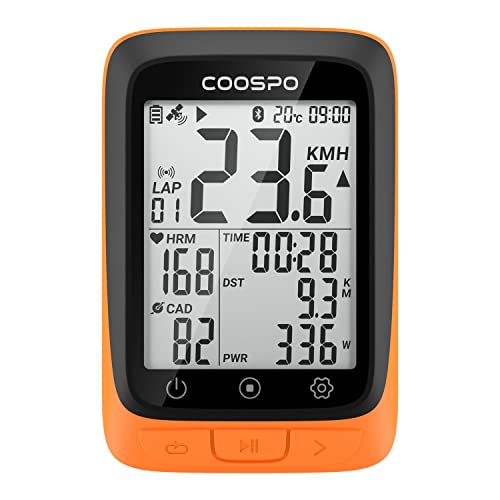
CooSpo Bike Computer Wireless GPS

iGPSPORT BSC100S GPS Bike Computer

Garmin Edge 540 Compact GPS Cycling Computer

CYCPLUS GPS Wireless Bike Computer 2.9″ LCD

CYCPLUS GPS Wireless Bike Computer 2.9″ LCD

Hilceriy Wired Bike Computer and Odometer

Bikevee GPS Bike Computer Wireless 2.4″ LCD

Bikevee GPS Bike Computer Wireless 2.4″ LCD

Garmin Edge Explore 2 GPS Cycling Navigator

CYCPLUS GPS Bike Computer 2.5″ Screen
CooSpo lands in the sweet spot for riders who want GPS data without a crowded interface. The 2.4-inch LCD keeps the footprint modest, and the Bluetooth plus ANT+ support matters when you want sensor flexibility on a commuter bike or a weekend training setup.
The honest read is that this one favors straightforward ride tracking over flashy extras. For most daily routes, that makes it easier to live with, especially when auto backlight helps on early starts and the wireless layout keeps the cockpit cleaner than a wired unit like the Hilceriy pick.
Strong Points
- GPS-based speed and distance tracking suits mixed city and suburban routes.
- Bluetooth and ANT+ give you room to pair compatible sensors later.
- Auto backlight helps on dim morning rides and late returns.
- Compact display keeps handlebar clutter down.
Things To Consider
- The smaller screen can feel tight for riders who want lots of data at once.
- Wireless gear still needs charging attention, unlike the wired Hilceriy option.
- Navigation depth appears simpler than Garmin’s Edge models.
Feature Snapshot
Who It Suits Best
Commuters and casual trainers who want GPS basics in a compact body will get the most from it.
A Better Fit Elsewhere
Garmin Edge Explore 2 suits touring riders better, since its navigation focus makes longer route planning feel more natural.
After the CooSpo, this iGPSPORT model stands out for riders who care about longer ride windows. The 40-hour rechargeable spec is the headline, and the 2.6-inch LCD gives a touch more room for data without pushing the unit into bulky territory.
You may find this especially useful for weekend gravel loops, touring days, or anyone who dislikes charging gear every couple of rides. It keeps the same wireless convenience as the other GPS picks, but the real draw is stamina rather than a deep feature list.
Highlights
- 40-hour rechargeable battery suits long weekends and back-to-back rides.
- 2.6-inch screen offers a little more room than smaller units.
- Bluetooth and ANT+ support keep accessory pairing flexible.
- Water-resistant construction fits normal outdoor use.
Room For Improvement
- It looks more utilitarian than Garmin’s Edge 540 or Explore 2.
- Charging is still part of the routine, unlike a wired computer.
- Riders who want advanced coaching will need to step up the stack.
Details At A Glance
Who Will Love This
Endurance-minded cyclists who want a simple GPS head unit with long battery life will feel at home here.
Another Choice May Suit
CYCPLUS GPS Wireless Bike Computer 2.9″ LCD makes more sense for riders who want a broader screen and a slightly more relaxed cockpit view.
This is the pick for riders who care about training guidance as much as distance and speed. Button controls matter on wet roads and gloved hands, and the 2.6-color display keeps the interface friendlier than a purely text-heavy unit.
Compared with the simpler CooSpo and iGPSPORT options, the Edge 540 feels built for riders who want more structure in their riding. The trade-off is that you’re paying for a deeper system, so casual riders who only want basic mileage may never use everything it offers.
Upsides
- Button controls stay dependable in rain, mud, and winter gloves.
- Targeted adaptive coaching suits structured workouts and training plans.
- Advanced navigation helps on unfamiliar roads and longer routes.
- The compact body stays tidy on road and gravel bars.
- ANT+ and Bluetooth support keeps it compatible with many accessories.
Worth Noting
- It asks more of your wallet than the basic GPS computers here.
- The learning curve is heavier than the simpler CooSpo or CYCPLUS units.
- Riders who only track time and distance may feel underused by the feature set.
Core Details
Built With In Mind
Serious road riders and structured-trainning cyclists who want coaching and navigation in one compact unit should look here.
Where A Sibling Pick Shines
Garmin Edge Explore 2 suits touring riders better, because its navigation-first layout is friendlier for map-led rides than workout-heavy sessions.
Some cyclists just want a broad, readable display that stays out of the way, and this CYCPLUS model fits that mood well. The 2.9-inch LCD is the main attraction, since it gives your ride data a little more breathing room than the smaller screens in this roundup.
Its IPX6 waterproof rating helps it suit wet commutes and dusty shoulder-season rides, though the real benefit is everyday ease rather than headline features. Compared with Garmin’s more training-heavy units, this one feels calmer and simpler, which is a good thing for plenty of weekend riders.
Bright Spots
- The 2.9-inch display is easy to glance at during traffic or climbing.
- Bluetooth and ANT+ give you room for accessory pairing.
- Auto backlight helps the screen stay useful in changing light.
- IPX6 protection suits rain and road spray.
Small Caveats
- The larger screen doesn’t turn it into a deep training computer.
- IPX6 is practical, though it is less rugged than the IPX7 Bikevee units.
- It still needs charging, so it’s not as hands-off as a wired odometer.
Feature Card
Perfect Match For
Commuters and relaxed fitness riders who want a bigger screen without a complicated setup will appreciate it.
Look Elsewhere When
Garmin Edge 540 makes more sense for riders chasing coaching tools and route guidance beyond basic ride data.
This second CYCPLUS entry sits close to the previous one, but it earns attention by keeping the same roomy 2.9-inch screen and pairing options in a familiar package. For riders who like straightforward ride data and don’t want to overthink the cockpit, that familiarity can be a plus.
The bigger difference is how you may use it alongside a wider setup, such as a heart-rate strap or cadence sensor. It won’t feel as ambitious as Garmin’s Edge 540, yet it can be enough for riders who want clean data and an uncluttered handlebar.
Best Bits
- Large 2.9-inch screen helps with fast glances on rough roads.
- Bluetooth and ANT+ keep sensor choices open.
- Auto backlight supports dawn and dusk use.
- The wireless layout keeps the bars cleaner than a wired head unit.
Points To Note
- Feature depth stays modest next to Garmin’s navigation-focused models.
- You’ll still need to remember charging, which some riders prefer to avoid.
- It overlaps a lot with the other CYCPLUS 2.9-inch pick, so the final call may come down to color or bundle differences on the listing.
Technical Sheet
Whose Shelf It Belongs On
Weekend riders and commuters who want a large, wireless display without a lot of setup complexity are the natural match.
A Better Fit Elsewhere
iGPSPORT BSC100S GPS Bike Computer suits endurance-focused cyclists better, since its 40-hour battery stretches farther between charges.
After all the GPS models, this wired Hilceriy option feels refreshingly plain. That is the point, really, because a wired computer avoids charging routine and gives you a direct read on speed, mileage, time, and related ride numbers.
It also adds automatic wake-up, which makes it friendlier for riders who want a set-and-forget unit on a bike used for errands or fitness laps. The trade-off is obvious, though, since you give up the cleaner wireless look of the CooSpo and CYCPLUS picks.
Reasons To Buy
- Wired design keeps power concerns simple.
- Shows average and top speed for more detailed ride tracking.
- Includes single-mileage and ride-time functions.
- Automatic wake-up fits regular stop-and-go use.
Minor Gripes
- Wiring adds installation effort and a less minimal cockpit.
- It lacks the GPS flexibility found in the wireless picks above.
- Feature depth is narrower than Garmin’s or even the better wireless units here.
Core Details
Right Fit For
Commuters, casual exercisers, and anyone who wants a low-drama mileage tracker will get the most from it.
Where A Sibling Pick Shines
CooSpo Bike Computer Wireless GPS is a better match for riders who want a neater cockpit and GPS-based tracking.
Bikevee pushes a little harder on convenience than some of the simpler options here. The 2.4-inch LCD is modest in size, but auto start-stop and the nine-language interface make it feel more approachable for mixed households or riders who share equipment.
IPX7 waterproofing gives it a sturdier weather story than the IPX6 CYCPLUS model, which matters on long wet commutes or unpredictable shoulder-season rides. That said, the screen is still on the compact side, so riders who want a big dashboard may prefer the 2.9-inch CYCPLUS units.
Standout Traits
- Auto start-stop helps cut down on manual button work.
- Nine language options make the menu friendlier for shared use.
- IPX7 protection suits heavier weather exposure.
- Automatic backlight helps with early departures and evening rides.
Softer Spots
- The 2.4-inch screen feels smaller than the CYCPLUS 2.9-inch picks.
- Feature depth stays focused on convenience rather than training depth.
- It may feel more basic than Garmin’s coaching-heavy models.
Spec Overview
Best Suited To
Daily commuters and casual fitness cyclists who want a simple, weather-ready wireless unit should consider it.
Swap It Out When
Garmin Edge 540 fits better for serious training, since its coaching tools go far beyond convenience features.
This second Bikevee listing tracks very close to the previous one, so the decision is mostly about small differences in the listing, bundle, or finish rather than a dramatic feature leap. The core appeal stays the same, a compact wireless computer with auto start-stop, nine languages, and an IPX7 weather rating.
That makes it a sensible everyday option for riders who want dependable basics and a cleaner handlebar layout. Compared with the Hilceriy wired computer, it is far easier to live with on a bike that you also use for commuting, errands, or weekend spins.
Positives
- IPX7 weather protection handles tougher wet conditions.
- Auto start-stop helps during traffic lights and short stops.
- Nine language support keeps setup approachable.
- Compact body works well on smaller handlebars.
Areas To Watch
- Its specs overlap heavily with the other Bikevee model.
- The smaller display won’t feel roomy on a busy cockpit.
- Basic ride tracking is the focus, not deep training guidance.
Feature Rundown
The Right Fit
Casual riders and commuters who want a simple wireless computer with easy handling will be comfortable here.
Not Your Match When
iGPSPORT BSC100S GPS Bike Computer is the better choice for longer rides, since its 40-hour battery stretches farther between charges.
The Explore 2 is for riders who think in routes, not just ride totals. Maps, navigation, and eBike compatibility make it a stronger fit for touring, travel days, and unfamiliar roads than the simpler speed-and-distance computers above.
It also brings safety features into the picture, which matters for riders who cover new terrain or spend time on busier roads. Compared with the Edge 540, this one feels more route-first and less training-first, and that distinction is the reason it belongs on this list.
What We Like
- Map and navigation support suits longer, route-based rides.
- eBike compatibility broadens its usefulness for mixed cycling setups.
- Safety features add useful context for road and touring use.
- The interface is built for easier day-to-day navigation.
- Garmin’s ecosystem matters here for riders already using compatible gear.
Trade Offs
- It is more navigator than lightweight speedometer.
- Casual riders may not use the full mapping toolset.
- The feature depth asks more setup time than the simpler GPS units.
Feature Snapshot
Made For
Touring riders, route planners, and eBike owners who want navigation first should look here.
Reach For A Different Pick When
Garmin Edge 540 fits better for riders who care more about training guidance than map-led exploration.
This CYCPLUS model lands as the most balanced of the brand’s options here, mainly because the 2.5-inch screen sits between the compact 2.4-inch units and the larger 2.9-inch displays. For riders who want wireless basics with ANT+, Bluetooth, and rechargeable convenience, that middle ground makes sense.
IPX6 waterproofing keeps it practical for everyday riding, though the trade-off is that it doesn’t chase the deeper navigation or coaching tools found in Garmin’s higher-tier units. Think of it as the sensible middle lane, steady and easy to live with.
Plus Points
- 2.5-inch screen strikes a comfortable middle size.
- Rechargeable design suits regular use across the week.
- ANT+ and Bluetooth support make pairing flexible.
- IPX6 weather resistance fits ordinary outdoor riding.
Areas To Watch
- It does not reach the navigation depth of Garmin’s models.
- The screen is smaller than the 2.9-inch CYCPLUS units.
- Feature depth stays focused on core ride data.
Feature Rundown
Who Should Grab It
Riders who want a balanced wireless computer for commuting, weekend spins, and light training will get solid value here.
Skip It When
Garmin Edge Explore 2 is the better move for map-heavy touring, since its navigator focus goes much further.
How To Choose The Right Bicycle Computers
Match The Screen To Your Ride Style
Screen size shapes how easy a computer is to live with on the bars. A 2.4-inch or 2.5-inch display keeps the cockpit compact, while 2.9-inch screens are friendlier when you want a quick glance during traffic, climbing, or rough pavement.
Button controls matter too. Riders in gloves or rain usually appreciate Garmin’s Edge 540 more than touch-heavy designs, while casual commuters often prefer a simpler LCD with fewer menus.
Decide How Much Navigation You Need
Basic bicycle computers track speed, distance, time, and mileage, which is enough for many daily rides. GPS units add route awareness, and Garmin’s Edge Explore 2 leans hardest into maps and navigation for touring or unfamiliar roads.
That extra guidance comes with extra complexity. You pay for it in setup time and menu depth, so riders who mostly follow the same route often stay happier with a lighter model like CooSpo or CYCPLUS.
Battery Life And Charging Habits
Battery span becomes important fast once you start riding longer weekends or several days in a row. The iGPSPORT BSC100S stands out with its 40-hour rechargeable spec, while Garmin Edge 540 keeps a training-focused unit in the mid-long range with up to 26 hours.
Wired computers such as the Hilceriy model skip charging but add installation effort. That trade-off suits riders who want a fixed, low-maintenance odometer more than a removable GPS computer.
Connectivity And Sensor Support
Bluetooth and ANT+ are the two names worth knowing here. Bluetooth helps with phone-based syncing and some accessories, while ANT+ is common in cycling sensors like heart-rate straps and cadence units.
Riders who only want speed and distance can ignore that detail. Once you start adding sensors or structured workouts, the extra compatibility makes the computer feel a lot more useful.
A Quick Reality Check Before You Choose
Wrong Turns To Avoid
Many shoppers focus on screen size and forget about the ride they actually do. A touring cyclist needs maps and route handling, while a commuter often needs a clean display, weather resistance, and simple auto functions.
Another common miss is pairing a feature-heavy unit with a casual use case. Garmin’s Edge 540 is excellent for structured training, yet it can be more computer than you need for short city loops.
What The Higher Tier Buys
Higher-tier models usually spend their extra cost on navigation detail, training guidance, and better interaction design. That shows up in Garmin’s line first, where the Edge 540 and Edge Explore 2 offer more polished route support than basic speedometers.
Those upgrades make sense for riders who spend real time on the bike, especially on unfamiliar roads or organized training plans. For simple mileage checks, a basic wireless computer is often enough and easier to live with.
Frequently Asked Questions
What does ANT+ do on a bicycle computer?
ANT+ is a wireless connection used by many cycling sensors and accessories. It helps your computer talk to gear like cadence sensors or heart-rate straps.
Is GPS better than a wired bicycle computer?
GPS gives you broader ride tracking and route awareness, which helps on mixed roads or travel days. Wired units are simpler, often cheaper, and easier to keep powered.
How much screen size do you really need?
Smaller screens suit riders who want a tidy cockpit and just a few fields on display. Larger screens help when you want faster glances or more data at once.
Do waterproof ratings matter for commuting?
Yes, especially in wet weather or on roads that kick up spray. IPX6 and IPX7 ratings give you a clearer idea of how well the unit is built for those conditions.
Which bicycle computer is easiest for beginners?
The simpler wireless units, like CooSpo or Bikevee, are easier to start with because they keep the menu load lower. Riders who want basic speed and distance tracking usually settle in quickly with those.
Closing Thoughts
You have a wide spread here, from basic wired odometers to navigation-first Garmin units, so the right choice depends on how much information you want at a glance and how far you usually ride. For simple fitness loops, a lighter wireless model is enough. For route-heavy rides or structured training, stepping up makes sense. The best match is the one that fits your handlebars, your routine, and the kind of miles you actually log.