

A trailer-hitch rack keeps bikes out of your cabin and makes family trail days, campground stops, and regular rides far less awkward. Your right match depends on bike count, receiver size, tire width, and whether you carry heavier e-bikes. The nine options below cover hanging and platform styles, from four-bike carriers for a group to ramp-equipped trays for two heavy electric bikes.
The Shortlist at a Glance
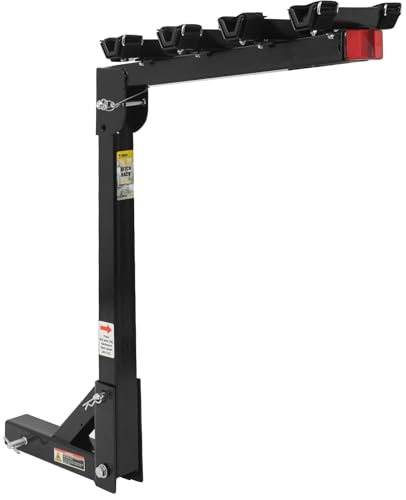
MAXXHAUL Hitch Mount 4 Bike Rack 70210

MAXXHAUL Platform Bike Rack 50027

Yakima DoubleDown 4-Bike Hitch Mount Rack

Trimax RMBR4 Road-MAX 4 Bike Rack
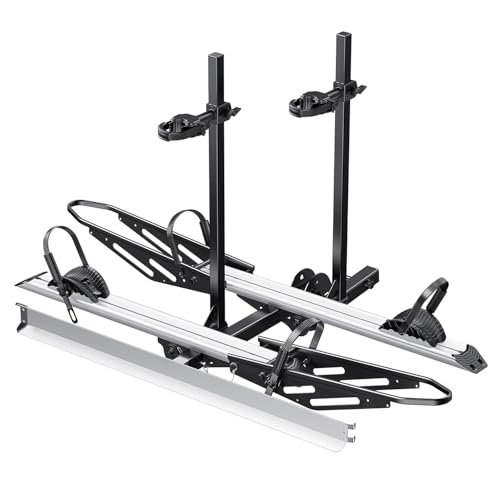
Young Hitch Mount E-Bike Rack with Ramp

WEIZE 2 E-Bike Rack with Lock

WILDROAD Folding 2-Bike Hitch Rack

TANX 2-Bike E-Bike Hitch Rack

Young Electric E-Bike Rack with Ramp
More Details On Our Top Picks
Four standard bikes are the clear focus here, making the MAXXHAUL 70210 a sensible match for family weekends and group trail rides. Its swing-down design lets the carrier move downward for rear access, which matters when your SUV cargo area holds helmets, snacks, and camping gear.
The stated 150-pound capacity suits lighter traditional bikes rather than a pair of bulky electric models. You may find a hanging carrier takes more patience during loading because frames need spacing, but its storage footprint is usually easier to live with than a large tray rack.
Strong Points
- Holds up to four bikes for shared outings.
- Swing-down function supports access behind the vehicle.
- Safety reflector adds rear visibility to the rack assembly.
- Fits cars, trucks, SUVs, and minivans.
Things To Consider
- Hanging layouts can require extra care to prevent frame contact between bikes.
- Owners commonly need to check straps and fasteners before longer highway drives.
Key Specs
Who It Suits Best
Your household benefits most when you carry several conventional bicycles and want a straightforward hitch-mounted format.
Where Another Pick Suits Better
Young Hitch Mount E-Bike Rack with Ramp suits you better for two heavy electric bikes that are awkward to lift.
Moving from the 70210’s hanging design to a platform rack changes how your bikes are supported. The MAXXHAUL 50027 uses tire cradles, meaning bike wheels sit in shaped supports rather than leaving the full load on a top tube.
Foam-padded hooks contact the bike while adjustable cradles help you tailor placement for two bicycles. A 2-inch Class III or IV receiver is required, so this makes sense for your truck, SUV, or van with the larger hitch format.
What We Like
- Wheel-cradle support can be friendlier to varied frame shapes.
- Adjustable placement helps two bikes sit with more breathing room.
- Foam on the hooks adds a protective contact layer.
Worth Noting
- Only 2-inch Class III and IV receivers fit this carrier.
- Platform carriers take more garage space than folding-arm hanging models.
- Cleaning road grit from tire cradles after wet trips helps preserve smooth adjustments.
At A Glance
Made For
Your two-bike trips benefit from a tray-style setup that supports bicycles at their wheels.
Consider Something Else When
Yakima DoubleDown 4-Bike Hitch Mount Rack fits you better when your vehicle has a 1.25-inch receiver or your group carries four bikes.
The Yakima DoubleDown covers both 1.25-inch and 2-inch receivers, giving you useful flexibility across vehicles. That difference separates it from the MAXXHAUL 50027, which is limited to larger 2-inch Class III and IV hitch openings.
Anti-sway cradles are supports intended to reduce bike-to-bike movement, while folding arms shrink the rack profile during storage. For your sedan-to-SUV household, that versatility may matter more than a tray-style loading layout.
Highlights
- Accommodates 1.25-inch and 2-inch receivers.
- Anti-sway cradles help limit bike movement in transit.
- Tilting rear mount assists with rear-area access.
- Folding arms reduce protrusion between rides.
- Four-bike capacity works for group outings.
Trade Offs
- Like the MAXXHAUL 70210, its hanging arrangement calls for deliberate bike spacing.
Technical Sheet
Right Fit For
Your mixed-vehicle household benefits from a four-bike carrier that accepts either common receiver size.
Not Your Match When
Trimax RMBR4 Road-MAX 4 Bike Rack suits you more when you prefer a tray format with locking arms.
The Trimax RMBR4 brings tray-style bike support to a four-bike format, an approach that differs from the hanging arms on the first and third racks. Locking arms give your bicycles a defined retention point, while the folding construction helps reduce the rack’s parked footprint.
It requires a 2-inch receiver, so you need to verify your hitch before considering it. The honest read is that a four-bike tray carrier can be substantial to handle, but your regular group trips gain a more structured loading arrangement.
Upsides
- Four-bike tray layout suits regular group rides.
- Locking arms provide a defined way to secure loaded bikes.
- Foldable construction helps during parking and storage.
- Built for SUVs, trucks, and vans with a 2-inch receiver.
- Wheel-based carrying can suit bicycles with less conventional frame designs.
- Your bikes sit in individual positions rather than stacking close together.
Minor Gripes
- The 2-inch receiver requirement rules out smaller hitch openings.
- A four-bike tray rack needs meaningful storage room off the vehicle.
Feature Snapshot
Best Suited To
Your SUV, truck, or van is a strong match when four bikes travel together and your hitch is 2 inches.
Look Elsewhere When
MAXXHAUL Hitch Mount 4 Bike Rack 70210 fits you better for a simpler hanging carrier with a stated 150-pound capacity.
A loading ramp is the major reason to consider this Young carrier. Rather than lifting a heavy e-bike from ground height to a tray, you roll it upward, which can make a noticeable difference after a long ride.
Its stated 200-pound capacity is shared by two bikes, and it accommodates standard and fat-tire styles. Your 2-inch receiver is essential, while RV, trailer, car, SUV, and truck fit broadens the possible travel setups.
Standout Traits
- Ramp reduces the need to lift heavy e-bikes.
- 200-pound stated total capacity suits two substantial bikes.
- Supports standard and fat-tire bicycle formats.
- Fits several vehicle and trailer types with a 2-inch receiver.
Room For Improvement
- You still need to confirm each bike’s weight stays within the shared 200-pound total.
- The ramp and tray assembly take more room than a compact hanging rack.
- Keeping the ramp track clear of mud and gravel supports easier loading.
Quick Facts
Who Will Love This
Your frequent e-bike outings become easier when lifting a heavy bicycle onto a rack is the main frustration.
A Better Fit Elsewhere
WEIZE 2 E-Bike Rack with Lock suits you more when tire width up to 5.5 inches is your stated requirement.
The WEIZE rack focuses on broad tire accommodation, with support for tires up to 5.5 inches wide. That makes it more accommodating for very wide fat tires than the Young Hitch Mount E-Bike Rack with Ramp, whose source details do not state a tire-width number.
Its smart tilting and folding design aims to make rear access and storage less inconvenient, while the listed lock adds a retention feature. For two e-bikes totaling 160 pounds or less, it looks like a practical middle ground.
Bright Spots
- Supports tires measuring up to 5.5 inches wide.
- 160-pound capacity serves many two-e-bike combinations.
- Tilting design can help you reach the rear cargo area.
- Folding structure reduces the parked profile.
- Includes a lock.
Points To Note
- Heavier e-bike pairs may exceed the stated 160-pound combined capacity.
- The 2-inch hitch requirement needs confirmation before installation.
- Owners commonly benefit from wiping down moving tilt points after dirty rides.
- No ramp is listed, so loading still involves lifting.
Feature Rundown
Perfect Match For
Your fat-tire e-bike pair fits well when combined weight remains within 160 pounds and your receiver is 2 inches.
Skip It When
Young Electric E-Bike Rack with Ramp suits you better when rolling rather than lifting each bike is a priority.
The WILDROAD carrier provides a stated 180-pound capacity for two bikes, giving it more headroom than the WEIZE 2 E-Bike Rack with Lock. It also works with standard, fat-tire, and electric bikes, so your garage can hold more than one riding style.
Wobble-free design refers to an approach intended to reduce hitch movement, while tilting and folding functions improve day-to-day convenience. You may appreciate that combination for regular weekend rides where the rack stays attached between trips.
Reasons To Buy
- 180-pound stated capacity handles heavier two-bike combinations.
- Accommodates standard, fat-tire, and electric bicycles.
- Tilting function supports access behind the vehicle.
Softer Spots
- Only 2-inch receivers are listed as compatible.
- A heavy loaded rack still benefits from careful hitch-pin checks before travel.
Spec Overview
Who Should Grab It
Your two-bike setup benefits from extra stated capacity while retaining compatibility with standard and fat-tire bicycles.
Another Choice May Suit
TANX 2-Bike E-Bike Hitch Rack suits you more when a 160-pound two-bike platform is enough for your riding pair.
The TANX rack is geared toward two e-bikes or fat-tire bikes, using a stated 160-pound overall capacity. Like the WILDROAD option, it has wobble-reduction, tilting, and folding functions for a less cumbersome parked setup.
Included assembly tools can reduce the need to hunt for basic setup equipment, although your vehicle’s hitch compatibility still needs checking. The source lists a 2-inch receiver, so it is not a fit for smaller 1.25-inch hitches.
Plus Points
- Made for two e-bikes or fat-tire bikes.
- 160-pound capacity gives a clear total-load reference.
- Folds for more manageable storage.
- Tilting format supports rear access.
Small Caveats
- Your two bike weights must remain under the 160-pound stated capacity.
- It fits only a 2-inch receiver.
- Periodically checking tightened hardware is sensible after initial use and long road travel.
Details At A Glance
Built With In Mind
Your regular car, SUV, or truck trips suit this rack when two e-bikes stay within the stated total capacity.
Reach For A Different Pick When
WILDROAD Folding 2-Bike Hitch Rack suits you better when your two-bike load calls for its higher 180-pound capacity.
Young Electric combines a ramp with a 200-pound stated hitch-mounted capacity for two bikes, closely matching the practical appeal of the earlier Young rack. The listed 5-inch fat-tire capability gives you a specific fit point for wider e-bike tires.
Foldability matters for your daily parking routine, especially when the rack stays installed outside riding days. For most two-e-bike households, rolling a bike onto the tray is a more manageable routine than repeatedly lifting it.
Best Bits
- Ramp supports roll-on loading for heavy e-bikes.
- 200-pound stated capacity serves two substantial bicycles.
- Accommodates tires up to 5 inches wide.
- Foldable format takes up less room behind the vehicle.
- Fits cars, trucks, SUVs, and minivans with a 2-inch receiver.
Areas To Watch
- The rack needs a 2-inch receiver.
- Your bikes must share the 200-pound capacity rather than each receiving that amount.
Feature Card
The Right Fit
Your frequent e-bike travel is well served by ramp loading, a 200-pound total capacity, and support for tires up to 5 inches.
Where A Sibling Pick Shines
Young Hitch Mount E-Bike Rack with Ramp suits you better when you also need the stated RV and trailer compatibility.
How To Choose The Right Bicycle Racks For Trailer Hitch
Start With Your Hitch Receiver
Your receiver is the square hitch opening beneath the vehicle, and its inside width determines rack compatibility. Many e-bike and tray carriers here require a 2-inch receiver, while the Yakima DoubleDown also accepts a 1.25-inch receiver. Confirm the receiver size on your vehicle documentation or measure the opening before narrowing your options.
Your hitch also has a tongue-weight limit, meaning the maximum downward weight it can carry at the receiver. Add the rack weight and the full weight of every loaded bike, then keep that total within the vehicle and hitch limits. This step matters especially for electric bikes, because batteries, motors, and thicker frames add substantial weight.
Match the Rack Style to Your Bikes
Hanging racks suspend bicycles from support arms and can carry four bikes with a relatively compact structure. They work well for conventional frames, but your bikes may need careful positioning to avoid touching. The MAXXHAUL 70210 and Yakima DoubleDown are sensible directions for your family of lighter standard bikes.
Platform racks support bikes closer to their wheels, so they often suit varied frame shapes and heavier models. The trade-off is a larger, heavier assembly that needs more garage room. For your e-bike pair, wheel trays plus a ramp can make loading feel less like a lifting exercise.
Check Bike Weight and Tire Width
Do not rely on the bike count alone. A rack rated for two bikes may have a combined limit that your pair of electric bikes approaches quickly, so weigh each bike with accessories removed or included according to your normal travel setup.
Tire width matters too. The WEIZE supports tires up to 5.5 inches, while the Young Electric model states fit for tires up to 5 inches. Standard road and hybrid tires are rarely the difficult part, but fat-tire e-bikes need exact cradle compatibility.
Think Through Daily Access and Storage
A tilting rack can move away from the vehicle enough to improve access to the rear area, though your vehicle’s tailgate or hatch geometry still affects the result. Foldable racks reduce rear projection when no bikes are loaded, which helps with parking and driveway space.
For regular trips, inspect straps, hooks, wheel trays, and hitch hardware before leaving. Road dust and moisture collect around joints and cradles, so a quick wipe-down after muddy outings helps keep moving components easier to use.
A Few Details Worth Weighing First
Common Shopping Slip Ups
A frequent mistake is choosing a four-bike hanging carrier for two heavy e-bikes. Bike count may look right, but combined weight, frame shape, and loading height can make it a poor match. Match the rack’s stated capacity to your actual bikes, not only the number of spaces.
Another oversight is assuming every trailer hitch is 2 inches. Smaller 1.25-inch receivers need compatible carriers such as the Yakima DoubleDown. Also account for the rack’s folded position before committing to a tight garage or apartment parking space.
Where The Extra Money Goes
Higher-tier hitch racks often add wheel trays, anti-wobble systems, tilt mechanisms, locks, and ramps. Those parts address routine hassles such as lifting a heavy bike, accessing cargo, and managing movement on long drives.
The upgrade makes sense for your frequent e-bike use, fat tires, or regular road trips. A basic hanging rack remains a reasonable route for lighter bikes that come out a few times each season, especially when storage space matters more than advanced loading support.
Frequently Asked Questions
Will a 2-inch bike rack fit a 1.25-inch receiver?
No, a 2-inch rack needs a 2-inch receiver unless the rack includes compatible adaptation. The Yakima DoubleDown is listed for both 1.25-inch and 2-inch receivers.
Can you carry e-bikes on a hanging rack?
You can only do so within the rack’s stated capacity and bike-fit guidance. Platform racks are often more suitable because they support bikes at the wheels.
What does a tilting hitch rack do?
A tilting rack pivots downward or away from the vehicle’s rear area. It can make cargo access easier while the rack remains installed.
Why does tire width matter for a hitch rack?
Wheel cradles need enough space to hold your tire securely. Fat-tire bikes need a rack with stated wide-tire compatibility.
Should you remove e-bike batteries before travel?
Removing accessories and batteries can reduce the bike weight you place on the rack. Follow your bike maker’s transport guidance for battery handling.
Final Verdict
Your ideal hitch rack starts with the bikes already in your garage, not the rack that looks most convenient at first glance. The MAXXHAUL Hitch Mount 4 Bike Rack 70210 is a straightforward family choice for conventional bikes, while the Young Electric E-Bike Rack with Ramp and Young Hitch Mount E-Bike Rack with Ramp make more sense for heavy electric models. The Yakima DoubleDown is particularly useful where 1.25-inch receiver compatibility matters. Measure your receiver, total your loaded bike weight, and choose the loading style that fits your regular riding routine.