
Big Party Tents give your gathering a defined space when a patio umbrella or small canopy just won’t cover the table, food station, and guests. Your right choice depends on the footprint of your yard, how often you host, and whether sidewalls matter for changing weather or privacy. A large framed tent suits weddings and family reunions, while a pop-up canopy makes more sense for vendor booths, tailgates, and casual backyard meals.
The Shortlist at a Glance
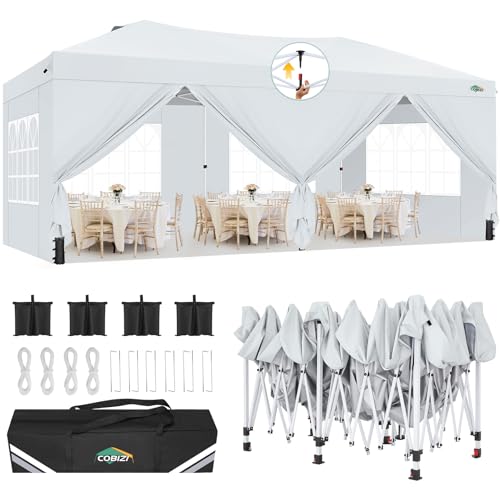
COBIZI 10×20 Pop Up Canopy Tent with 6 Sidewalls

COBIZI 10×20 Heavy Duty Pop Up Canopy with Sidewalls
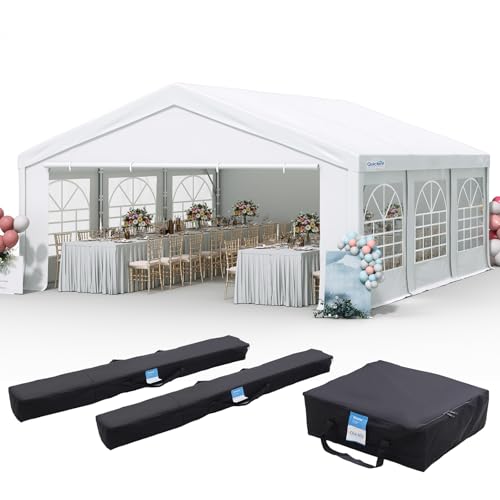
Quictent Premium 20×20 Heavy Duty Party Tent

Driftalia 10×10 Pop Up Canopy with Sidewalls

Nazhura 10×10 Pop Up Canopy Tent with Sand Weight Bag
Outsunny 20 x 40 ft Heavy Duty Party Tent
COBIZI 10×20 Pop Up Canopy Tent with Sidewalls (Upgrade)
Quictent 10×10 Pop Up Canopy Without Sidewall

Outsunny 22.3 x 16.4 ft Party Tent with Sidewalls
More Details On Our Top Picks
A 10-by-20-foot pop-up canopy creates 200 square feet of covered room, enough to separate seating from a buffet at a backyard celebration. Its six sidewalls add flexibility around an open layout, while the one-push design targets quicker frame setup.
Sandbags are included for added anchoring support, which is especially useful on paved patios where stakes may not work. For most backyards, this is the more adaptable COBIZI choice for hosts who want enclosure options without moving to a permanent-frame tent.
Strong Points
- 10×20 footprint gives your gathering more usable covered space than a 10×10 canopy.
- Six sidewalls let you shape a more private serving or dining area.
- One-push frame design reduces the number of setup steps.
- Included sandbags help you prepare for hard-ground locations.
- Water-resistant canopy coverage suits outdoor meal tables during unsettled weather.
Things To Consider
- Six separate walls mean more fabric to fold, dry, and store after an event.
- You may want a second adult nearby while raising a 10×20 frame evenly.
Key Specs
Who It Suits Best
Your home gatherings benefit most when you need a broad 10×20 shelter with adjustable perimeter coverage.
Where Another Pick Suits Better
Quictent Premium 20×20 Heavy Duty Party Tent suits your larger wedding layout better when 200 square feet is not enough.
Frequent event use calls for a shelter that can travel, and this COBIZI pairs a 10×20 pop-up format with a roller bag. The stated thickened frame distinguishes it from a lighter casual canopy, while sidewalls make the footprint more useful for vendor setups or receptions.
Compared with Item 1, the listing emphasizes transport and frame construction rather than a six-wall count. The honest read is that the roller bag matters most for you when the canopy regularly moves from a garage to parks, markets, or event spaces.
What We Like
- Roller bag makes moving a large folded canopy less awkward across parking lots.
- Thickened frame is aimed at repeated commercial-style setup.
- Sidewalls give you a more contained booth or dining area.
- Water-resistant cover supports outdoor event planning.
Worth Noting
- A larger rolling bag still needs meaningful storage space in your vehicle or shed.
- Frame joints benefit from being cleared of dirt before folding.
- Sidewall arrangement details are less specific than on COBIZI 10×20 Pop Up Canopy Tent with 6 Sidewalls.
At A Glance
Made For
Your recurring vendor dates, outdoor receptions, and community events suit this transport-focused 10×20 canopy.
Consider Something Else When
Driftalia 10×10 Pop Up Canopy with Sidewalls makes more sense for your smaller campsite or compact patio.
At 20 by 20 feet, this Quictent brings 400 square feet of cover, doubling the area of the two COBIZI 10×20 choices. A reinforced steel frame supports the larger structure, and the 180G PE canopy uses polyethylene fabric with a stated 180-gram material weight.
Removable church-window sidewalls bring natural light into an enclosed layout, useful for daytime celebrations. Depending on your soil, the larger frame and fabric sections may make setup a planned two-person or group task rather than a quick afternoon job.
Highlights
- 20×20 dimensions give you room for tables, chairs, and a serving line.
- Reinforced steel frame matches the needs of a larger temporary structure.
- 180G PE canopy provides a stated material detail for shoppers comparing fabric builds.
- Church-window walls admit daylight while retaining a defined perimeter.
- Three storage bags help divide components after teardown.
- Removable walls let you adapt airflow and openness to the occasion.
Trade Offs
- Three storage bags organize parts, but they also require careful labeling and dry storage.
Technical Sheet
Right Fit For
Your wedding reception, reunion, or larger backyard meal benefits from this 20×20 enclosed-capable shelter.
Not Your Match When
Nazhura 10×10 Pop Up Canopy Tent with Sand Weight Bag fits your short picnic trip better when portability comes first.
Not every gathering needs a 200- or 400-square-foot roof. Driftalia’s 10×10 format gives your campsite, snack table, or small patio group a manageable covered zone with sidewalls and a carry bag.
The listing states that two people can set it up in less than five minutes, making it a sensible option for plans where you don’t want assembly to take over the afternoon. You may find its 100-square-foot footprint limiting once several full-size tables enter the plan.
Upsides
- 10×10 size is easier to place in smaller yards than the COBIZI 10×20 models.
- Carry bag supports transport between campsites and event spaces.
- Sidewalls add more weather separation than Quictent 10×10 Pop Up Canopy Without Sidewall.
Minor Gripes
- Carry bag fabric and zippers tend to last longer when the canopy is completely dry before packing.
- The stated quick setup still calls for two people.
- 100 square feet leaves limited room for a larger seated group.
Feature Snapshot
Best Suited To
Your camping weekends and small backyard gatherings suit this portable 10×10 shelter with sidewalls.
Look Elsewhere When
Outsunny 20 x 40 ft Heavy Duty Party Tent is the stronger match for your large reception seating plan.
The Nazhura focuses on a small-group, mobile use case through a one-person setup claim and height-adjustable frame. Its included sand weight bag gives you an accessory for stabilizing a freestanding canopy where you cannot rely on stakes alone.
Unlike Driftalia’s stated two-person setup, this one targets solo handling for picnics and camping. One thing worth considering is that an open 10×10 shelter prioritizes easy access over the enclosed feel of a sidewall tent.
Standout Traits
- One-person setup suits your independent picnic or campsite routine.
- Height adjustment helps you tailor clearance for standing guests or a food table.
- Sand weight bag gives you an anchoring option for firm surfaces.
- 10×10 dimensions keep the footprint manageable for casual outings.
Room For Improvement
- Sandbags require you to source and empty fill material before long-term storage.
- No sidewalls are listed, so privacy and wind blocking are limited.
Quick Facts
Who Will Love This
Your solo camping, picnic, and casual daytime outing plans fit this height-adjustable 10×10 canopy.
A Better Fit Elsewhere
COBIZI 10×20 Pop Up Canopy Tent with 6 Sidewalls suits your enclosed family celebration better.
This 20×40 Outsunny changes the scale entirely, providing 800 square feet of coverage for a large party, carport-style shelter, or expansive event layout. Removable sidewalls and windows allow you to open the perimeter or create a more sheltered space.
That extra room is useful, but it also asks more of your site preparation than Quictent Premium 20×20 Heavy Duty Party Tent. For a level lawn and a group ready to assemble it, the size can make a big gathering feel properly organized.
Bright Spots
- 20×40 footprint provides 800 square feet for large tables and event circulation.
- Removable sidewalls let you alter the tent’s openness.
- Windows bring daylight into an enclosed configuration.
- Can serve event, party, barbecue, or carport-style coverage needs.
- Water-resistant canopy supports outdoor hosting plans.
Points To Note
- Large fabric panels need a dry, generously sized storage area.
- Assembly and anchoring require more planning than a pop-up canopy.
- Your site needs room beyond the 20×40 footprint for access during setup.
- Window panels can need extra cleaning after dusty outdoor events.
Feature Rundown
Perfect Match For
Your larger wedding, reunion, barbecue, or vehicle-cover need suits this expansive 20×40 tent.
Skip It When
Quictent 10×10 Pop Up Canopy Without Sidewall is easier for your beach afternoon or compact tailgate.
For a vendor table, wedding support area, or broad backyard patio, a 10×20 pop-up footprint gives you useful length without the scale of Outsunny’s 20×40 structure. This COBIZI version includes sidewalls and is positioned for commercial events as well as home gatherings.
It sits close to COBIZI 10×20 Heavy Duty Pop Up Canopy with Sidewalls in purpose, so your decision comes down to the listing details you value most. In a busy event schedule, having a dedicated storage routine for walls and frame accessories will keep setup calmer.
Reasons To Buy
- 10×20 coverage serves long vendor tables and buffet-style gatherings.
- Pop-up format is more convenient to transport than a full pipe-frame tent.
- Sidewalls help turn an open canopy into a more defined event shelter.
Softer Spots
- Large pop-up frames are easier to raise with another person guiding the opposite side.
- Sidewalls should be dried before folding to avoid stale storage odors.
Spec Overview
Who Should Grab It
Your vendor booth, wedding support station, or long backyard buffet fits this sidewall-equipped 10×20 canopy.
Another Choice May Suit
Outsunny 22.3 x 16.4 ft Party Tent with Sidewalls suits your themed event better when windows and two doors matter.
Quictent’s open-sided 10×10 canopy keeps the focus on quick, portable cover for beach trips, camping, and casual parties. The lack of walls is deliberate, giving your group easier movement and sightlines around the shelter.
Compared with the sidewall-heavy choices above, it takes less fabric management after a day outside. For a breezy shoreline or a sun-exposed field, you may prefer that airy layout, though it will not create a private enclosed room.
Plus Points
- Open design keeps entry simple from every side.
- 10×10 footprint suits compact campsites and tailgate spaces.
- One-person instant setup design helps with independent outings.
- Compact portable format reduces the burden of travel storage.
Small Caveats
- No sidewalls means no stated perimeter barrier for privacy or wind.
- After beach use, owners commonly benefit from brushing off sand before folding the frame.
- 100 square feet is better for a small group than a full meal service.
Details At A Glance
Built With In Mind
Your beach, camping, tailgate, and open-air party plans suit this compact sidewall-free 10×10 canopy.
Reach For A Different Pick When
Driftalia 10×10 Pop Up Canopy with Sidewalls suits your campsite better when you want perimeter coverage.
This Outsunny creates a broad 22.3-by-16.4-foot event area with a distinctly themed American flag treatment. Two doors support entry from more than one point, while six windows help the enclosed space feel less shut in.
It lands between Quictent Premium 20×20 Heavy Duty Party Tent and Outsunny 20 x 40 ft Heavy Duty Party Tent in overall floor area. The visual style is specific, so it suits gatherings where that pattern belongs naturally rather than a neutral wedding setting.
Best Bits
- 22.3 x 16.4-foot footprint provides generous party coverage.
- Two doors help guests enter and exit without crowding one opening.
- Six windows bring daylight into the sidewall setup.
- American flag styling gives your themed gathering a clear visual direction.
- Sidewalls create more separation than an open pop-up canopy.
Areas To Watch
- The themed canopy is less adaptable for formal events needing a plain white presentation.
- Six window sections may require more wiping after a muddy or dusty gathering.
- Its wide footprint needs a carefully measured level site.
Feature Card
The Right Fit
Your patriotic celebration or themed backyard party benefits most from this windowed, two-door event tent.
Where A Sibling Pick Shines
Outsunny 20 x 40 ft Heavy Duty Party Tent suits your much larger guest list and neutral event layout better.
How To Choose The Right Big Party Tents
Match Floor Area to Your Layout
Start with the usable floor area, not just the guest count. A 10×10 canopy gives 100 square feet, which works for a drink station or several standing guests, while a 10×20 layout gives 200 square feet for a long table arrangement. A 20×20 structure gives 400 square feet, and a 20×40 model reaches 800 square feet for a more complete event setup.
Leave room around tables for movement. Your tent needs space for chairs pulling back, food access, and entry paths, so a tightly calculated footprint can feel crowded quickly.
Choose Pop-Up or Frame Construction
A pop-up canopy uses a folding scissor-style frame that expands as a connected unit. That construction suits your vendor booth, campsite, or occasional backyard use because setup has fewer separate poles. Larger frame tents use more individual sections, so they take longer to assemble but can provide much larger spans.
Your storage situation matters here too. A pop-up frame needs one long storage space, while a multi-part tent needs room for poles, fabric, and hardware bags.
Decide How Much Enclosure You Need
Sidewalls add privacy and help define an event zone, especially around food, seating, or vendor merchandise. Windowed walls allow daylight to enter, which can make an enclosed daytime tent more comfortable for guests. An open-sided canopy is easier to access and pack, though it offers less separation from wind and surrounding activity.
Your event type should guide this decision. Casual beach gatherings often benefit from open access, while a backyard dinner or outdoor ceremony can feel more intentional with removable walls.
Plan for Ground Conditions and Cleanup
Grass allows stakes in many settings, while pavement often calls for weighted accessories such as sandbags. Check that your planned site is level and leaves clearance around the structure for assembly. Large tents also need a dry place for fabric after use, since packing damp panels can create odors and make the next setup less pleasant.
A few minutes of cleanup pays off. Brush away sand, leaves, and dirt from canopy fabric and frame joints before storing everything.
What Matters Before Your Event
Common Shopping Slip Ups
Your first mistake is choosing by tent dimensions alone. Measure your yard, account for fence lines and trees, then add room around the tent for assembly and guest movement.
Another common issue is overlooking sidewall needs. An open canopy works for a relaxed picnic, but food service, privacy, and cooler weather may call for removable walls.
Where The Extra Money Goes
Higher-tier models commonly add larger footprints, thicker frame construction, windowed walls, storage bags, or more complete accessory sets. Those details can matter for your recurring events because transport, organization, and setup time become part of ownership.
Spending more makes sense for your frequent vendor work, larger celebrations, or repeated seasonal use. A simpler 10×10 design remains a sensible fit for your occasional picnic or camping shelter.
Frequently Asked Questions
What size party tent works for a backyard meal?
A 10×20 tent gives 200 square feet for a long dining layout or several smaller tables. Your chair clearance and serving area need extra room beyond the table measurements.
Are sidewalls useful on a party tent?
Sidewalls create more privacy and help define a food or seating area. Removable panels give you the option to open the tent during calm, warm conditions.
Can one person set up a big party tent?
Some 10×10 pop-up models are designed for solo setup. Larger 10×20 and frame-based tents are easier to manage with at least one additional person.
How should you store a party tent?
Dry the canopy and walls fully before placing them in storage. Remove dirt from frame joints and keep hardware together in labeled bags.
What is the difference between a pop-up canopy and a frame tent?
A pop-up canopy unfolds through a connected folding frame. A frame tent uses separate poles and connectors, which supports larger configurations but requires more assembly.
Closing Remarks
Your right shelter starts with the event you host most often, not the biggest party you might hold once. Choose a 10×10 canopy for portable shade, a 10×20 model for flexible backyard or vendor space, and a 20×20 or 20×40 structure for larger seating plans. Sidewalls are worth prioritizing for more private, organized gatherings, while an open design keeps travel and packing easier. Measure your site carefully, plan your anchoring approach, and give yourself enough room for guests to move comfortably.