
Large-group camping gets much easier once everyone has room to sleep, change clothes, and keep bags out of the walkway. Big Tents For Camping suit family trips, music weekends, backyard sleepovers, and campsites where a standard dome feels cramped by the second night. Your best fit depends on whether you need divided sleeping space, walk-in cabin walls, a screened porch, or a fast inflatable setup. The nine options below cover those different camping styles, including one oversized cot for building a more comfortable sleep arrangement inside a shelter.
The Shortlist at a Glance

GoHimal 8 Person Tent for Camping, Rainfly
REDCAMP 59″ Queen Camping Cot 2 Person

Castle Unicorn 8-12 Person 2 Room Camping Tent

KTT Extra Large 10-14 Person Family Cabin Tent

KTT Extra Large 12-14 Person Family Cabin Tent
WildFinder Inflatable Tent with Skylight and Pump

LOYEAHCAMP 8 Person Extended Dome Camping Tent

TIMBER RIDGE 8 Person Family Tent with Screen Porch

uniHimal 10 Person Family Tent, 18 x 9 x 6.8 ft
More Details On Our Top Picks
The GoHimal layout centers on an eight-person interior, a rainfly, and a curtain that splits the sleeping area. That divider gives siblings, couples, or early sleepers a little separation without moving into a much larger cabin tent.
For a typical weekend campsite, the carry bag makes this a more manageable choice than the giant KTT cabins. The honest read is that its listed capacity works most comfortably with fewer people once sleeping pads and duffels enter the tent.
Strong Points
- The interior curtain creates a useful private zone for changing clothes or separating bedtimes.
- A rainfly adds an outer weather layer, helping keep the main sleeping compartment more protected during wet nights.
- The carry bag gives you a defined place to store poles and fabric between trips.
Things To Consider
- Eight occupants can make the floor feel crowded once everyone brings full-size camping gear.
- Owners commonly benefit from drying the rainfly and tent body separately before packing them into the carry bag.
Key Specs
Who It Suits Best
Your family of four to six benefits most when you want one tent with a basic privacy split and portable storage.
Where Another Pick Suits Better
The TIMBER RIDGE 8 Person Family Tent with Screen Porch suits you better when a separate covered entry area matters more than an interior curtain.
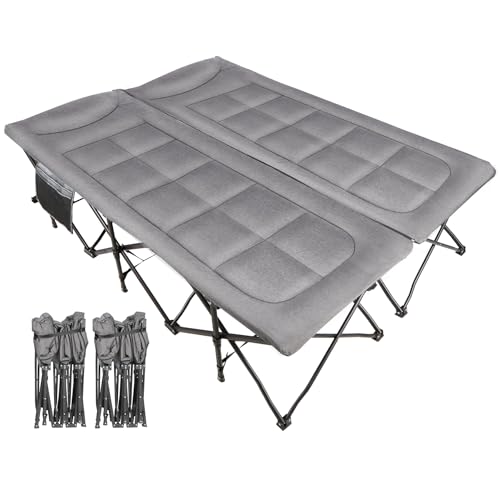
This REDCAMP item is not a tent, yet it can change how you use a large shelter by adding a queen-size raised sleep surface for two people. Its 59-inch width makes more sense inside a roomy cabin tent than inside the GoHimal’s shared sleeping zone.
The stated 500-pound limit suits many two-person camp setups, though your tent floor still needs enough clear space around the cot. You may find a cot especially useful on uneven campground ground, where thick pads alone do not feel as settled.
What We Like
- The queen-size format gives two campers a shared surface rather than separate narrow cots.
- Its 59-inch width offers noticeably more room than a single-person camp bed.
- The listed 500-pound limit helps you match the cot to a two-adult arrangement.
- Raised sleeping can make getting up less awkward during overnight camping trips.
Worth Noting
- You need a large tent floor to preserve a path around a queen-width cot.
- Folded camping furniture takes room in your vehicle, so measure your cargo area before departure.
- Fabric sleeping surfaces need to be fully dry before storage after damp camps.
At A Glance
Made For
You benefit most from this cot as a couple camping inside a spacious cabin or tunnel shelter with floor room to spare.
Consider Something Else When
The Castle Unicorn 8-12 Person 2 Room Camping Tent suits you better when you need the shelter itself rather than a sleeping accessory.
A 7.1-foot stated height immediately separates the Castle Unicorn from lower dome-style shelters. The two-room design uses a zippered divider, while the porch gives you an in-between area for shoes, folding chairs, or damp outer layers.
Compared with the GoHimal, you get a more defined room plan and more entry points through three mesh doors. For most family camps, that extra circulation space can reduce the familiar scramble around sleeping bags.
Highlights
- The 7.1-foot height helps taller campers stand while changing and organizing bedding.
- A zippered divider provides a closable separation between the two rooms.
- Three mesh doors give your group multiple ways in and out.
- The porch can keep dirtier footwear outside the sleeping rooms.
- Mesh doors and windows support airflow while helping keep the interior more comfortable.
Trade Offs
- A tall cabin profile needs careful staking and guy-out attention on exposed ground.
- More zippers and mesh panels mean more areas to brush clean before storage.
Technical Sheet
Right Fit For
You get the most from this tent during multi-family weekends where separate sleeping rooms and standing space matter.
Not Your Match When
The WildFinder Inflatable Tent with Skylight and Pump suits you better when you prefer an air-supported structure instead of a conventional cabin format.
KTT builds this version around straight walls, a shape that preserves usable room near the edges instead of tapering inward like a dome. The two-room format, three doors, and three mesh windows give a large group more options for circulation.
Against the Castle Unicorn, this KTT model emphasizes broad occupancy and cabin-like sidewalls rather than a stated tall height and porch. The trade-off shows up at setup, because a tent of this scale benefits from two or more adults sharing the work.
Upsides
- Straight walls leave more practical room for cots, bins, and camp chairs near the perimeter.
- Three doors help larger groups avoid climbing over sleeping bags at one entrance.
- Three mesh windows bring in airflow during warm afternoons.
- A double-layer construction pairs the main tent with an additional outer layer.
Minor Gripes
- The 10-to-14-person format requires a notably large, level campsite.
- Owners commonly find that folding large wall panels takes more patience than packing a compact dome.
- More doors create more zipper tracks to keep clear of grit.
Feature Snapshot
Best Suited To
You benefit most during family reunions and car-camping trips where your campsite has ample flat ground for a cabin footprint.
Look Elsewhere When
The GoHimal 8 Person Tent for Camping, Rainfly suits you better when you want a smaller family shelter with a carry bag.
This KTT variation keeps the straight-wall, two-room cabin approach but shifts the details toward two doors and four mesh windows. That window count may appeal to your group during warm-weather camping, especially with several people sleeping inside.
It shares the large-site requirement of the earlier KTT Extra Large 10-14 Person Family Cabin Tent, so your campsite reservation matters as much as the tent itself. Nothing flashy here, just a practical layout for a very large sleeping group.
Standout Traits
- Four mesh windows give you more potential ventilation points than the three-window KTT version.
- The two-room layout lets you separate adults from children or reserve one side for gear.
Room For Improvement
- Two doors provide less entry flexibility than the earlier KTT model’s three-door plan.
- Large double-layer tent fabric needs a dry, open area at home for airing out after rain.
- Your group may need to pack lighter than the headline capacity suggests to retain clear floor space.
- Straight-wall shelters need a campsite with enough room around the perimeter for proper staking.
Quick Facts
Who Will Love This
You get the strongest fit from this KTT cabin tent for large summer gatherings where ventilation and split rooms take priority.
A Better Fit Elsewhere
The LOYEAHCAMP 8 Person Extended Dome Camping Tent suits you better when three rooms matter more than maximum stated occupancy.
The WildFinder takes a different route from the pole-based KTT cabins by using an inflatable structure supplied with a pump. Inflatable means air-filled beams support the tent, reducing the need to sort through a traditional pole set.
Its Oxford fabric, skylight, and stove jack position it for campers building a more comfort-oriented base camp. Depending on your campsite surface, you will want to clear sharp debris thoroughly before laying out any inflatable tent.
Bright Spots
- The included pump supports the air-beam setup without requiring separate pumping equipment.
- A skylight brings daylight into the shelter and gives your sleeping area a more open feel.
- Oxford fabric is a woven textile commonly chosen for outdoor gear where a substantial fabric feel matters.
- The stove jack is a dedicated opening intended for a compatible stove-flue arrangement.
- Its house-like glamping format suits longer campsite stays where comfort matters.
- A waterproof outer design targets wet-weather camping conditions.
Points To Note
- You need to inspect the ground and remove sharp stones before inflation.
Feature Rundown
Who Should Grab It
You benefit most from this WildFinder tent during car-based glamping trips where a skylight and inflatable setup appeal to your camping style.
Skip It When
The KTT Extra Large 12-14 Person Family Cabin Tent suits you better when your priority is a stated capacity for a very large group.
Three rooms in an eight-person tent make the LOYEAHCAMP especially interesting for families that value organization over maximum headcount. Its extended dome shape and semi-freestanding setup create a distinct alternative to the straight-wall KTT tents.
Semi-freestanding means the structure needs anchoring to reach its intended form, rather than standing fully on its own. For campsites with firm soil, that may feel like a fair trade for a roomier multi-zone layout.
Reasons To Buy
- Three rooms can assign separate areas for adults, children, and bags.
- Mesh windows encourage airflow through a full family shelter.
- The extended dome shape gives you a different footprint from bulky cabin-wall designs.
Softer Spots
- Semi-freestanding construction makes proper staking especially important.
- Three-room tent layouts take extra attention during setup so each divider and panel sits correctly.
Spec Overview
Built With In Mind
Your family benefits most from this model when each camper needs a defined sleeping or storage zone within one tent.
Another Choice May Suit
The Castle Unicorn 8-12 Person 2 Room Camping Tent suits you better when you prefer a taller cabin-style shelter with a porch.
The TIMBER RIDGE makes its screen porch the central reason to choose it. That separate front area gives your group a spot to leave shoes, coolers, or damp layers before they reach the sleeping compartment.
At 20 feet long, 8 feet wide, and 76 inches high, its tunnel format calls for a long, clear tent pad. Compared with the GoHimal, you exchange an interior privacy curtain for an outdoor-adjacent screened zone.
Plus Points
- The screen porch creates a buffer zone for footwear and campsite clutter.
- A 20-by-8-foot footprint gives you a long layout for organized sleeping arrangements.
- The 76-inch height supports more comfortable movement than a low-profile tent.
- Double-layer construction and a rainfly add separate fabric layers to the shelter design.
Small Caveats
- The 20-foot length can be difficult to place on narrow wooded tent pads.
- Screened porch mesh needs gentle brushing after trips where leaves or mud collect around the entrance.
- Tunnel-style shelters need a properly cleared, level strip of ground.
Details At A Glance
The Right Fit
You benefit most from this TIMBER RIDGE shelter on roomy campground pads where a screened porch keeps your sleeping area tidier.
Reach For A Different Pick When
The uniHimal 10 Person Family Tent, 18 x 9 x 6.8 ft suits you better when you need a shorter footprint with two rooms.
uniHimal gives you a clearly stated 18-by-9-foot footprint and a 6.8-foot height, useful details for matching a tent to your campsite. Four large mesh windows and a two-room configuration make this a sensible middle ground between the eight-person options and the huge KTT cabins.
The listed ten-person capacity leaves flexibility for festival groups and family trips, although sleeping fewer people preserves space for luggage. For most backyards and drive-in campsites, the 18-foot length is easier to place than the TIMBER RIDGE’s 20-foot tunnel shape.
Positives
- The stated 18-by-9-foot floor size helps you plan your campsite before leaving home.
- Four large mesh windows offer several places for warm air to move out.
- A two-room arrangement lets you separate sleeping zones from bags and chairs.
- The 6.8-foot height supports easier standing for many adults.
- Double-layer construction adds an outer layer beyond the main tent body.
Areas To Watch
- Ten-person capacity is more comfortable with fewer sleepers and a dedicated gear area.
- Large mesh panels should be checked for trapped grit before the tent goes back into storage.
Feature Card
Whose Shelf It Belongs On
You get the most from this uniHimal tent for festivals, family camps, and backyard gatherings where measured floor space matters.
Where A Sibling Pick Shines
The KTT Extra Large 10-14 Person Family Cabin Tent suits you better when your group needs three doors and a larger stated occupancy range.
How To Choose The Right Big Tents For Camping
Start With Usable Floor Space
Capacity labels describe sleeping potential, not the room you retain after adding pads, duffels, coolers, and clothing bins. Your group gains much more comfort by sizing up, especially during rainy trips where everyone spends extra time indoors. An eight-person tent often serves four to six campers more comfortably than eight full-size adults.
Measure your usual tent pad or review campsite dimensions before choosing a long tunnel or wide cabin structure. The TIMBER RIDGE’s 20-foot length needs a clear stretch of ground, while the uniHimal’s stated 18-by-9-foot floor gives you a more defined planning reference.
Choose a Layout Around Your Group
Two-room tents work well for families that need a sleeping split or a protected gear area. A zippered divider, such as the one in the Castle Unicorn, gives a more closed separation than an open shared floor. Three-room layouts, including the LOYEAHCAMP, help you assign space more deliberately during longer trips.
Porches solve a different problem. A screened porch does not replace a bedroom, but it can keep muddy shoes, folding chairs, and camp clutter outside your sleeping area. Your camping routine should determine whether internal division or an external buffer matters more.
Consider Setup, Stakes, and Storage
Large tents reward a calm setup routine. Lay the footprint out first, organize poles or inflation gear, and leave enough space around the shelter for stakes and guy lines. A semi-freestanding design needs anchoring, while inflatable designs need a ground check before air beams go up.
At home, dry every fabric panel before storage and remove sand from zipper tracks. Large cabins also need more garage or closet room than compact domes, so your storage space deserves the same attention as your campsite.
Match Features to Weather and Comfort
A rainfly is an outer covering that sits above the main tent body, creating another layer over the sleeping space. Double-layer construction follows the same general idea by pairing the main shelter with an additional fabric layer. Mesh windows and doors support airflow, though you still need to close and secure the shelter according to changing weather.
Your comfort priorities can point you toward very different options. The WildFinder suits a skylight-oriented glamping setup, while the KTT cabins focus more on broad group accommodation and straight-wall room.
Details That Matter Before Your Trip
Common Shopping Slip Ups
Do not choose solely from the largest occupancy number. Your family needs floor area for personal bags, paths to doors, and space to change clothes, particularly on wet weekends. A smaller group inside a larger shelter often enjoys the trip more.
Another frequent mistake is overlooking tent-pad shape. An 18- or 20-foot shelter may not fit a short wooded platform, even though its total floor area sounds suitable. Check length, width, and clearance for stakes before committing to a layout.
What The Higher Tier Buys
Higher-tier large tents often add livability rather than just more sleeping positions. Dividers, screen porches, multiple doors, tall walls, extra mesh windows, and inflatable support systems address specific campsite frustrations. Those features can matter a great deal during multi-night stays.
Spending more makes sense when your tent becomes a regular family base rather than occasional backyard equipment. Your larger group may appreciate the added access points and defined zones, while a simple shared-space tent remains sensible for shorter trips.
Frequently Asked Questions
How Many People Fit Comfortably in a Large Camping Tent?
Your group usually gets more comfort by sleeping fewer people than the stated capacity. Leave floor room for bags, pads, and a clear route to the door.
Are Cabin Tents Better Than Dome Tents for Families?
Cabin tents commonly offer straighter walls and more usable space near the sides. Dome tents can suit you when a less boxy footprint better matches your campsite.
Why Does a Large Tent Need Multiple Doors?
Multiple doors help your group enter and exit without stepping across sleeping areas. They also make it easier to separate gear from the main path.
What Does a Rainfly Do on a Camping Tent?
A rainfly is an outer fabric cover placed over the main tent body. It adds another layer above the sleeping area during damp conditions.
Can You Use a Queen Cot Inside a Family Tent?
You can use a queen cot when your tent floor has enough open room around it. Measure both the cot width and the tent’s usable interior before packing.
Closing Remarks
Your right choice comes down to how your group actually camps. The GoHimal works well for a family that wants a simple divided interior, while the Castle Unicorn and KTT cabin options suit you when separate rooms and broad capacity matter more. The TIMBER RIDGE gives you a practical screened porch, and the WildFinder appeals to a more comfort-focused inflatable setup. Choose the footprint that fits your usual campsite, leave room for gear, and your tent will feel far more welcoming after a long day outside.