
Rock climbing gear does a lot of quiet work, whether you’re setting up at the crag, handling rope tasks at height, or packing for a long gym session. The right mix saves time, keeps your kit organized, and feels less fussy in the moments that matter. You’ll see a spread here, from protection and rope hardware to carrying options and small essentials, so you can match each item to the way you climb.
Some of these picks suit tree work, rescue-style rope handling, or rigging tasks more than a casual gym day. Others are better for bouldering, day hikes, or hauling shoes and layers between routes. That mix is the point, since climbing trips rarely ask for just one kind of gear.
Quick Look At The Shortlist

Notch Gecko Aluminum 3.0 Climbers Tree and Pole Gaffs

TRIWONDER Rescue Figure 8 Descender
Old Blue Chalk Bag for Rock Climbing

BeneLabel Poseidon Series Sewn Prusik Loops

X XBEN Thicken Climbing Harness

Bseash 50L Hiking Backpack, Dark Purple

Bseash 50L Hiking Backpack, Lake Green

Bseash 50L Hiking Backpack, Navy Blue
Tree and pole work asks for a very different feel than a chalk bag or a backpack, and this pair of gaffs is built for that heavier task. The quick connect straps and reinforced fiberglass cuffs point to a setup meant to stay put, while the 5.3-pound total weight keeps the load from feeling excessive for a tool in this class.
The 350-pound weight limit and ASTM F887 listing matter because they speak to the intended use, not casual sport climbing. For someone handling vertical work with regular transitions, the lighter frame is appealing, though the trade-off is that this is specialized gear, not an all-purpose climbing accessory.
Strong Points
- Quick connect straps help shorten setup time.
- Fiberglass cuffs add a steadier feel around the lower leg.
- The aluminum build keeps the overall weight manageable.
- 350-pound limit suits the stated work profile.
- Works for tree and pole tasks without excess bulk.
Areas To Watch
- These are task-specific, so they are not a general climbing catch-all.
- Owners usually need to stay attentive to strap fit and cuff placement.
- Regular inspection makes sense for any gear used at height.
Feature Snapshot
Who It Suits Best
Climbers or arborist-minded users who need tree or pole gaffs for repeated workdays will get the most value here.
A Better Fit Elsewhere
Old Blue Chalk Bag for Rock Climbing fits gym climbers and boulderers far better, since it handles hand chalk and small-item storage instead of leg-mounted work gear.
A figure 8 descender is the kind of tool you notice most when rope control matters, because it shapes the way friction is managed during descent. This TRIWONDER piece uses aluminum and lists both 35kN and 50kN figures, which signals a heavy-duty orientation for rappelling, belay work, and rigging tasks.
That strength focus makes it more specialized than the chalk bag or backpack picks above, and that’s the trade-off. It suits rope users who want a straightforward device without extra clutter, though the honest read is that newcomers still need solid rope knowledge before relying on hardware like this.
What We Like
- Figure 8 format is familiar to many rope users.
- Aluminum construction keeps weight sensible for metal hardware.
- Listed strength figures suit heavier-duty rope tasks.
- Useful for rappelling, belay, and rigging roles.
- Straightforward shape tends to make handling feel intuitive.
Points To Note
- This is specialized rope hardware, not a casual climbing accessory.
- The simple design still asks for careful rope handling.
- Cleaning is usually easy, though wear checks should stay routine.
Core Details
Who Will Love This
Rope-savvy climbers and rescue-oriented users who want a simple descender for controlled rappelling are the best match here.
Where A Sibling Pick Shines
X XBEN Thicken Climbing Harness is the better fit for someone building a wearable rope system, especially for work positioning or tree-climb setups.
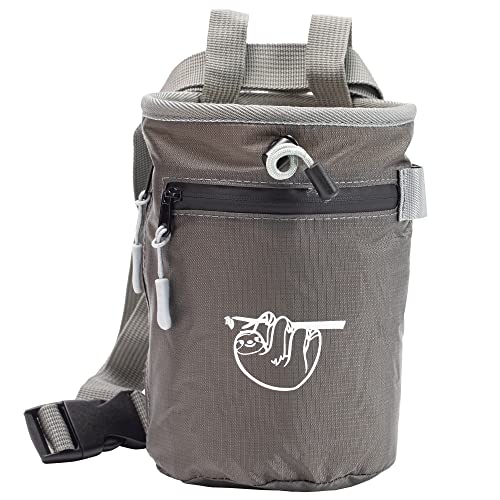
For gym sessions and bouldering days, a chalk bag with usable storage can matter more than flashy styling. Old Blue’s design adds two large zip pockets, so you can keep tape, keys, or a small brush close at hand instead of stuffing them in a loose pocket.
That makes it feel more practical than the hardware-focused picks above, especially for indoor climbing where you want one small carry point that does several jobs. The trade-off is simple: it’s still a chalk bag first, so it won’t replace a pack or a true gear organizer.
Positives
- Two zip pockets add handy storage for small essentials.
- Fits bouldering and gym climbing without feeling overbuilt.
- Can also serve weightlifting and gymnastics sessions.
- Easy to keep at the wall or toss in a larger bag.
Room For Improvement
- Storage is useful, though it still stays within chalk-bag limits.
- Needs basic upkeep so chalk dust does not build up inside pockets.
Technical Sheet
Built With In Mind
Gym climbers and boulderers who like having tape, a brush, or keys within reach will get the most from this bag.
Another Choice May Suit
Bseash 50L Hiking Backpack, Dark Purple works better for full-day outings, since it gives you far more carry room than a chalk bag ever could.
Sewn prusik loops are compact rope helpers, and this BeneLabel two-pack keeps the format straightforward. At 19 inches long and 2/5 inch in diameter, these loops are sized for rope management tasks where a smaller, tidy connection point is useful.
Compared with the figure 8 descender, this is much more of a support item than a primary rope-control device. The blue finish is a simple touch, but the real draw is the pair format, which can make it easier to keep a backup ready or set up two stations.
Bright Spots
- Two-pack format helps with redundancy or paired use.
- Compact 19-inch length keeps the loops easy to stash.
- The sewn construction suits rope-handling roles well.
- Useful as a helper item in a larger rigging kit.
Softer Spots
- These are support tools, so the use case is fairly narrow.
- Small textile items need routine checks for wear and dirt.
- Best value comes from people who already know how they’ll use them.
Feature Rundown
Right Fit For
Climbers or rigging users who want a small sewn loop set for backup tasks or rope management will find this practical.
Swap It Out When
TRIWONDER Rescue Figure 8 Descender is the better match for someone who needs a primary lowering device rather than a support loop.
A half-body harness makes sense for work where waist support and a wider fit matter more than a full sport-climbing layout. X XBEN lists a polyester build, reinforced ends, and adjustable alloy buckles, so it reads like a utilitarian option for rope-heavy tasks rather than a minimalist sport harness.
The stated 300 kg load limit and 15 kN breaking strength are the kind of numbers that matter in tool-oriented gear, though they do not remove the need for proper use and inspection. You may find the fit range especially helpful for shared household use or mixed body sizes, while the bulk is the trade-off for that broader adjustability.
Reasons To Buy
- Wider half-body shape offers a steadier waist feel.
- Adjustable leg and waist straps help tune the fit.
- Polyester webbing and reinforced ends suit hard use.
- Useful for roofing, rescue, tree work, and climbing tasks.
- Shared sizing can work well for family or team kits.
Points To Note
- Half-body construction is more task-specific than a full climbing harness.
- Fit tuning takes a little attention before each use.
- Regular checking of buckles and webbing is part of ownership.
Details At A Glance
Whose Shelf It Belongs On
Rope workers, tree climbers, and rescue-minded users who want a wider half-body harness will get the most from this model.
Look Elsewhere When
Notch Gecko Aluminum 3.0 Climbers Tree and Pole Gaffs is the better match for someone who needs leg-mounted climbing hardware rather than a waist harness.
A 50L pack gives you real breathing room for climbing weekends, car-camping overnights, or gear-heavy day trips. This dark purple version stands out most for the shoe compartment, which helps keep dirty footwear separate from snacks, layers, or a helmet.
It overlaps with the other Bseash backpacks in size, but this one leans toward more organized carry for people who hate mixing clean and muddy gear. The trade-off is simple enough, since a larger pack can feel like overkill for very light outings.
Highlights
- 50L capacity suits larger climbing or travel loads.
- Shoe compartment helps separate footwear from other items.
- Water-resistant build makes sense for changing outdoor conditions.
- Works across camping, skiing, cycling, and hiking use cases.
Worth Noting
- The size may feel bigger than needed for short gym visits.
- Organized packing still depends on how you use the main compartment.
At A Glance
Made For
Climbers who carry extra layers, shoes, and meal items for long days out will appreciate the room here.
Consider Something Else When
Bseash 50L Hiking Backpack, Lake Green is the better fit for someone who wants the same size pack without the shoe compartment.
This Lake Green version keeps the same 50L format but skips the shoe compartment, which gives the pack a cleaner setup for people who already carry separate footwear. That simpler layout can feel more direct for gym commutes or lighter overnights where every pocket has a job.
Compared with the dark purple version, you give up that dedicated shoe section, but you also remove a bit of structure you may not need. For many hikers and climbers, that can be the more practical compromise, especially in a car boot or on public transit.
Best Bits
- 50L capacity still leaves plenty of room for trip gear.
- Water-resistant material suits outdoor use.
- Simpler layout can make packing feel less fussy.
- Good for people who already own separate shoe storage.
Minor Gripes
- Lacks the shoe compartment found on some sibling versions.
- Large volume can feel unnecessary for quick wall sessions.
Feature Card
The Right Fit
Outdoor travelers who want one roomy pack for hiking, climbing, or cycling gear without extra compartments will like this version.
Where A Sibling Pick Shines
Bseash 50L Hiking Backpack, Navy Blue works better for anyone who wants the same format with the shoe compartment included.
The Navy Blue version keeps the 50L capacity and shoe compartment, so it lands in the same useful middle ground as the dark purple pack. The difference is mostly visual, which can matter more than people expect when gear lives in a car, locker, or shared storage shelf.
For weekend climbs, gym-to-trail transitions, or ski days, this version offers the same organizational advantage as its sibling with a slightly quieter look. It’s a sensible choice, though like the other large Bseash packs, it may feel roomy for quick one-hour errands.
Standout Traits
- 50L volume handles larger climbing and travel loads.
- Shoe compartment helps keep dirt away from clean items.
- Water-resistant build suits outdoor routines.
- Neutral navy color can fit shared storage spaces easily.
Honest Caveats
- Like the other 50L versions, it can feel large for short trips.
- The shared format means the main differences come down to color and compartment layout.
Quick Facts
The Right Fit
Weekend climbers who want a roomy, straightforward pack with a separate shoe zone will be comfortable here.
Skip It When
Bseash 50L Hiking Backpack, Lake Green makes more sense for someone who wants the same size without the shoe compartment.
How To Choose The Right Gear For Rock Climbing
Match The Tool To The Job
Climbing gear covers several very different jobs, so the first question is not “what looks useful,” it’s “what task are you solving.” A descender like the TRIWONDER Figure 8 is for rope control, while a chalk bag serves grip and storage at the wall. Tree gaffs, harnesses, loops, and backpacks each live in different parts of the climbing world, and mixing them up usually leads to frustration.
Think about the setting too. Gym climbers usually care about ease, compact storage, and quick access, while tree or pole work calls for support, fit stability, and sturdy attachment points. The closer your gear matches the setting, the less you need to improvise.
Check Fit, Not Just Names
Climbing gear often sounds similar on a product page, but the dimensions and fit details tell the real story. Harness straps, loop length, pack capacity, and cuff design all change how the item behaves once it’s on your body or in your kit. A roomy 50L pack helps on a weekend trip, while a 19-inch sewn loop makes more sense as a compact rope aid.
That’s where the small numbers matter. A lightweight tool can still feel awkward if the sizing is off, and a larger item can be a drag in daily use when you only need a pared-down setup. For shared household gear, adjustable buckles and broad size ranges usually make life easier.
Look For Real-World Convenience
Storage, cleaning, and packing behavior matter more than many first-time shoppers expect. Zipper pockets on a chalk bag, a shoe compartment on a backpack, or quick connect straps on leg gear can save time in the parking lot or at the base of a route. Those touches rarely sound dramatic, but they shape how often you’ll reach for the item.
Durability also shows up in the little things, like reinforced ends, aluminum parts, or webbing that’s easy to inspect. Gear that’s used around rope or body weight should be checked regularly, and textile pieces need cleaning and dry storage so they don’t become crusty or hard to manage. The best choice usually feels easy to live with, not just impressive on paper.
Things Worth Knowing First
Mistakes Worth Dodging
One common slip is buying hardware for the wrong style of climbing. A chalk bag won’t help with rope lowering, and a descender won’t replace a carrying pack. Another easy miss is ignoring fit data, especially on harnesses or leg-mounted gear where small changes make a big difference in comfort.
Another issue is skipping maintenance plans in your head. Textile gear collects dust and sweat, metal hardware needs visual checks, and anything used at height should be handled with a little more care than casual gym items. The simplest fix is to choose gear you can inspect, clean, and store without a lot of fuss.
The Upgrade Payoff
Higher-tier climbing gear usually costs more because of better materials, tighter construction, or more thoughtful adjustability. Reinforced cuffs, alloy buckles, aluminum parts, and larger organized storage all add up, especially when the item is expected to take repeated use or support more demanding jobs. You’re often paying for smoother handling as much as for strength.
That upgrade matters most when the gear gets used often or in less forgiving settings. For occasional gym sessions, a simpler chalk bag or backpack may be enough, but rope work, tree work, and shared household kits benefit from sturdier build details. The extra spend tends to make the most sense where comfort, repeat use, and confidence are all pulling in the same direction.
Closing Thoughts
The right climbing setup depends on how you actually move, carry, and manage rope work. A chalk bag, descender, harness, or backpack can each solve a different problem, and the best result usually comes from choosing the item that fits one job cleanly instead of asking one piece to do too much. The shortlist above covers that spread with a practical bias, so you can build out a kit that feels tidy, usable, and ready for real days out. Start with the task you care about most, then work outward from there.