
Green Camping Stoves suit cooks who want a setup that feels straightforward at the campsite, tailgate, or trailhead. Some of these picks favor family-style meals, others stay compact enough for a backpack, and a few split the difference with smart burner layouts and foldable frames. The main challenge is matching fuel type, weight, and cooking surface to the way you actually travel.
This roundup keeps the focus on real use, like boiling water before dawn, frying breakfast for a group, or packing light for a short overnighter. You’ll see where each stove earns its place, plus the trade-offs that matter once you’re loading gear into a trunk or stash bag. A little clarity here saves a lot of fuss later.
The Shortlist At A Glance

Coleman Classic 3-Burner Propane Camping Stove

KOMAN Camping Propane Stove 10000BTU Single Burner

Flame King VT-101 2-Burner Portable Camping Stove Grill

Camp Chef Everest 2X 2-Burner Portable Camping Stove

Coleman Cascade 3-in-1 Outdoor Camp Stove
Fire-Maple Fixed Star 3 Backpacking and Camping Stove System

OGERY 2-Burner Foldable Camping Stove with Griddle
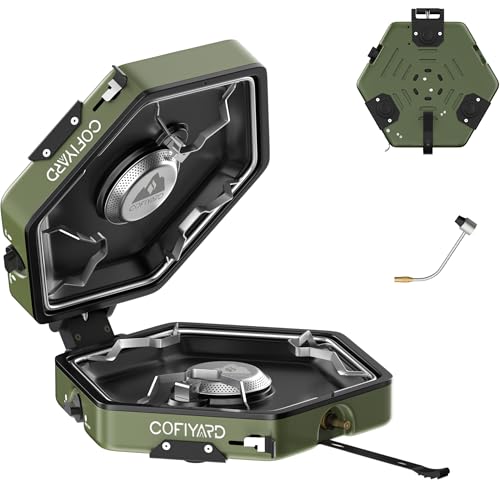
Cofiyard Propane 2-Burner Camping Stove with Carrying Bag
More Details On Our Top Picks
Family trips and group tailgates are where this three-burner layout makes sense. The separate adjustable burners let you keep a pot simmering while another pan runs hotter, which is a relief in a busy campsite kitchen.
InstaStart ignition cuts out the match-fumbling that can slow down a morning meal, and the 28,000 BTU output gives you room to cook more than one dish at once. The honest trade-off is size and fuel use, so this fits car campers more naturally than anyone chasing a tiny pack weight.
Strong Points
- Three burners give you space for real meal prep, not just water boiling.
- Adjustable flame control helps you move between searing, simmering, and gentle warming.
- InstaStart ignition saves time at camp, especially before breakfast coffee.
- 28,000 BTUs suits larger cookware and faster heat-up needs.
- Works well for tailgates, hunting camps, and base-camp cooking.
Things To Consider
- Its footprint suits trunks and picnic tables better than ultralight packs.
- Higher output usually means you’ll think more about propane planning.
- Cleaning around three burners takes a little more post-meal effort.
Feature Snapshot
Who It Suits Best
Campers who cook full meals for a group will get the most from this stove.
Where A Sibling Pick Shines
Fire-Maple Fixed Star 3 Backpacking and Camping Stove System suits hikers who care more about pack weight than cooking for a crowd.
For solo cooking or a stripped-down weekend setup, this single-burner KOMAN keeps things simple. Its smaller profile makes more sense than the Coleman Classic 3-Burner Propane Camping Stove when your kit already feels crowded.
The 10,000 BTU burner suits quick boils, basic skillet work, and light camp meals. One thing worth considering is fuel planning, since it runs on a 16 oz propane cylinder and fuel is not included, so you’ll want the right canister in hand before heading out.
Bright Spots
- Single-burner design keeps setup straightforward.
- Compact size fits narrow camp tables and smaller storage bins.
- 10,000 BTUs are enough for everyday campsite cooking tasks.
- Pairs well with a minimalist backpacking or car-camping kit.
Minor Gripes
- One burner limits how much food you can manage at once.
- You need to supply the propane cylinder separately.
- Best for smaller cookware rather than multi-pan meals.
Core Details
Who Should Grab It
Solo campers and minimalist packers will appreciate the small footprint most.
Another Choice May Suit
Camp Chef Everest 2X 2-Burner Portable Camping Stove fits pairs and families who need more cooking space and stronger output.
Backpackers who still want two burners get a useful middle ground here. Compared with the KOMAN single-burner stove, the VT-101 gives you more flexibility without jumping all the way to a full-size camp cooktop.
The side wind guards and lid that doubles as a windshield help protect the flame in breezy campsites, which matters more than people expect once you’re cooking near open air. The compact, portable build should suit short trips well, though the trade-off is still a smaller cooking zone than the larger Coleman and Camp Chef options.
Highlights
- Two burners let you split cooking tasks more cleanly.
- Wind-blocking panels help steady flame in open campsites.
- Lid-cum-windshield design adds usefulness without extra parts.
- Portable build makes it easier to carry on trips with limited room.
Room For Improvement
- Smaller cooking space can feel tight for bigger pans.
- It still needs the right propane bottle on hand.
- Not as roomy as the three-burner Coleman options.
Details At A Glance
Best Suited To
Campers who want a lighter two-burner setup for short outings will feel at home here.
Look Elsewhere When
Green Camping Stoves with more cooking room, such as the Coleman Cascade 3-in-1 Outdoor Camp Stove, fit group meal prep better.
Strong burner output is the reason this Camp Chef model stands apart from the rest of the field. For most car campers, that extra power means faster preheating and less waiting around while dinner gets going.
At 40,000 BTUs, it sits well above the Coleman Classic and the Flame King VT-101 in raw heat capacity, so it makes more sense for larger pans and heavier cooking loads. The trade-off is that this kind of output usually fits base-camp life better than minimalist packing.
Reasons To Buy
- High heat output helps speed up cooking tasks.
- Two burners keep the layout flexible for separate dishes.
- Good fit for bigger cookware and fuller meal routines.
- Useful for families that want a stronger camp kitchen.
Areas To Watch
- More power can mean more fuel planning.
- Less appealing for ultralight or minimalist trips.
- Storage space matters because it’s not a tiny unit.
Feature Rundown
The Right Fit
Campers who value fast heat and larger meal prep will get the most from this stove.
Swap It Out When
KOMAN Camping Propane Stove suits solo trips and simpler kits that don’t need this much output.
Cooking styles change from trip to trip, and this Coleman leans into that flexibility. The cast-iron grill and griddle accessories give you more surface options than the basic burner-first stoves above, which is handy for breakfast duty or mixed meal prep.
The 24,000 BTU output sits below the Camp Chef Everest 2X, so you give up some raw power in exchange for more cooking formats. That trade makes sense for campers who want one stove to cover eggs, burgers, and skillet sides without hauling separate gear.
Plus Points
- Three-in-one design supports several cooking styles.
- Cast-iron accessories add useful surface options.
- Good match for campers who cook varied meals.
- More versatile than a plain single-burner setup.
- Useful for tailgates where menu variety matters.
Worth Noting
- Accessory setup takes a little more attention than a plain stove.
- Lower output than the high-power Camp Chef unit.
- Cast-iron pieces add weight to the overall kit.
Quick Facts
Whose Shelf It Belongs On
Camp cooks who like switching between grilling and skillet work will appreciate this flexible layout.
A Better Fit Elsewhere
Fire-Maple Fixed Star 3 Backpacking and Camping Stove System fits hikers who want a lighter, boil-focused setup instead.
This is the kind of stove system that makes sense on long trail days and tight packing lists. The integrated pot-and-burner style keeps the setup compact, and the locking handle helps when you’re moving hot water or a small meal around camp.
The HX base is the key idea here, because a heat exchanger base is designed to improve heat transfer from flame to pot. That usually matters most to hikers who want quicker boiling and less fuel fuss, though it’s less flexible than the open-burner designs from Coleman or Camp Chef.
Best Bits
- All-in-one setup keeps pieces together more neatly.
- HX base is aimed at more efficient heat transfer.
- Piezo ignition removes the need for a separate lighter.
- Locking handle helps with easier handling on the move.
- Compatible with most canisters, which broadens fuel matching.
Softer Spots
- Best suited to boiling and simple meals, not big group cooking.
- Less open-ended than a two- or three-burner camp stove.
- Integrated systems can feel more specialized than standalone burners.
Technical Sheet
Made For
Pack-light hikers who mostly boil water or cook quick trail meals will find this system appealing.
Where Shoppers Go Wrong
Green Camping Stoves with open grates, such as the Coleman Cascade 3-in-1 Outdoor Camp Stove, suit varied cooking better than this tight system.
Foldable gear tends to win points with people who load and unload camp setups often, and this OGERY leans into that kind of use. The included carrying bag makes transport cleaner, while the two adjustable burners give you more control than a plain one-burner design.
The griddle comes in textured and smooth surfaces, so you get some menu flexibility without adding separate cookware. One caution is that the extra moving parts and cooking surfaces call for a bit more cleaning and packing discipline, especially after greasy breakfast duty.
Standout Traits
- Foldable build simplifies storage and transport.
- Two burners help you split breakfast or dinner tasks.
- Included griddle expands meal options at camp.
- Carrying bag makes the whole kit easier to manage.
Points To Note
- More pieces usually mean more cleanup after cooking.
- Foldable hardware asks for a little care during packing.
- Still a better car-camp fit than a true ultralight setup.
Feature Card
Perfect Match For
Campers who want a foldable stove with a griddle for tailgates or family weekends will get the most from it.
Where A Sibling Pick Shines
Coleman Classic 3-Burner Propane Camping Stove suits larger groups that need more total burner space.
This Cofiyard model is aimed at casual campers who want a functional two-burner setup without overcomplicating the packing list. The carrying bag and gas stove pressure regulator make the package feel more complete than a bare-bones burner, especially for weekend trips and tailgate setups.
The flick-style ignition adds a bit of convenience at start-up, and the foldable format should make it easier to tuck into a trunk or gear bin. The trade-off is that it sits in the middle ground, so it won’t feel as roomy as the Coleman Classic 3-Burner Propane Camping Stove or as specialized as the Fire-Maple system.
Positives
- Two burners give you useful cooking flexibility.
- Carrying bag helps keep storage cleaner.
- Pressure regulator adds a helpful control component.
- Foldable design works well for mixed-use camping kits.
Areas To Watch
- Not as roomy as a three-burner camp stove.
- More suited to casual use than big-group feasts.
- Foldable parts deserve ordinary care during packing.
Spec Overview
Built With In Mind
Weekend campers who want a balanced two-burner stove with useful extras will find this a sensible fit.
Reach For A Different Pick When
Camp Chef Everest 2X 2-Burner Portable Camping Stove is the stronger match for cooks who care more about heat output than accessory bundle value.
How To Choose The Right Green Camping Stoves
Match Burner Count To Meal Style
Burner count matters because it shapes the whole campsite rhythm. A single-burner stove works for coffee, oatmeal, and simple skillet meals, while two burners let you separate a sauce from a side dish. Three burners make the most sense for family camps, group tailgates, or any setup where you want less waiting between pans.
Think about your usual menu instead of your nicest camping memory. The Coleman Classic 3-Burner Propane Camping Stove and the Coleman Cascade 3-in-1 Outdoor Camp Stove suit fuller cooking plans, while the KOMAN Camping Propane Stove keeps things lean. That split is the real decision point.
Balance Power, Fuel, And Pack Size
BTUs, or British Thermal Units, are a heat output measure, and they matter more than many people expect. Higher numbers tend to help with faster heating and bigger cookware, but they can also mean more fuel planning and a larger footprint. The Camp Chef Everest 2X leans into output, while the Fire-Maple Fixed Star 3 stays tuned for efficient boiling and lighter transport.
Pack size is the quiet factor that decides whether a stove gets used often or stays in the garage. Car campers can live with more bulk, but backpackers usually want an integrated system like the Fire-Maple or a compact single burner. A stove that fits your storage bin travels better than one that only looks good on paper.
Look Closely At Ignition And Wind Protection
Ignition style changes how smooth your setup feels at camp. Piezo ignition creates a spark with a built-in igniter, which saves you from hunting for a lighter in the dark, and the Coleman InstaStart does the same job in its own way. The trade-off is that simple systems still deserve routine care, because dirt and rough handling can make any igniter feel less crisp over time.
Wind protection matters most in open campsites, high desert spots, and breezy shorelines. The Flame King VT-101 uses side guards and a windshield lid, which gives it an edge where flame stability matters. That kind of detail can be the difference between easy cooking and a frustrating dinner delay.
Choose Materials And Accessories With Cleanup In Mind
Cast-iron grill and griddle accessories add cooking range, but they also add weight and cleanup. A plain burner setup is easier to pack away, while a model like the Coleman Cascade 3-in-1 gives you more surface variety at the cost of extra parts. The right answer depends on whether you value flexibility or a faster close-down after the meal.
Storage helps reveal the truth of any stove. Carrying bags, locking handles, and foldable frames make regular use easier because the gear stays together instead of bouncing around loose in a trunk. That’s where the OGERY and Cofiyard models feel especially practical for weekend use.
A Quick Reality Check
Mistakes Worth Dodging
One common slip is choosing output without thinking about cookware size. A high-output stove can still feel awkward under a big skillet if the frame is cramped, and a compact burner can frustrate you when you’re cooking for four. Match the cooking surface to the meals you actually make.
Another easy miss is skipping fuel compatibility. A stove that needs a 16 oz propane cylinder or a specific canister format should line up with the fuel you already plan to carry. The wrong match can turn an otherwise good setup into extra hassle before the trip even starts.
The Upgrade Payoff
Higher-tier stoves usually cost more because they give you stronger burners, more stable frames, better ignition systems, or extra cooking surfaces. That extra spend can make sense for frequent campers, large households, or anyone who cooks a real dinner outdoors instead of just boiling water. The Camp Chef Everest 2X and Coleman Cascade 3-in-1 show how added capability changes the whole experience.
Paying up also tends to mean less compromise in busy camp kitchens. Better burner spacing, more control, and included accessories can save you from juggling pans or carrying separate pieces. For occasional solo trips, that upgrade is harder to justify, and a simpler stove often makes more sense.
Final Thoughts
The right Green Camping Stoves choice comes down to how you camp, not how much gear sounds impressive on a listing. Families and tailgaters usually want the room and flexibility of the Coleman or Camp Chef models, while solo hikers will feel better served by the KOMAN or Fire-Maple. Pick the stove that fits your fuel, your storage space, and the meals you actually plan to cook, and the rest tends to fall into place.