

Handheld anemometers make more sense once you need more than a rough guess. You might be checking a vent in a workshop, a breeze for sailing, or air movement on a jobsite, and a small meter saves you from guessing at the wind. The eight options below lean toward different kinds of use, from simple outdoor checks to HVAC work with data logging and app support. You’ll also see where each one fits best, and where another model in the list makes more sense.
Quick Look At The Shortlist

XRCLIF Digital Wind Speed Meter Anemometer

BTMETER BT-100APP Anemometer
Wintact Digital Anemometer Handheld

testo 405i Anemometer Handheld
BTMETER Digital Anemometer Barometer Handheld BT-100WM

Mcbazel 3 in 1 Handheld Digital Anemometer Wind Meter
AOPUTTRIVER Pro HVAC Anemometer AP-856A

AOPUTTRIVER Mini Anemometer 53g
More Details On Our Top Picks
XRCLIF keeps the focus on the basics, which is useful when you want wind speed and air flow without a lot of menu digging. For backyard checks, fishing trips, or a quick shooting lane read, that straightforward approach feels easier to live with than a busier meter.
The trade-off is simple: you get a more general-purpose tool, not the deeper data options you see on the higher-end picks below. Still, for casual outdoor use and a spare tool in the kit, that restraint can be the right call.
Strong Points
- Plain layout keeps quick checks easy.
- Useful for everyday wind and airflow tasks.
- Good match for casual outdoor use.
Things To Consider
- Less suited to deeper airflow logging.
- Basic format means fewer advanced workflow touches.
Feature Snapshot
Who It Suits Best
Weekend hobbyists and casual outdoor users get the most from this one.
Swap It Out When
BTMETER BT-100APP suits you better for Bluetooth-linked tracking and app-based convenience.
BTMETER leans into connected use, and that makes sense for anyone who wants wind readings to live beyond the screen on the tool itself. In a workshop, on a roofline, or during repeated checks at the same site, Bluetooth can make note-taking feel less clumsy.
Compared with XRCLIF’s simpler layout, this one suits a more data-minded routine, though app dependence also adds a little setup work. The honest read is that it fits best where you value convenience and record-keeping more than bare simplicity.
What We Like
- Bluetooth support helps move readings into a phone workflow.
- Handy for repeated measurements at the same site.
- Air velocity and temperature coverage broadens use.
- Better fit for users who track results over time.
Room For Improvement
- App-based features add a setup step.
- More connected than minimal, so it suits less casual use.
Details At A Glance
Whose Shelf It Belongs On
DIYers and field users who like logged readings and phone-based convenience get the most from it.
Where A Sibling Pick Shines
XRCLIF Digital Wind Speed Meter Anemometer is the easier fit for anyone who wants a simpler handheld tool without app management.
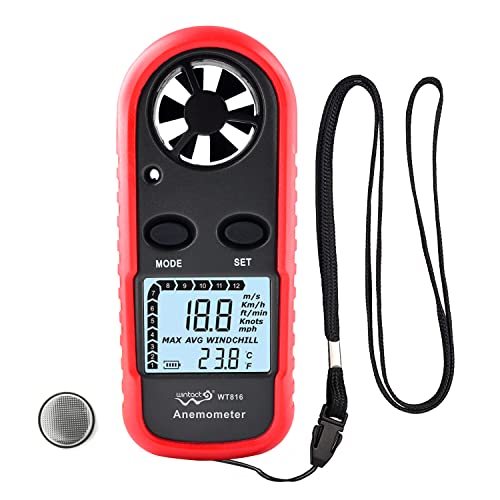
Wintact looks built for people who want a broad everyday range without moving into specialty gear. The listed wind and temperature spans give it a practical edge for sailing docks, drone prep, golf practice areas, and HVAC spot checks.
That wider spread is useful, though it also means the feel is more general-purpose than highly specialized. Compared with testo 405i, you give up the duct-focused finesse, but you gain an easier all-around handheld for mixed outdoor and indoor work.
Highlights
- Wide wind range suits many everyday scenarios.
- Temperature coverage helps with simple condition checks.
- Works across sports, hobby, and HVAC tasks.
- Good middle ground for mixed use.
Points To Note
- General-purpose design may not feel specialized enough for pro workflows.
- Less focused than duct-first tools for fine HVAC work.
Core Details
Perfect Match For
Hobby users who split time between outdoor sports and basic airflow checks will find the broad range useful.
Another Choice May Suit
AOPUTTRIVER Pro HVAC Anemometer AP-856A makes more sense for logging-heavy HVAC work and deeper record keeping.
testo 405i is the most clearly work-focused pick in the group, and that shows in the telescopic shaft and in-duct airflow emphasis. For HVAC techs or serious home improvers, the extendable reach matters because registers, ducts, and tight openings are exactly where a short handheld can feel awkward.
The app-based control gives you a modern workflow, though it also means this isn’t the friendliest choice for casual spot checks. Compared with Wintact, you get more duct-specific intent and more professional fit, but not the same broad hobby-first feel.
Positives
- Telescopic shaft reaches into tighter duct areas.
- Designed for in-duct airflow and temperature checks.
- Bluetooth and app control support a cleaner workflow.
- Good match for repeated HVAC service visits.
- CFM support helps you think in system terms, not just wind speed.
Minor Gripes
- More specialized than a casual all-purpose meter.
- App reliance adds extra steps for quick one-off checks.
Technical Sheet
Best Suited To
HVAC technicians and hands-on property maintainers get the clearest value here.
Look Elsewhere When
BTMETER BT-100APP is the easier fit for shoppers who want wireless convenience without a duct-first tool focus.
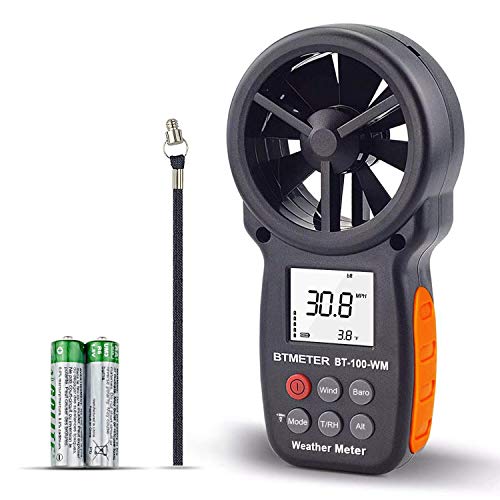
BT-100WM brings more environmental context than the simpler meters in this roundup. For climbing, drone prep, or HVAC work, humidity, altitude, and barometric pressure can help you build a fuller picture instead of relying on wind alone.
The upside is obvious for anyone who wants more than a breezy snapshot, though more inputs also mean more to keep track of in everyday use. Compared with BTMETER BT-100APP, this one leans less toward phone-based convenience and more toward broad environmental reading on the tool itself.
Best Bits
- Humidity and pressure readings broaden the tool’s usefulness.
- Altitude support helps with outdoor planning.
- Useful for drone, climb, and HVAC scenarios.
- Shows more context than wind-only meters.
Worth Noting
- More data points mean a busier readout.
- Less streamlined than a basic wind-speed-only device.
Feature Rundown
Right Fit For
Outdoor hobbyists and field users who want broader atmospheric data will get the most from it.
Reach For A Different Pick When
XRCLIF Digital Wind Speed Meter Anemometer is easier to live with for quick wind checks and lighter use.
Mcbazel keeps things compact and useful, which is exactly what many people want from a handheld meter. The backlight helps in dim garages, shaded decks, and early starts, so the screen stays readable without forcing you into awkward angles.
It doesn’t lean into flashy extras, and that’s part of the appeal. Compared with BT-100WM, it feels calmer and lighter on features, but that simpler profile fits daily carry better for a lot of routine wind checks.
Upsides
- Backlight improves visibility in low light.
- Simple 3-in-1 layout suits regular use.
- Good fit for indoor and outdoor checks.
- Easy to keep in a tool bag.
Areas To Watch
- Less specialized than HVAC-focused models.
- Better for routine checks than deep data work.
Feature Card
The Right Fit
Commuting hobby users, indoor-outdoor tinkerers, and casual field checkers will like this one.
Skip It When
AOPUTTRIVER Pro HVAC Anemometer AP-856A makes more sense for logging-heavy work and deeper measurement habits.
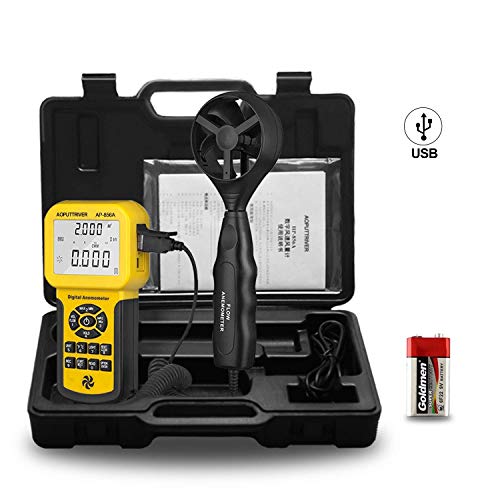
AP-856A is built for the kind of work where records matter as much as the live reading. With 600 stored entries, USB export to PC, and max, min, and average tracking, it suits service calls, commissioning notes, and anyone who wants a paper trail without handwriting every number.
That extra depth makes it heavier on workflow than the simpler picks, but it also pays off in repeatable HVAC tasks. Compared with testo 405i, this one leans more into data handling and less into reach, so the better fit depends on whether your job asks for logging or for duct access.
Reasons To Buy
- Stores up to 600 readings for later review.
- USB export supports a PC workflow.
- Max, min, and average modes help summarize changes.
- 0.001 resolution suits detailed reading work.
- Backlight improves visibility in dim work areas.
Softer Spots
- More feature depth means more menu handling.
- Feels aimed at technical tasks, not casual use.
Spec Overview
Built With In Mind
HVAC pros and detail-focused technicians will get the clearest benefit from the record keeping and export tools.
Where A Sibling Pick Shines
Wintact Digital Anemometer Handheld is simpler for mixed hobby and outdoor use without the logging-heavy workflow.
AOPUTTRIVER’s mini meter stands out for one obvious reason, it’s built to disappear into a pocket or pouch until you need it. At 53g, it makes sense for travel kits, boat bags, or anyone who wants a light tool without carrying a larger housing around all day.
The quick backlight is handy in dim settings, though the smaller body can feel more minimal than the heavier-duty options above. For quick wind, temperature, and wind chill checks, that trade-off is easy to accept, especially when space is tight.
Positives
- Very light body suits pocket carry.
- Backlight helps in low-light conditions.
- Useful for fast current, average, and max checks.
- Easy to pack for travel or field use.
Small Caveats
- Smaller format may feel less substantial in hand.
- Best for quick checks rather than deeper workflow.
Core Details
Who Should Grab It
Travel-focused hobbyists and anyone who wants a pocketable meter will appreciate the size most.
Consider Something Else When
AOPUTTRIVER Pro HVAC Anemometer AP-856A is the stronger choice for log-heavy field work and PC export.
How To Choose The Right Handheld Anemometers
Match The Meter To The Job
The best handheld anemometer for you depends on where you use it most. Outdoor hobby use calls for a simple wind and temperature meter, while HVAC work benefits from CFM or CMM support, which means cubic feet or cubic meters per minute, a more system-focused way to think about airflow.
That difference matters because a fishing trip and a duct balance check need different information. A general model keeps things simple, but a service-oriented model saves time when repeated readings and notes matter.
Pay Attention To Reach And Form
Short, pocketable meters are easy to carry, yet they can feel limited near vents, louvers, or deeper duct openings. A telescopic shaft, like the one on testo 405i, gives you extra reach without forcing awkward hand positions.
For jobs in tight spaces, the shape of the meter matters as much as the display. A compact unit fits a jacket pocket, while a longer body can feel steadier during stationary checks.
Look Past Wind Speed Alone
Some meters track only wind speed and temperature, which is enough for many casual tasks. Others add humidity, altitude, barometric pressure, record storage, or Bluetooth, and that extra layer helps when you need context rather than a single number.
There’s a trade-off, though. More features usually mean more buttons, more setup, and a little more time learning the device, so the right call is the one that matches your actual routine.
Think About Visibility And Logging
Backlighting helps more than people expect, especially in dim garages, shaded decks, and early-morning field work. Data memory and PC export matter most when you revisit the same system over and over, because they turn scattered readings into a usable record.
For a one-off wind check, that extra depth can feel excessive. For service work or repeat site visits, it often pays to have it.
What To Weigh Before You Click
Hidden Buying Traps
Many shoppers focus on top speed range and ignore the use case. A meter can read a broad range and still feel clumsy for ducts, pockets, or quick outdoor checks.
Another common miss is overlooking display readability and carry size. A compact shell, backlight, and sensible button layout matter more than extra jargon on the listing.
The Upgrade Payoff
Higher-tier handheld anemometers usually cost more because they add memory, export tools, Bluetooth, finer resolution, or extra environmental readings. Those extras help most in HVAC, inspection, drone prep, and repeated measurement work.
For casual use, the simpler meters in this list are often enough. Paying more makes sense when you need records, duct access, or a clearer workflow across multiple readings.
Final Thoughts
The right handheld anemometer depends less on the longest feature list and more on the job in front of you. XRCLIF and Wintact fit everyday checking well, testo 405i and AP-856A lean into HVAC work, and AOPUTTRIVER’s mini model is easy to carry. Keep your use case in view, and the choice gets much easier.