
Boating can turn a simple outing into a navigation puzzle fast, especially on big water, in low light, or around unfamiliar shorelines. This roundup focuses on handheld GPS picks and marine-friendly tools that help you track position, mark waypoints, and keep your bearings without crowding the helm. You get a mix of compact handheld units, marine electronics, and a few off-water picks that fit specific tracking needs. The goal is simple, choose the shape of device that matches how you actually spend time on the water.
The Shortlist At A Glance
PAJ 4G Magnetic GPS Tracker

Spot X with Bluetooth 2-Way Satellite Messenger



BEVA GPS Land Measuring Instrument
More Details On Our Top Picks
Boat owners who want location tracking more than route plotting will notice the appeal here right away. The magnetic body makes sense for equipment, trailers, or a vessel tied to one mounting spot, and the long battery claim points to less frequent charging in routine use.
The trade-off is plain, this is not a handheld charting navigator for steering around channels. You may find it better as a security-and-location tool than as your main on-water map companion, especially when your setup already includes a helm display.
Strong Points
- Magnetic attachment suits quick placement on metal surfaces.
- Live app tracking helps you keep tabs on gear or a boat at anchor.
- Battery endurance reduces the need for frequent charging during normal stretches between checks.
- Geofence support adds a useful boundary layer for assets stored away from home.
Points To Note
- It tracks position, but it does not replace a dedicated marine navigator.
- Subscription-based service adds an ongoing ownership cost.
- Magnetic mounting works best on suitable metal surfaces, so placement matters.
Feature Snapshot
Who It Suits Best
Boat owners, marina users, and equipment managers who want location tracking with minimal fuss will get the most from it.
Swap It Out When
Garmin eTrex SE is a better fit for boaters who want a true handheld navigator with multi-GNSS support and a readable screen.
The Spot X makes more sense for remote trips than for day-to-day harbor navigation. Bluetooth pairing adds convenience for message entry, and the two-way satellite design matters most where normal phone coverage drops away.
That makes it a strong companion for offshore crews, solo paddlers, and coastal trips that push beyond reliable service. The honest read is that it solves communication first and navigation second, so it sits beside a map device rather than replacing one.
Highlights
- Two-way satellite messaging supports back-and-forth communication in remote areas.
- SOS function adds a direct line for emergency contact situations.
- Bluetooth pairing makes message setup easier from a phone.
- Handheld format travels well in a dry bag or cockpit pouch.
Areas To Watch
- It leans more toward messaging than pure boating navigation.
- Service subscription is part of normal ownership.
- Bluetooth convenience depends on pairing habits and device setup.
Core Details
Made For
You get the most from this pick on remote water, along thinly covered coastlines, or on trips where regular signal drops are part of the plan.
Another Choice May Suit
PAJ 4G Magnetic GPS Tracker is the cleaner fit for marina security, equipment tracking, or a boat that stays in one place between outings.
Among the compact handhelds here, the eTrex 32x feels like the straightforward navigator. It suits boaters who want a rugged unit they can carry from dock to trail without learning a complicated menu stack.
That simplicity matters on a wet deck or in a small console bag, because the less you fiddle, the faster you get back to the job at hand. Compared with the more feature-heavy Garmin Striker Vivid 7cv, this one keeps the footprint smaller and the role narrower.
Upsides
- Rugged housing fits rough handling better than a delicate pocket device.
- Handheld format suits jacket pockets and compact storage.
- Simple navigator role helps you stay focused on wayfinding.
- Good match for boaters who also hike, camp, or move between uses.
Small Caveats
- It is less expansive than a full fishfinder or charting screen.
- Small-device ergonomics can feel tight for large hands.
- Menu depth is manageable, though not as polished as newer touchscreen units.
Details At A Glance
The Right Fit
You benefit most here as a boater who wants a compact navigator with outdoor crossover, not a full marine electronics hub.
Where A Sibling Pick Shines
Garmin eTrex SE makes more sense for longer days on the water, thanks to its larger battery endurance and Bluetooth pairing with Garmin Explore.
The eTrex SE stands out for boaters who hate charging gear every night. A 168-hour battery claim, multi-GNSS support, and Bluetooth pairing with Garmin Explore point to a device built for long weekends and messy itineraries.
Its 2.2-inch display is small, though, so this is more pocket navigator than chart-table showpiece. In rough weather or cramped helm space, that smaller screen can feel like a fair trade for the lighter carry and the IPX7 water-resistant shell.
Bright Spots
- Long battery life helps on multi-day outings and busy marina days.
- Multi-GNSS support can improve positioning by drawing from several satellite systems.
- Bluetooth pairing with Garmin Explore adds planning flexibility off the water.
- IPX7 water resistance suits wet marine environments and deck spray.
Honest Caveats
- The 2.2-inch screen is compact, so map viewing feels tight.
- Small controls may take a little getting used to with wet hands.
- It is a handheld navigator, not a larger helm display.
Core Details
Whose Shelf It Belongs On
You should look here for a handheld boating companion that stays light, lasts long, and handles wet conditions without fuss.
Look Elsewhere When
Garmin Striker Vivid 7cv fits better for anglers who want a larger display and built-in sonar on the same helm.
This one moves beyond basic wayfinding and into serious fishing support. The 7-inch color display, GT20 transducer, CHIRP traditional sonar, and ClearVü scanning sonar make it a strong helm tool for boaters who care about structure, depth changes, and waypoint marking.
The built-in GPS and Quickdraw Contours mapping add practical value for repeat trips around the same water. That said, the broader feature set means more screen time and more setup than the simpler handheld GPS units earlier in the list.
Reasons To Buy
- Large 7-inch display is easier to read from a seated helm position.
- CHIRP and ClearVü sonar help you read underwater structure more clearly.
- Built-in GPS lets you save waypoints and track boat speed.
- Quickdraw Contours supports custom map creation for familiar waters.
- The included tilt/swivel mount helps with placement on the console.
Worth Noting
- It is more marine electronics than handheld navigator, so portability is limited.
- The system makes most sense once you have a steady mounting spot.
- It asks for more setup than the simpler eTrex handhelds.
Feature Rundown
Best Suited To
You get the most from this pick on a fishing boat where console space, sonar reads, and mapping matter more than pocket portability.
Skip It When
Garmin GPS 73 makes more sense for boaters who want a lighter handheld unit without the sonar hardware.
The GPS 73 keeps the form factor small, which is exactly what some boaters want. A 2.6-inch screen fits nicely in a glove box, dry pouch, or jacket pocket, and that makes it easy to carry as a backup nav tool.
Its charm is restraint, not feature overload. Compared with the eTrex SE, you give up some modern convenience, but you also get a straightforward device that feels easy to toss aboard without thinking twice.
Best Bits
- Very compact body suits grab-and-go boating use.
- Small screen helps keep the unit lightweight and easy to stash.
- Good as a backup navigator for simple routes.
- Easy to carry between a dinghy, larger boat, or shore bag.
Room For Improvement
- The 2.6-inch display leaves little room for detailed map viewing.
- It feels more basic than newer handheld units with broader connectivity.
- Small-screen navigation can be slower for users with larger hands.
Quick Facts
Who Should Grab It
You should look at this if you want a spare handheld navigator that takes almost no room and keeps the boating kit light.
Reach For A Different Pick When
Garmin eTrex SE is the better fit for longer outings where battery life and Bluetooth pairing matter more.
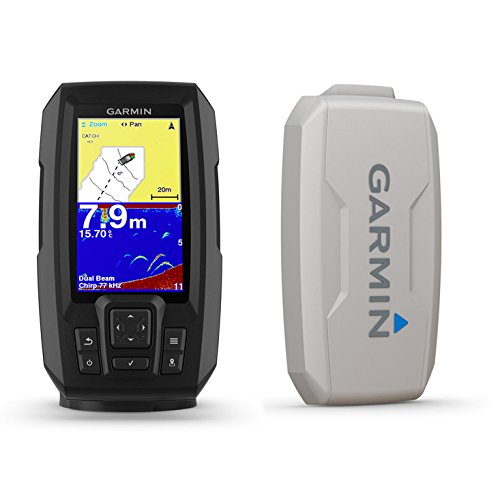
For small boats, the Striker Plus 4 lands in a sweet spot between simplicity and marine usefulness. The 4.3-inch LED display, dual-beam transducer, and included protective cover point to a unit that fits compact consoles without feeling flimsy.
It does not try to do everything, and that restraint helps. Compared with the Striker Vivid 7cv, you give up screen size and the wider sonar package, but you also get a leaner setup that feels easier to place on a modest dash.
Positives
- Compact marine setup suits smaller boats and tight consoles.
- Dual-beam transducer gives you flexible sonar viewing choices.
- Protective cover helps with storage and deck travel.
- 4.3-inch LED display is manageable without dominating the helm.
Minor Gripes
- The screen is smaller than the 7-inch option above, so detail space is tighter.
- It is more useful for fishing support than broad navigation duties.
- Accessory placement and mounting still matter on a crowded console.
Spec Overview
Built With In Mind
You fit this best as a weekend angler or small-boat owner who wants marine sonar support without a bulky console footprint.
Where Shoppers Go Wrong
Garmin eTrex 32x is the better match for someone who wants handheld navigation first and fishfinding second.
This BEVA unit belongs in a different lane from the marine handhelds above. It is aimed at land measurement work, so it makes sense for acreage checks, slope work, and rough terrain use more than for steering a boat across open water.
The satellite support and area-measurement focus suggest a utility tool for field tasks, not a boating navigator. That makes it useful in the broader outdoor toolkit, but most boaters will get more from Garmin’s handheld and marine picks in this list.
Standout Traits
- Supports GPS and GLONASS, which broadens satellite access for positioning tasks.
- Designed for measurement work on land, including uneven ground.
- Small size helps it travel easily in a utility bag.
Areas To Watch
- Its main use is land measurement, not marine navigation.
- The fit makes more sense for survey-style chores than for boating decks.
- It sits outside the boating-first use case that defines the rest of this list.
Technical Sheet
Who Will Love This
You should only look here for field measuring work, property checks, or rough-land tasks that sit outside marine navigation.
Another Choice May Suit
Garmin GPS 73 is the more sensible boating backup because it is built as a compact handheld navigator.
How To Choose The Right Handheld Gps For Boating
Screen Size, Controls, And Visibility
A handheld GPS for boating lives or dies by legibility. A 2.2-inch or 2.6-inch screen, like the Garmin eTrex SE or GPS 73, stays compact, but it gives you less room for charts, waypoints, and quick glances in chop. Larger marine screens, such as the 7-inch Striker Vivid 7cv, read more easily from a seated helm, though they stop feeling truly handheld.
Button layout matters just as much. Wet fingers, cold weather, and a bouncing deck make tiny controls harder to trust, so a simpler interface often helps more than a feature-packed menu. For day boaters and backup-navigation use, a clean button set usually beats a deep interface tree.
Battery Life And Power Planning
Battery endurance becomes a real issue on long weekends, anchor days, and trips where charging options are thin. Garmin eTrex SE’s up to 168-hour claim stands out for extended use, while trackers and messengers can make sense when you care more about location or communication than charting. That difference matters because a unit that dies early turns into dead weight fast.
Long battery life also reduces your packing burden. You can carry one fewer charger, keep the device in a dry bag longer, and spend less time worrying about power management between launches. For seasonal boaters, that kind of simplicity is worth more than a long feature list.
Navigation, Tracking, Or Sonar?
Not every handheld GPS for boating does the same job. A true navigator like the Garmin GPS 73 or eTrex 32x helps with position and route awareness, a tracker like the PAJ unit helps you monitor location, and a fishfinder like the Striker series adds sonar for underwater reading. Choosing the wrong category is the easiest way to end up with a gadget that looks useful but misses the real need.
Think about how you use the boat most days. Harbor hopping, trailering, and backup positioning call for a compact handheld; offshore communication points you toward the Spot X; fishing from a console pushes you toward the Garmin Striker line. Match the device to the job and you avoid paying for features that never get touched.
Water Exposure And Mounting
Marine use is hard on gear, so water resistance, covers, and mounting style matter. Garmin eTrex SE’s IPX7 rating suits wet decks and spray, while the Striker Plus 4’s protective cover helps with transport and storage. Magnetic mounting on the PAJ tracker works well for compatible surfaces, though it is a different kind of setup than a handheld navigator clipped to a lanyard or tucked in a bag.
Maintenance stays simple when the device is easy to rinse, dry, and stow. That sounds minor, but it matters after a long day with salt spray, sunscreen, and wet hands everywhere. A little practicality here keeps the gear ready for the next launch instead of living half-forgotten in a drawer.
Things Worth Knowing First
Wrong Turns To Avoid
One common mistake is buying tracking gear and expecting full navigation. A tracker helps you see where something is, but it does not replace map detail, waypoint handling, or sonar. Another misstep is ignoring the screen size, because a tiny display feels fine in a listing and cramped on a rolling boat.
Service costs also catch people off guard. Spot X and PAJ both point to subscription-based ownership, so the device is only part of the story. That matters most for casual boaters who launch a few times a month and want predictable upkeep.
The Upgrade Payoff
Higher-tier marine units usually cost more because they combine larger displays, transducers, custom mapping, and sturdier mounting options. The Striker Vivid 7cv carries more hardware and sonar capability than a plain handheld, so you get more information at the helm and more setup work in return. That extra spend makes sense when fishing and route detail drive the whole outing.
Premium also buys convenience in less obvious places. Better battery life, broader satellite support, and tighter outdoor integration can save time over a season, especially for frequent boaters who want gear that feels less fussy to live with. For occasional use, the simpler units often make more sense.
Final Thoughts
The right handheld GPS for boating depends on how you spend time on the water, not just how much gear you want on the dash. For simple navigation and backup use, the Garmin eTrex SE, eTrex 32x, and GPS 73 keep things compact and clear. For fishing, the Striker Vivid 7cv and Striker Plus 4 add sonar depth that handhelds cannot match. Pick the tool that fits your trips, and the rest becomes easier.