

Handheld radios earn their keep in places where cell service fades, weather shifts fast, or a group needs a simple way to stay in step. You’ll find marine-ready units, emergency radios, compact walkie-talkies, and GPS-enabled communicators here, so the right match depends on where you plan to use it. Some are built for docks and boats, others for family outings or backup communication at home. The details below focus on practical fit, durability cues, and the trade-offs that matter once you start carrying one.
Quick Look At The Shortlist

Solar Radio Emergency Hand Crank 12000mAh with Clear Signal
Uniden Atlantis 275 Handheld Two-Way VHF Marine Radio
Standard Horizon HX210 6W Floating Handheld Marine VHF Transceiver [HX210]
BAOFENG GT-18 Walkie Talkies for Kids Adults Ages 3-12 License Free, 3 Pack

Motorola Defy Satellite Link – Rugged Handheld GPS Communicator, Two-Way Global SMS Text Messenger, Emergency SOS Alerting

Panasonic Portable AM/FM Radio, Battery Operated Analog Radio, AC Powered, Black (RF-2400-K)

Retevis RM01P 3.5W Marine Radio VHF IP67 Floating, USB-C for Fishing(1Pack)

Garmin Rino 700, Rugged 2-Way Radio and Handheld GPS Navigator with GPS/GLONASS, 2.2 inches (010-01958-20)
More Details On Our Top Picks
Storm prep is where this Mesqool unit makes immediate sense. The 12000mAh battery, hand crank, and solar charging give you more than one path back to power, which matters during outages or on long trips away from an outlet.
The AM, FM, and NOAA weather coverage turn it into a serious emergency radio, while the dual LED flashlight and SOS function add practical utility. The trade-off is size and complexity, so it fits a car kit, basement shelf, or camping bin better than a pocket carry.
Strong Points
- Multiple charging methods reduce your dependence on wall power.
- NOAA weather reception helps during severe-weather planning.
- The built-in flashlight adds useful backup lighting.
- Dual outputs let you handle more than one device role.
- That large battery suits longer outages and road trips.
Things To Consider
- It feels more like a preparedness tool than an everyday pocket radio.
- The broader feature set asks for a little learning at first.
- Storage works best in a dry place, since emergency gear tends to sit unused until needed.
Feature Snapshot
Who It Suits Best
You get the most value from this one as a preparedness-minded household, camper, or driver who wants a single backup device with several power options.
A Better Fit Elsewhere
Panasonic Portable AM/FM Radio, Battery Operated Analog Radio, AC Powered, Black (RF-2400-K) suits you better for simple desk or kitchen listening without the emergency-tool overhead.
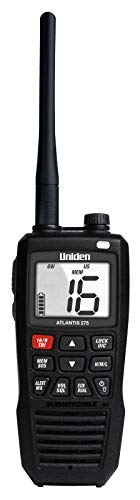
For boat days, this one feels purpose-built rather than adapted. The floating body, IPX8 submersible rating, and large dual-color screen all point toward wet-deck use where visibility and recovery matter more than bells and whistles.
Uniden’s support for U.S., international, and Canadian marine channels gives it broad coverage for travel on different waterways. The 6-watt output is a solid fit for marine communication, though the marine-only focus means it’s less versatile than the emergency radio above.
What We Like
- Floating design makes accidental drops less nerve-racking around water.
- IPX8 submersible protection suits real boat and dock use.
- The large dual-color screen helps with quick checks in bright light.
- Channel support spans U.S., international, and Canadian marine bands.
- NOAA weather alerts add a useful safety layer for coastal trips.
Room For Improvement
- Marine specialization means it makes little sense outside that setting.
- The larger screen is handy, though it also adds to the overall footprint.
- After saltwater use, routine rinsing and drying are worth doing to keep the finish in good shape.
Details At A Glance
Who Should Grab It
You fit this best as a boater, kayak angler, or dock user who wants a floating VHF radio with straightforward water resistance.
Swap It Out When
Standard Horizon HX210 6W Floating Handheld Marine VHF Transceiver [HX210] makes more sense for you if you want a simpler marine radio with a tighter feature set.
This Standard Horizon model keeps the focus tight, which some boaters will appreciate. You get the handheld VHF radio, antenna, rapid charger cradle, and documentation in the box, so setup feels more straightforward than a bundle-heavy package.
The 6-watt marine transceiver format makes it a sensible pick for day sailors and anglers who want a dependable radio without extra lifestyle features. A 3-year waterproof warranty is part of the listing, though the real draw is the clean, workmanlike design that stays out of the way on the water.
Best Bits
- Lean packaging keeps the focus on core marine radio use.
- The supplied rapid charger cradle helps with day-to-day docking.
- Floating design fits boat decks, kayaks, and fishing trips.
- The included antenna means you start with the essential parts together.
Softer Spots
- The product page gives less detail than some of the other radios here.
- Marine-only use means it is less flexible than the emergency or GPS picks.
- Owners who like richer screens may prefer the Uniden Atlantis 275.
Core Details
Right Fit For
You suit this best as a practical boater who wants a straightforward floating VHF without a long feature list.
Another Choice May Suit
Garmin Rino 700, Rugged 2-Way Radio and Handheld GPS Navigator with GPS/GLONASS, 2.2 inches (010-01958-20) is the stronger call for you if route tracking matters as much as radio use.
Group communication gets easier with a three-pack, especially for family outings or around a campground. The 1500mAh rechargeable battery and 22 FRS channels give this set a clear role as a simple, license-free option for short-range chatter.
NOAA support adds a bit of weather awareness, which is useful on hikes or beach days, though the listing leans much more toward casual use than serious field work. Compared with the marine radios above, it’s much more approachable, but the trade-off is a lighter-duty build and less specialized range.
Bright Spots
- The three-pack helps you equip a group without buying singles.
- License-free FRS channels keep the setup simple for casual use.
- Rechargeable power reduces the fuss of swapping disposables.
- NOAA support gives you a weather-aware backup for outings.
- The child-friendly age guidance broadens its use for family activities.
Areas To Watch
- It’s built for short-range family communication, not rugged marine duty.
- The return-related wording on the listing is noisy and doesn’t help much with product choice.
- Battery charging habits matter here, since walkie-talkies often sit idle between outings.
Feature Card
Built With In Mind
You fit this best as a parent, group organizer, or casual camper who wants easy radios for short distances.
Look Elsewhere When
Uniden Atlantis 275 Handheld Two-Way VHF Marine Radio works better for you if your use case centers on boats or dockside communication.
This one shifts the list from radio-only gear toward satellite messaging. The rugged handheld design, two-way global SMS, and emergency alerting speak to hikers, travelers, and anyone who wants text-style communication away from normal coverage.
Android and iOS compatibility make it easier to fit into an existing phone setup, though the source data focuses on the communicator itself rather than accessories or ease-of-use extras. Compared with the other picks, it’s the most mission-specific option, so it makes sense for off-grid messaging more than casual family chat.
Highlights
- Global SMS messaging reaches beyond ordinary radio use.
- Emergency alerting gives you a direct signaling layer.
- The rugged build suits rough carry and travel.
- Phone compatibility keeps it aligned with common mobile setups.
- It fills a different role from the marine radios and walkie-talkies.
Points To Note
- This is more communicator than traditional handheld radio, so the fit is specialized.
- The listing does not spell out every daily-use detail, which makes accessory planning worth a closer look.
- For camping weekends with a group, the BAOFENG GT-18 three-pack is the simpler, more social choice.
Technical Sheet
Whose Shelf It Belongs On
You suit this best as a hiker, overlander, or remote traveler who needs text messaging outside standard coverage.
Where A Sibling Pick Shines
Garmin Rino 700, Rugged 2-Way Radio and Handheld GPS Navigator with GPS/GLONASS, 2.2 inches (010-01958-20) is the better match for you if you want navigation and radio together in one handheld.
Sometimes a plain radio is exactly what you want, and this Panasonic keeps the idea refreshingly simple. Battery operation plus AC power gives you flexibility for kitchen counters, offices, or emergency shelves without pushing you into a complex setup.
Its analog tuning style suits anyone who prefers straightforward knobs over menus and sub-settings. That simplicity is the point, though it also means you’re getting broadcast listening rather than the weather, marine, or messaging features found on the more specialized picks above.
Upsides
- Two power options make it useful at home and during outages.
- Analog controls are easy to understand at a glance.
- The compact black housing fits shelves, counters, and go-bags.
- It’s a calm, no-drama choice for everyday AM and FM listening.
Minor Gripes
- No weather-band or marine functions, so its scope stays narrow.
- Analog tuning is simple, though it can feel less precise than digital controls.
- Those who want multi-role emergency gear may prefer the Mesqool emergency radio.
Core Details
The Right Fit
You suit this best as someone who wants a dependable household radio without extra gear to learn.
Another Choice May Suit
Mesqool Solar Radio Emergency Hand Crank 12000mAh with Clear Signal suits you better for storm prep and longer off-grid backup.
Retevis aims this radio at people who move between boats, lakes, and travel days. The IP67 floating body, USB-C charging, and 15-hour battery all point toward practical use where convenience matters as much as water resistance.
The 3-watch function and vibration drainage feature make it feel geared toward active marine use, especially for fishing and water sports. It’s not as powerful as the 6-watt marine radios in this list, but that lower profile can be enough for smaller outings and lighter carry.
Reasons To Buy
- USB-C charging keeps the cable side of life simple.
- Floating construction helps on wet decks and dock edges.
- Fifteen-hour battery life suits full-day outings.
- NOAA weather alert support adds a useful planning layer.
- Vibration drainage is a thoughtful touch for marine use.
Small Caveats
- The 3.5W output places it below the stronger 6-watt units here.
- Single-pack packaging works for solo use, though groups will need more than one.
- After water exposure, giving the case and ports a proper dry-down is a sensible habit.
Feature Rundown
Perfect Match For
You suit this best as a fishing, lake, or boating user who wants a lighter marine handheld with modern charging.
Skip It When
Uniden Atlantis 275 Handheld Two-Way VHF Marine Radio is the smarter call for you if stronger marine output and a larger screen matter more.
This Garmin stands apart because it combines radio communication with handheld GPS navigation. The 2.2-inch screen keeps the unit compact, while GPS and GLONASS support give you broader satellite positioning coverage for trail work or route-aware field use.
Compared with the Motorola Defy Satellite Link, this unit leans more toward navigation plus radio than off-grid texting. That makes it especially useful for hikers, hunters, and backcountry workers who care about both position and communication in one device.
Standout Traits
- Combines two-way radio use with handheld navigation.
- GPS and GLONASS support broaden positioning options.
- The 2.2-inch display keeps the device relatively compact.
- It suits field use where location context matters.
- You avoid carrying separate radio and GPS tools.
Honest Caveats
- The feature mix makes it better for serious field use than casual carry.
- The smaller screen asks for more attention than a larger marine display.
- For simple boating needs, the Standard Horizon HX210 is the leaner choice.
Quick Facts
Who Will Love This
You suit this best as an outdoor traveler, field worker, or route-focused adventurer who wants navigation and radio in the same handheld.
Reach For A Different Pick When
Panasonic Portable AM/FM Radio, Battery Operated Analog Radio, AC Powered, Black (RF-2400-K) fits you better for simple home listening without mapping tools.
How To Choose The Right Handheld Satellite Radios
Match The Device To The Setting
Marine radios belong on boats, docks, kayaks, and wet decks, where floating design and water resistance matter more than extra app features. Emergency radios make more sense for outage prep, roadside kits, and storm shelves, since crank charging and weather bands are the point. Satellite communicators sit in a different lane, since they focus on messaging beyond normal network coverage.
Think About Power Before Anything Else
Battery capacity, charging style, and backup options shape how a handheld behaves in real use. A large internal battery helps during long outages, while USB-C suits travel and modern gear bags, and hand-crank or solar charging helps when outlets are gone. The trade-off is usually size, weight, or added complexity.
Keep Controls And Screen Size Practical
A big display helps on bright water or while moving, but it also makes the unit bulkier. Analog dials feel simple in a kitchen or glove box, while dual-color screens and GPS displays help when you need faster information at a glance. The right pick is the one you can manage cleanly in the conditions where you’ll actually carry it.
Choose By Group Size And Communication Style
A three-pack walkie-talkie set suits families and casual outings because everyone starts on equal footing. Single marine radios and GPS communicators fit solo operators or paired users who need a more focused tool. You save frustration by matching the radio style to the way you talk, travel, and store the gear.
Before You Choose
Wrong Turns To Avoid
Many shoppers mix up marine, emergency, and satellite gear because the names sound close. The fix is simple, read the use case first and the feature list second. A floating VHF radio does a very different job from a battery radio or a GPS communicator.
Another common miss is overbuying features that sit untouched in a drawer. A compact household radio or a basic family walkie-talkie often serves better than a heavy-duty unit when your real need is simple communication.
The Upgrade Payoff
Higher-tier models usually cost more because they add specialized radio bands, stronger water protection, navigation hardware, or more advanced messaging. Those parts are not just cosmetic, they change how the device behaves in the field and how much confidence you have during rough weather or distance travel.
The upgrade makes sense for boaters, hikers, and remote travelers who need one device to do several jobs. For occasional use at home or on family outings, a simpler handheld usually feels easier and lighter to live with.
Closing Thoughts
Your best handheld comes down to setting, not hype. A marine radio should feel at home near water, an emergency radio should sit ready for outages, and a GPS communicator should earn its place by solving a real navigation or messaging problem. The good news is that each pick here has a clear lane, so you can focus on the one that fits your trips, your kit, and the way you like to stay connected.