

Outdoor antennas can be a smart move when you want local channels without a monthly TV bill hanging over your setup. The right pick depends on your roofline, attic space, mounting options, and how far you live from broadcast towers. Some models lean on long-range VHF and UHF reach, while others make placement easier with 360-degree reception or a shorter, cleaner install. You get the best results by matching the antenna style to your home, not by chasing the biggest range claim.
Quick Look At The Shortlist
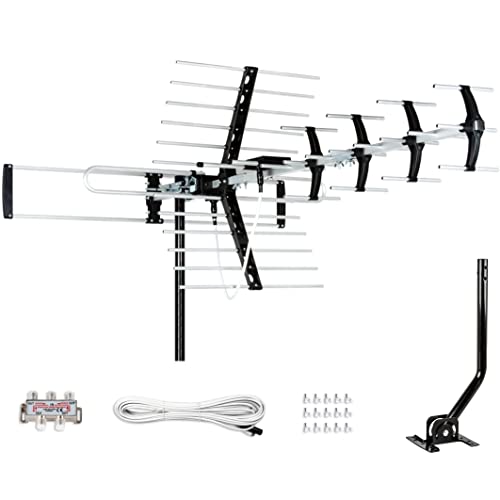
Five Star Outdoor HDTV Antenna 200 Mile Range

Five Star Outdoor HDTV Antenna 200 Mile Range, 40 ft. Cable

GE Outdoor HD Digital TV Antenna 33685

CeKay Outdoor Yagi HD Antenna with 40FT RG6 Cable
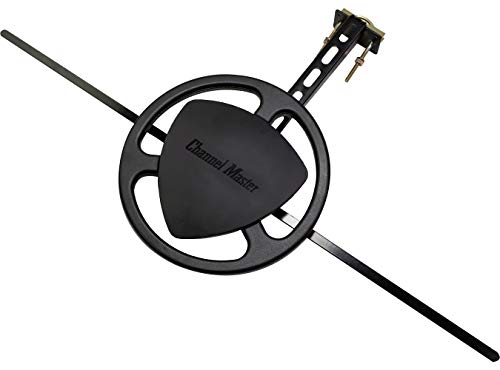
Channel Master Omni+ 50 Omnidirectional HDTV Antenna

Yeceny Outdoor TV Antenna with 60 ft RG6 Cable
nelapsano 2026 TV Antenna 5000+ Miles
Arrasolt Melas 4500+ Miles Range TV Antenna
More Details On Our Top Picks
Five Star gives you a broad setup canvas, because it can live in an attic or on a roof and comes with a J mount and install kit. That matters for homes where cable runs, roof angles, or attic clearance make the placement puzzle a little awkward.
The ATSC 3.0-ready note is useful for future-minded setups, though your actual channel mix still depends on tower distance and obstructions. Compared with the Channel Master Omni+ 50, this one is built for people who want a more directional long-range path rather than a 360-degree catch-all approach.
Strong Points
- Attic or roof placement gives you room to work around your home layout.
- Included J mount and install kit reduce the number of separate parts you need to source.
- ATSC 3.0 readiness makes the setup feel more forward-looking for newer broadcast formats.
- Support for VHF and UHF helps cover the two main broadcast bands used by local stations.
- The long-range design suits homes that sit farther from transmitters or sit behind more terrain.
Points To Note
- Large-range claims still depend on your location, so your roofline and nearby structures matter.
- The more directional style can take a little more patience during placement than an omni antenna.
- Roof installs usually call for sensible cable routing and weather-conscious hardware placement.
Feature Snapshot
Who It Suits Best
You get the most from this model in a house where attic space or roof access is practical and you want a more serious long-range antenna layout.
Where A Sibling Pick Shines
Channel Master Omni+ 50 suits you better for simpler all-direction reception in neighborhoods where tower locations sit around different bearings.
This Five Star version keeps the long-range, attic-or-roof idea but adds a 40-foot RG6 coaxial cable, which can make the layout easier in real homes. That extra reach is handy when the best mounting spot and the TV room sit farther apart than you’d like.
Compared with Item 1, you lose the installation kit mention but gain a clearer cable story, so your decision comes down to whether routing length matters more than bundled accessories. For households that need a cleaner path from antenna to set, that trade-off makes sense.
What We Like
- Forty feet of RG6 cable gives you more placement freedom between the antenna and the TV.
- Attic or roof mounting lets you choose the spot that fits your structure best.
- Long-range intent suits homes that want a stronger chance at pulling in distant stations.
- Support for 4K, 1080P, VHF, and UHF makes it easy to match common broadcast and display needs.
Things To Consider
- The cable helps, but you still need to plan a tidy route through attic or exterior space.
- Like many long-range antennas, performance depends on terrain, building height, and nearby obstructions.
- The more parts your installation spans, the more careful you’ll want to be with weather exposure.
Core Details
Built With In Mind
You’ll appreciate this one most in a home where cable routing matters as much as reception range.
Look Elsewhere When
Five Star Outdoor HDTV Antenna 200 Mile Range from Item 1 fits better when you want the install kit and J mount bundled together.
GE takes a more classic Yagi-style path, which means the antenna focuses reception in a more directional way rather than trying to listen to everything at once. That kind of shape often suits suburban rooftops or attic spots where the broadcast towers sit in a fairly steady direction.
It includes a J mount for attic or outdoor placement and lists weather-resistant construction, so the package feels straightforward for a home setup that needs to sit outside for the long haul. Compared with the Five Star pair, this one reads as a cleaner middle ground for shoppers who want a familiar antenna layout without extra flourish.
Upsides
- Yagi-style design helps concentrate reception rather than spread it in every direction.
- Attic or outdoor use gives you flexibility during installation.
- Included J mount saves you from hunting for matching hardware.
- Weather-resistant build is useful for exposed placements.
Small Caveats
- Directional antennas work best when you know the tower direction ahead of time.
- Outdoor placement usually rewards careful cable sealing and tidier mounting.
Details At A Glance
Who Should Grab It
You fit this antenna well when your local stations cluster in one direction and you want a familiar, practical outdoor setup.
A Better Fit Elsewhere
Channel Master Omni+ 50 suits you better if you need reception around the full circle and don’t want to aim as carefully.
CeKay leans into an all-metal Yagi build, and that usually appeals to homeowners who want a sturdier outdoor feel rather than a lighter decorative shell. The included 40-foot RG6 coax cable and J mount also make the package easier to visualize for attic, roof, or RV use.
The source material points to support for UHF and VHF, plus coverage of 720p through 8K broadcast formats, so it covers the common and the more future-facing side of over-the-air TV. Compared with GE’s 33685, this one feels more rugged and a little more travel-friendly, which can matter in an RV or a more exposed location.
Bright Spots
- All-metal construction gives the antenna a solid outdoor-ready character.
- Forty feet of RG6 cable helps with larger or more awkward layouts.
- J mount inclusion simplifies the start of the installation process.
- Attic, roof, or RV use broadens the situations where this model can fit.
- Support for several broadcast resolutions makes the spec sheet feel well rounded.
Room For Improvement
- Directional Yagi antennas reward careful aiming, especially in mixed-signal neighborhoods.
- Outdoor metal gear usually benefits from neat cable management and regular visual checks.
- The RV angle is useful, though mobile setups can still vary with travel location.
Core Details
Whose Shelf It Belongs On
You’ll like this model most when you want a more rugged antenna for a tougher exterior setting or an RV.
Another Choice May Suit
GE Outdoor HD Digital TV Antenna 33685 is the simpler fit for a more ordinary attic or roof setup where a classic Yagi layout is enough.
Channel Master takes the stress out of aiming, because its omnidirectional layout is built for 360-degree reception. That can be a real comfort in neighborhoods where broadcast towers sit in different directions or where you don’t want to keep adjusting the antenna after the first install.
It covers more modest 50-plus-mile reception and works indoors or outdoors, with a mounting bracket for a wall, mast pole, or an existing satellite mount. Compared with the directional Five Star and GE choices, this one favors convenience over long-range chasing, which suits plenty of normal suburban homes.
Highlights
- 360-degree reception reduces the need to point the antenna toward one fixed tower line.
- Works with HDTV and 4K TV setups, which keeps it broadly compatible.
- Mounting options for wall, mast pole, or an existing satellite mount simplify planning.
- Indoor or outdoor placement gives you more freedom than roof-only designs.
Worth Noting
- Its stated range is shorter than the larger long-range antennas in this list.
- Omnidirectional designs can be easier to live with, but they are not the best fit for every fringe area.
Feature Rundown
Perfect Match For
You suit this antenna best if you want a simpler, lower-fuss install and your towers are scattered in different directions.
Swap It Out When
Five Star Outdoor HDTV Antenna 200 Mile Range fits better for homes that need longer-range directional reach and don’t mind more precise placement.
Yeceny stands out because it mixes a digital amplified antenna with 360-degree rotation and a wireless remote, which gives you more control from the couch or the equipment shelf. The 60-foot RG6 cable is another practical touch, especially in homes where the antenna position and the TV are not close neighbors.
It also lists support for two TVs, so this model makes sense in family rooms or split living spaces where one antenna feed needs to go farther than just a single set. Compared with Channel Master’s simpler fixed-direction approach, this one asks a little more of the setup but gives you more moving parts to work with.
Reasons To Buy
- Wireless remote control makes antenna adjustments less awkward after installation.
- 360-degree rotation helps you fine-tune reception without climbing back outside right away.
- Sixty feet of RG6 cable adds useful reach for larger homes.
- Support for two TVs can simplify a multi-room setup.
- The amplified design may help in homes that need a stronger signal path.
Softer Spots
- More features also mean more parts to place, route, and keep organized.
- Remote-controlled rotation is handy, though it still depends on solid initial installation.
- Amplified designs can be situational, so placement still matters a lot.
Spec Overview
Built For In Mind
You fit this model well in a larger home where a remote-controlled antenna is easier to live with than a fixed one.
A Better Fit Elsewhere
Channel Master Omni+ 50 is the calmer choice for someone who wants fewer moving parts and a more straightforward installation.
nelapsano leans hard into device compatibility, with support for smart TVs and digital devices plus indoor or outdoor placement. That broad positioning can be appealing when you want one antenna to work across a mixed household setup rather than a single carefully planned media room.
The signal booster and the very large range claim make it feel ambitious on paper, though practical results always hinge on your home and your local broadcast environment. Compared with the more grounded Channel Master or GE options, this pick aims at flexibility first, so it suits shoppers who want a wider use case more than a stripped-down install.
Best Bits
- Supports both indoor and outdoor use, which widens your placement choices.
- Works with smart TVs and digital devices for broad household compatibility.
- Signal booster inclusion can help in setups that need a stronger reception path.
- The flexible use case is handy for apartments, homes, or backup TV spots.
Areas To Watch
- Large range language should still be judged against your actual location and obstacles.
- Broad compatibility helps, but the antenna still needs careful positioning for solid reception.
Feature Card
Right Fit For
You fit this antenna best when you want one flexible option that can move between indoor and outdoor roles.
Reach For A Different Pick When
GE Outdoor HD Digital TV Antenna 33685 suits you better for a more conventional attic or outdoor install with a more defined antenna shape.
Arrasolt Melas keeps the pitch simple, with a 360-degree indoor or outdoor antenna and a stronger amplifier for everyday TV setups. That mix is useful in homes where you want something adaptable without stepping all the way into a more complex remote-controlled system.
The 38-foot coax cable is a practical touch for homes that need a little room between the antenna placement and the television. Compared with the nelapsano option, this one feels a bit more grounded and a little less feature-packed, which can actually be easier to live with.
Positives
- 360-degree reception lowers the need to keep chasing a single tower direction.
- Indoor or outdoor placement gives you more installation freedom.
- The 38-foot cable supports more flexible room layouts.
- Strong amplifier wording points toward a setup that aims to help weaker signals.
Honest Caveats
- The large-range language still depends on the local broadcast picture.
- Amplified antennas are more sensitive to placement than many shoppers expect.
- As with many compact antenna packages, cable management can take a little care.
At A Glance
The Right Fit
You suit this antenna best when you want a straightforward everyday option with flexible placement and a long-ish cable.
Not Your Match When
Five Star Outdoor HDTV Antenna 200 Mile Range fits you better if you want a more mount-focused outdoor setup with attic or roof installation in mind.
How To Choose The Right Hdtv Outdoor Antennas
Match The Antenna Style To Your Tower Layout
Directional antennas, such as Yagi designs, focus reception in a narrower path. That makes sense for homes where broadcast towers sit in one main direction and you can aim the antenna once, then leave it alone.
Omnidirectional models gather signals from around the full circle. They suit neighborhoods with scattered tower directions, and they can feel calmer to live with because you do less fine-tuning after setup.
Start With Mounting And Cable Reality
Roof, attic, wall, mast pole, and RV mounting all bring different trade-offs. Roof and outdoor positions can improve line of sight, but they also ask for better cable routing and more attention to weather exposure.
Longer coax runs help when the best signal spot sits far from the TV room. RG6 coax is a common cable type in this category, and the length matters more than many people expect once you start planning the actual path through the house.
Check Bands, Resolution Support, And Device Fit
VHF and UHF are the two broadcast bands most of these antennas mention, and both matter because local stations may use either one. Some models also mention 4K, 1080P, or ATSC 3.0 readiness, which speaks more to compatibility with your viewing setup than to a promise of picture quality by itself.
Device fit matters too. A model that works with smart TVs, older TVs, or multiple sets can save hassle in a family room, spare room, or RV.
Be Honest About Your Home Environment
Terrain, roof material, walls, and nearby buildings can shape reception as much as the antenna label does. A long-range number is only one part of the story, and it rarely tells you how a specific house will behave.
Homes close to transmitters can often do well with simpler designs. Homes farther out, or homes with more obstructions, usually benefit from longer cables, stronger mounts, and a more deliberate antenna choice.
Things Worth Knowing First
Common Shopping Slip Ups
Many people focus on the biggest range claim and ignore the mounting plan. That usually leads to frustration later, because a strong antenna still needs the right direction, height, and cable route.
Another common miss is overlooking VHF and UHF support. Local channel lineups vary, so a model that only suits one band can leave gaps in everyday viewing.
What The Higher Tier Buys
Higher-end models often add stronger hardware, broader mounting flexibility, longer coax runs, or more advanced control such as remote rotation. Those extras matter most in homes with awkward layouts, multiple TVs, or harder-to-reach install points.
You also tend to see more attention to construction, which can help the antenna feel steadier in outdoor exposure. The upgrade makes sense when your installation is more complex than a simple attic setup.
Frequently Asked Questions
Do Outdoor HDTV Antennas Work Better Than Indoor Models?
Outdoor placement usually gives you a better shot at cleaner reception because the antenna sits higher and farther from household clutter. Indoor models can still work well in strong-signal areas, especially near windows or upper floors.
What Does Yagi Mean?
Yagi refers to a directional antenna style that focuses reception toward one main direction. That design helps when your local towers sit in a known line from your home.
Why Does Coax Length Matter?
Coax length affects where you can place the antenna and how easily you can route the cable to your TV. A longer run helps in bigger homes, but neat installation still matters.
Can One Antenna Feed More Than One TV?
Some models are built with multi-TV use in mind, and others are easier to split with the right home setup. The signal still has to be strong enough to support that layout well.
What Should You Check Before Mounting On A Roof?
Check access, cable path, and the best direction for local stations before you start. A roof install works best when the antenna location, hardware, and route to the TV all make sense together.
Closing Thoughts
Your best outdoor antenna choice comes down to how your home sits, how far you are from broadcast towers, and how much installation work you want to take on. The Five Star models suit stronger long-range planning, the GE and CeKay picks lean toward focused directional setups, and Channel Master offers a calmer omnidirectional path. Yeceny brings more moving parts, while nelapsano and Arrasolt Melas give you flexible all-purpose options. Match the antenna to your space, and the rest gets a lot easier.