
Cold nights can turn a good trip into a long one, especially in a tent, cabin, or spare room that never quite holds heat. You’re looking at a mix of classic down mummy bags, kid-focused options, a USB-powered heated design, and a double bag for shared sleeping space. That range matters, because the right choice depends less on hype and more on how you sleep, who’s with you, and how much packing room you have.
Quick Look At Our Top Heated Sleeping Bags

Kelty Cosmic 20 Down Mummy Sleeping Bag

Kelty Cosmic 20 Down Mummy Sleeping Bag
Teton Junior 20 Degree and 0 Degree Sleeping Bags
Heated Sleeping Bag 5pcs Multi USB Power Support

Coleman Brazos 20/30°F Adult Cool-Weather Sleeping Bag

3-4 Season Sleeping Bag for Adults and Kids

3-4 Season Sleeping Bag for Adults and Kids
MEREZA Flannel Double Sleeping Bag
More Details On Our Top Picks
Backpackers often care more about packed size and warmth-to-weight than about flashy extras, and this Kelty shape fits that mindset well. The 550 fill power down gives you insulation that compresses neatly, while the recycled shell materials and PFAS-free DWR finish speak to a more modern build. You may find the mummy cut snug, but that close fit helps trap heat on chilly shoulder-season trips.
Compared with bulkier camp bags later in this list, it’s the cleaner carry option for nights on the move. The honest trade-off is less room to sprawl, so it suits people who sleep fairly still and want a more streamlined setup.
Strong Points
- 550 fill power down brings efficient loft for cooler nights.
- Recycled fabrics add a practical sustainability angle.
- PFAS-free DWR helps the outer fabric shed light dampness.
- Mummy shape trims extra bulk in a pack.
- Good fit for backpacking weekends and lean setups.
Things To Consider
- The narrower cut feels close, which isn’t for every sleeper.
- Down bags usually ask for more careful drying and storage.
- Less forgiving for people who toss and turn a lot.
Feature Card
Who It Suits Best
Backpackers and campers who want a lighter, more compressible bag for cool nights will get the most from it.
A Better Fit Elsewhere
MEREZA Flannel Double Sleeping Bag is the better match for couples or anyone who wants extra room instead of a tight mummy profile.
This Kelty listing follows the same down-backed formula as the first pick, so the value here is mostly in how consistent that design language is. For campers who like a familiar mummy silhouette and a pack-friendly shell, that repeatability can feel reassuring. It’s a steady option, not a flashy one, and that’s the appeal.
Relative to the first Kelty entry, this one serves the same style of trip, so your decision is more about which listing you prefer than a different feature set. The trade-off is simple, since the close-fit shape and down fill still favor neat packing over extra wiggle room.
What We Like
- Down insulation keeps the weight-conscious profile intact.
- Recycled fabrics suit campers who care about material choices.
- PFAS-free DWR adds a practical outer finish.
- Compresses well for smaller packs and tighter storage.
Small Caveats
- Very similar to the other Kelty option, so the choice feels narrow.
- Mummy styling stays less roomy than rectangular camp bags.
- Down care matters, especially after damp trips.
Core Details
Who Will Love This
Minimalist campers who value a familiar, down-filled mummy bag will be comfortable with this pick.
Swap It Out When
SOULOUT 3-4 Season Sleeping Bag is a better fit for travelers who want a less fitted shape and more all-purpose use.
Kids need a bag that feels less fussy and more forgiving, and that’s where the Teton Junior design earns attention. The 20 degree and 0 degree options give you a clearer way to match the bag to the season, which matters for scouts, backyard campouts, and family park trips. The build language is straightforward, and that usually helps in real use, especially with younger campers.
Compared with the Kelty entries above, this one trades adult backpacking focus for family practicality. You may appreciate that directness more than fancy materials, though the broader size and weight expectations are part of the bargain.
Positives
- Two temperature choices make seasonal matching easier.
- Kid-oriented sizing suits boys, girls, and younger campers.
- Simple design keeps setup and packing easy for families.
- Useful for campouts, sleepovers, and casual outdoor nights.
Areas To Watch
- The warmer rating choice still depends on the rest of the sleep setup.
- Not built around the lightest carry for long hikes.
- You may want to store it loosely to keep loft from packing down.
Details At A Glance
Made For
Families who want a child-focused sleeping bag for campouts, sleepovers, or scouting weekends should look here first.
Where A Sibling Pick Shines
Coleman Brazos 20/30°F Adult Cool-Weather Sleeping Bag is the better fit for adults who want a roomier, easy-care option.
This is the only truly heated-style entry in the list, and its appeal is obvious for cold sleepers who already carry a USB power bank. The five heating pads and USB power support make it a more active warming setup than the insulated bags above, though that also means you’re tied to external power. For tent nights with access to charged gear, that can be the difference between merely sleeping and sleeping comfortably.
The mummy shape keeps the profile compact, which helps offset the extra gear concern. The honest catch is that convenience depends on managing cables and power sources, so it suits organized campers more than the grab-and-go crowd.
Highlights
- USB-powered warmth support sets it apart from passive insulation.
- Five heating pads spread warmth across key areas.
- Mummy style keeps the overall outline compact.
- Works with a battery power bank or other USB sources.
Worth Noting
- Depends on external power, so planning matters.
- Cord and battery handling adds setup complexity.
- Best suited to organized campsite use, not bare-minimum packing.
Technical Sheet
Built With In Mind
Cold sleepers who camp with a charged power bank and want active warmth rather than just insulation will get the most from this pick.
Not Your Match When
Kelty Cosmic 20 Down Mummy Sleeping Bag is the better fit for hikers who want warmth without depending on USB power.
Some camping bags are built for fuss-free weekends, and this Coleman sits squarely in that lane. The no-snag zipper matters more than it sounds, because a zipper that grabs fabric can turn a simple bedtime routine into a small annoyance. Add the stuff sack and machine-washable design, and you get a bag that fits neatly into car-camping life, guest-room duty, and travel overflow.
The 20/30 degree cooling-weather framing gives you a practical temperature window, though the PFAS content note is worth seeing clearly before you settle on it. Compared with the down-filled Kelty bags, this one is less about compact backpacking and more about easy ownership.
Reasons To Buy
- No-snag zipper makes nightly use feel smoother.
- Machine-washable care is handy after camp weekends or guest use.
- Stuff sack helps with storage and transport.
- Works well for travel, camping, and spare-room needs.
Points To Note
- Contains PFAS, which some shoppers prefer to avoid.
- Less compact than the down-focused backpacking picks.
- Better for casual use than long-mile carry.
Spec Overview
Whose Shelf It Belongs On
Car campers, occasional travelers, and households that need a low-fuss spare sleeping bag will get the most from it.
Reach For A Different Pick When
SOULOUT 3-4 Season Sleeping Bag makes more sense for a lighter travel setup that still handles cold-weather camping.
The soft spot in this SOULOUT bag is versatility, because the 3-4 season framing works for mixed camping calendars and family use. The waterproof compression sack is the kind of detail that matters more in real life than on a product page, since it helps with packing and gives you a place to stash the bag after a damp morning. It feels aimed at people who want one bag to cover a lot of ground.
Compared with the Coleman above, this one leans more toward portability and all-around travel use. The trade-off is that “do everything” bags rarely feel specialized, so you’re choosing flexibility over a more defined niche.
Upsides
- 3-4 season design gives you broader trip coverage.
- Lightweight build helps on hikes and road travel.
- Waterproof compression sack supports compact storage.
- Adult and kid use widens the family fit.
Room For Improvement
- Versatile bags can feel less specialized than niche options.
- Warmth expectations depend on the rest of your sleep setup.
- Compression packing should be used thoughtfully to protect loft over time.
Core Details
The Right Fit
Travelers and mixed-use campers who want a bag that moves easily between car trips, hikes, and family outings should look here.
Another Choice May Suit
Coleman Brazos 20/30°F Adult Cool-Weather Sleeping Bag is a stronger match for shoppers who want easier care at the campsite.
This second SOULOUT listing mirrors the same all-season idea, which makes it a practical backup option for families or campers who want a similar setup across different gear lists. The waterproof compression sack and lightweight profile still do the heavy lifting here, especially for people trying to keep trunk space under control. Nothing fancy, but that can be exactly the point.
Compared with the nearby SOULOUT model, the decision is less about a new feature set and more about which listing lines up with your shopping plan. The catch is that this style still leans general-purpose, so it won’t replace a highly specialized cold-weather system.
Best Bits
- Broad 3-4 season use fits many weekend plans.
- Light build keeps the bag easier to move around.
- Compression sack helps manage packed size.
- Useful for adults, kids, and casual travel.
Minor Gripes
- Very similar to the other SOULOUT listing.
- General-purpose design leaves less room for specialty features.
- Compressed storage needs sensible handling to preserve loft.
Feature Rundown
Built For
Campers who want a simple, portable sleeping bag for shared family use or travel-friendly packing should feel comfortable here.
Look Elsewhere When
Teton Junior 20 Degree and 0 Degree Sleeping Bags is the better fit for younger campers who need a more age-specific shape.
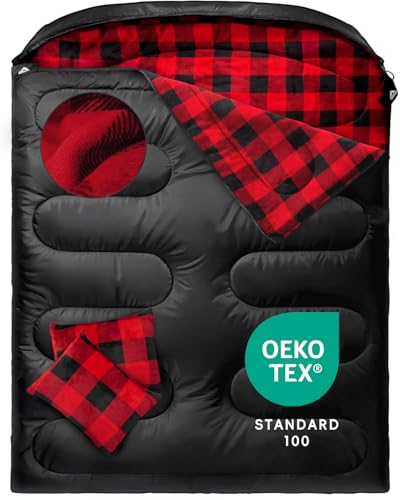
Shared camping needs a different kind of comfort, and this MEREZA double bag is built around that idea. The flannel lining and queen-size layout give couples or tall sleepers more room to settle in, while the included pillow is a nice practical touch for car camping and cabin weekends. It’s not the bag you stuff into the smallest backpack, but it does make sense when space in the tent matters more than space in the pack.
Compared with the single-person bags above, it clearly trades portability for sleep surface. The honest read is that this is better for two people who want to stay zipped into one setup than for solo campers chasing a lightweight load.
Bright Spots
- Double-size layout gives two sleepers shared space.
- Flannel lining adds a softer in-tent feel.
- Queen-size shape suits big-and-tall use better than mummy bags.
- Included pillow adds convenience for car camping.
Honest Caveats
- Bulk is the trade-off for the larger sleeping area.
- Better for vehicle camping than long carries.
- Shared bags can be less adjustable for different sleep habits.
Key Specs
Who Should Grab It
Couples, tall sleepers, and campers who want one shared bag for car trips or cabin stays will get the best match here.
Skip It When
Kelty Cosmic 20 Down Mummy Sleeping Bag is a better fit for solo hikers who care more about compact carry than shared space.
How To Choose The Right Heated Sleeping Bags
Start With How You Sleep
Sleeping style sets the tone. A mummy bag saves space and holds warmth close, while a roomier shape gives you more freedom to roll over at night.
Cold sleepers usually appreciate tighter designs or active heating support, while people who feel cramped in narrow bags tend to prefer a larger cut. That choice affects comfort more than small spec differences.
Match The Heat Source To The Trip
USB-powered heating pads make sense for trips where you already carry a battery pack and don’t mind managing cords. Down insulation or synthetic fill is simpler because it does not depend on charging or cable routing.
For overnight camping, the cleaner setup often wins. For backyard nights, cabins, or car camping, a heated option can feel worth the added planning.
Check Packability And Storage
Pack size matters more than many shoppers expect. Down models usually compress well, while big double bags and extra-heated designs take up more trunk or closet space.
Maintenance matters too. Machine-washable fabrics are easier for guest use, while down and heated gear usually ask for a little more care during drying, folding, and long-term storage.
Think About Who Will Use It
Kids need a size and temperature range that feels straightforward. Couples, tall sleepers, and frequent car campers usually benefit from larger shapes, while hikers and minimalist campers tend to prefer lighter, tighter bags.
The right match depends on the trip as much as the weather. A bag that feels perfect on a short road trip can feel clumsy on a long carry, and that’s the trade-off worth sorting first.
Things Worth Knowing First
Wrong Turns To Avoid
Two common mistakes stand out here: choosing a bag that’s too narrow for your sleep style, and assuming a temperature label tells the whole story. Shelter, pad insulation, clothing, and moisture all affect how warm a bag feels in camp.
Another slip-up is overlooking power needs on heated models. A USB setup sounds simple until you need a charged pack, a tidy cable path, and a place to store the battery overnight.
The Upgrade Payoff
Higher-tier bags often cost more because of better fill, lighter shell fabric, cleaner zippers, or a more refined shape. That shows up in easier packing, steadier warmth, and less annoyance during setup.
Spending up makes sense for frequent campers, backpackers, and anyone who wants a lighter load or a more exact fit. For occasional car camping, a simpler bag can be the smarter choice.
Frequently Asked Questions
Are heated sleeping bags worth it for camping?
They make the most sense for cold sleepers who camp with a battery pack or stay in spots where power is easy to manage. For simple backpacking, a well-insulated down bag is often easier to live with.
What’s the difference between down and heated sleeping bags?
Down bags rely on lofted insulation to trap warmth, so they stay lighter and more packable. Heated bags add an active heat source, which brings extra warmth but also extra setup.
Do kids need a special sleeping bag?
A kid-sized bag usually fits better and feels less empty inside, which can help with comfort on campouts. The Teton Junior option in this list is built around that kind of use.
Is a double sleeping bag practical for regular camping?
It works well for couples or anyone who values shared space over ultra-compact packing. A double bag is less convenient for solo trips and smaller packs.
How should you store a sleeping bag between trips?
Loose storage helps preserve loft better than leaving it compressed for long stretches. A dry closet shelf or a large storage sack is usually the cleaner long-term setup.
Closing Thoughts
You’ve got eight very different ways to solve cold nights, and the best match depends on how you camp more than on any single feature. Backpackers will usually lean toward the Kelty bags, families may prefer the Teton Junior, and couples or car campers can get real comfort from the MEREZA double. The heated USB model fills a narrower role, but it makes sense for cold sleepers who already carry power. Pick the shape that fits your trips, not the one with the longest feature list, and you’ll end up with a bag that earns its spot in your gear closet.