

A 20-gallon tank can punish sloppy heater choices. Too much output, weak temperature control, or a bulky body can turn a calm setup into a fuss in a hurry.
This roundup focuses on heaters that make sense for small community tanks, betta setups, and freshwater or saltwater homes that need steady warmth without crowding the glass. You get a clear look at compact models, adjustable options, and higher-output picks for more demanding setups.
The Shortlist At A Glance
Fluval M 100-Watt Submersible Aquarium Heater

HiTauing Aquarium Heater, 50W/100W/200W/300W/500W Submersible Fish Tank Heater
HiTauing Aquarium Heater, 50W/100W/200W/300W/500W Submersible Fish Tank Heater

AQUANEAT Aquarium Heater, 50W Fish Tank Heater
DaToo Small Aquarium Heater 100W Mini Fish Tank Heater
DaToo 50 Watt Aquarium Heater Submersible Adjustable Temperature Fish Tank Heater 50W

hygger Small Aquarium Betta Heater, Submersible Fish Tank Heater 10W/25W/50W/100W

hygger Aquarium Heater 300W/500W/800W/1000W, Submersible Fish Tank Heater
More Details On Our Top Picks
The Fluval M keeps things clean and compact, which matters in a 20-gallon tank where every inch of glass side space counts. A 100-watt submersible design gives you enough output for many small community setups, and the fresh or saltwater compatibility widens the use case.
The trade-off is simple, you’re paying for a more polished build rather than a plain basic stick heater. That fits well for hobbyists who want a tidy install and a steadier long-term setup, not a bare-bones stopgap.
Strong Points
- 100-watt output suits many 20-gallon tanks.
- Submersible format keeps the footprint discreet.
- Works in both fresh and saltwater setups.
- Good fit for a neat, uncluttered aquarium wall.
Things To Consider
- At 100 watts, it can feel more than you need for lightly stocked tanks in warm rooms.
- The simpler styling leaves less room for extra readouts or controls.
Feature Snapshot
Who It Suits Best
You’ll appreciate this most in a 20-gallon community tank where you want steady heat and a clean-looking setup.
A Better Fit Elsewhere
The hygger Aquarium Heater 300W/500W/800W/1000W suits larger tanks better, especially when you need a controller and higher output.
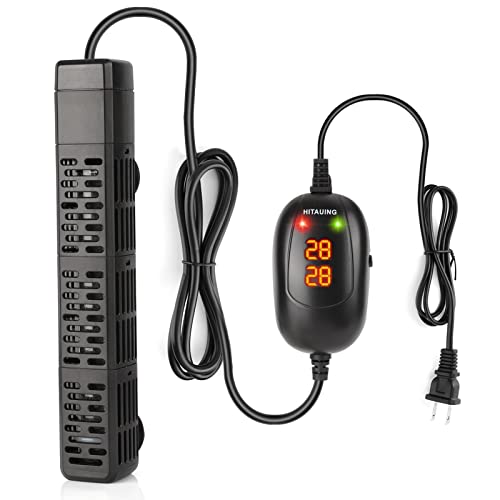
This HiTauing model leans practical, with size options that let you match the heater more closely to the tank instead of guessing. The over-temperature protection matters in everyday use because it adds a layer of temperature control that can suit busy setups where you’d rather not babysit the tank.
Automatic power-off when it leaves water is the kind of detail that helps in real homes, especially during maintenance or a clumsy top-off. Compared with the Fluval M, this one puts more emphasis on protection features than on a refined housing.
What We Like
- Several wattage options make matching easier.
- Over-temperature protection adds peace of mind in daily use.
- Power shutoff outside water helps during maintenance moments.
- Freshwater and saltwater compatibility broadens placement options.
Room For Improvement
- The longer feature list can feel more technical than a simple plug-and-go heater.
- Picking the wrong wattage remains your responsibility, so size planning still matters.
Technical Sheet
Built With In Mind
You’re the best match for this heater if you want a flexible, protection-minded option for a freshwater or saltwater tank.
Swap It Out When
The AQUANEAT Aquarium Heater 50W makes more sense for smaller, simpler tanks where a lower-power setup is easier to manage.
This version lands in the same family as the previous HiTauing pick, so the difference is mostly in how you value the protection features versus the rest of your setup. For freshwater or saltwater tanks, that split matters more than flashy styling, especially in homes where the heater gets moved during routine cleaning.
The honest read is that this is a sensible option for people who want a flexible wattage range and do not need a decorative piece. It’s a straightforward fit for practical aquarium keeping, though the wrong wattage choice can still leave you with more heater than a lightly stocked tank really needs.
Upsides
- Wide wattage range helps with different tank sizes.
- Automatic shutoff outside water supports easier maintenance.
- Works with both freshwater and saltwater setups.
- Plain design keeps the focus on function.
Minor Gripes
- Two HiTauing listings in this roundup make the choice feel more about wattage preference than a major design split.
- The look is functional, not decorative.
At A Glance
Right Fit For
You’ll like this most for a no-frills aquarium where protection features matter more than display flourishes.
Where A Sibling Pick Shines
The Fluval M 100-Watt Submersible Aquarium Heater suits you better if you want a more compact-looking heater for a 20-gallon tank.
A 50-watt heater like this one suits tighter aquariums where you want gentle output without crowding the tank wall. The included thermometer gives you a quicker read on water conditions, which is handy in a desk setup or a smaller room where temperature shifts can sneak up on you.
Compared with the Fluval M, it feels more straightforward and less refined, but that also keeps it easy to understand. For a 20-gallon tank, it makes more sense in warmer indoor spaces or for hobbyists who want a simple, lower-power setup.
Bright Spots
- 50-watt output stays modest for smaller setups.
- Built-in thermometer helps you check conditions fast.
- Adjustable thermostat supports more controlled heating.
- Small footprint keeps the aquarium uncluttered.
Small Caveats
- The lower output can feel light for a cooler room or a tank with more heat loss.
- Simple construction means fewer extras than some pricier options.
Details At A Glance
Whose Shelf It Belongs On
You’ll fit this best in a compact aquarium setup where a lower-watt heater and a thermometer are enough.
Look Elsewhere When
The DaToo Small Aquarium Heater 100W Mini Fish Tank Heater is the better match for you if you want a digital readout instead of a simpler control setup.
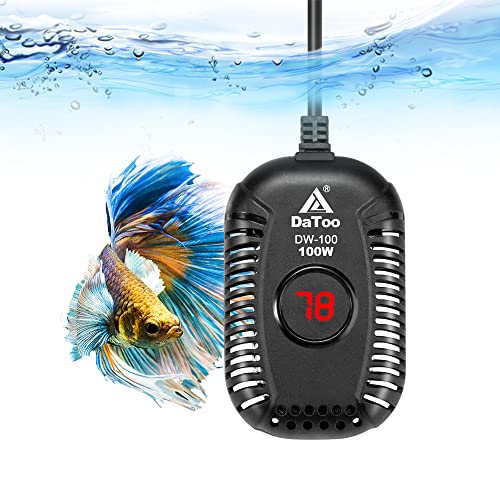
The LED temperature display is the headliner here, and that’s useful in a small tank where you want a quick glance instead of digging for a separate thermometer. A 100-watt body gives it more headroom than the AQUANEAT 50W, so it makes sense for people who want a little more output without stepping into a large heater.
Nothing flashy, but the mini format can suit a clean desktop aquarium or a compact home setup. The trade-off is that the added display and slightly higher output still need the right tank size, so this is more about visibility than brute force.
Reasons To Buy
- LED display gives you quick temperature visibility.
- 100-watt rating offers more flexibility than a 50W option.
- Mini size helps keep the tank looking tidy.
- Good match for frequent checks in busy spaces.
Areas To Watch
- The display helps with monitoring, but it does not replace correct heater placement.
- 100 watts can be more output than a very warm room needs.
Core Details
The Right Fit
You’re in the sweet spot for this one if you want a compact heater with an easy-to-read display for a smaller aquarium.
Another Choice May Suit
The Fluval M 100-Watt Submersible Aquarium Heater is a better fit for you if you value a more polished housing over a display-forward design.
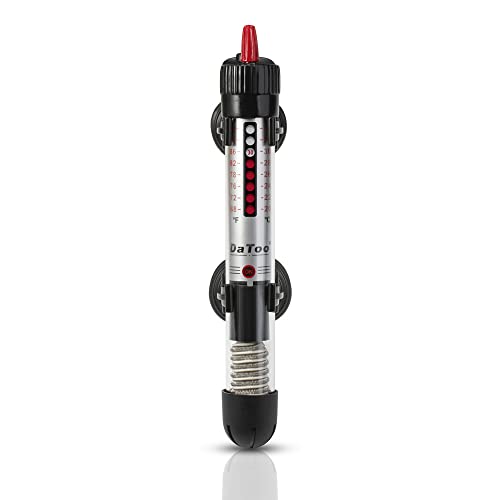
This DaToo heater stays focused on the basics, and that’s not a bad thing for a smaller tank. Adjustable temperature control gives you more say over the water environment, while the 50-watt rating keeps the unit sensible for compact aquariums that don’t need a heavy heater.
It sits close to the AQUANEAT 50W in purpose, but without the built-in thermometer. That makes it better for hobbyists who already monitor tank temperature another way and want a straightforward, modest heater body.
Best Bits
- Adjustable temperature control keeps the setup flexible.
- 50 watts suits small or easier-to-warm tanks.
- Simple design keeps installation uncomplicated.
- Good match for second-tank or backup use.
Softer Spots
- You’ll need a separate temperature check method.
- Lower output is less suited to cooler rooms.
Spec Overview
Made For
You’ll like this most for a compact tank where simple adjustable heat is enough.
Skip It When
The DaToo Small Aquarium Heater 100W Mini Fish Tank Heater makes more sense if you want an LED display with the heater itself.
This hygger heater is scaled with smaller aquariums in mind, especially betta tanks and compact freshwater or saltwater setups. The wattage range, from 10W to 100W, gives you a lot of size flexibility, and the LED digital display helps you keep tabs on temperature without extra gear.
That smaller size ceiling is the key trade-off, though. For a true 20-gallon tank, you’re better off using it only in lighter-heating scenarios or for smaller companion tanks, while the DaToo 100W or Fluval M fits the main 20-gallon job more naturally.
Highlights
- Multiple wattage options make sizing easier.
- LED digital display supports quick checks.
- Compact form suits betta and nano tanks.
- Freshwater and saltwater compatibility adds flexibility.
Points To Note
- The smaller wattage range suits compact tanks more than a full 20-gallon setup.
- Best results come from matching the exact wattage to the volume.
Feature Rundown
Perfect Match For
You’re the right fit for this heater if your aquarium stays on the smaller side and you want a compact display-equipped unit.
Consider Something Else When
The Fluval M 100-Watt Submersible Aquarium Heater is the stronger choice for a full 20-gallon tank that needs a more mature all-around package.
High-output heaters like this one belong in a different conversation from the rest of the list. The digital LED controller and automatic shutoff when the heater leaves water make it feel built for larger or more demanding setups, and that’s useful if your fish room includes more than a single 20-gallon tank.
For a standard 20-gallon fish tank, it’s simply more heater than most people need. The real appeal is in backup use, larger aquariums, or setups where you want stronger output control than the compact models can offer.
Positives
- Very wide wattage range supports bigger tanks.
- Digital LED controller gives clearer temperature management.
- Auto-stop behavior helps during handling and maintenance.
- Freshwater and saltwater compatibility keeps it versatile.
Worth Noting
- For a 20-gallon tank, the higher wattage options are usually more heater than you need.
- The added controls make it better suited to users who want more setup attention.
- Bulky output levels can feel excessive in a small room tank.
Core Details
Who Should Grab It
You’ll get the most from this if you keep larger aquariums or want a stronger heater for backup duty.
Reach For A Different Pick When
The Fluval M 100-Watt Submersible Aquarium Heater is the better fit for a standard 20-gallon tank that needs a calmer, smaller footprint.
How To Choose The Right Heaters For 20 Gallon Fish Tank
Match Wattage To The Room, Not Just The Tank
A 20-gallon tank is small enough that room temperature matters a lot. A heater that looks fine on paper can still feel underpowered in a cool basement or too aggressive in a warm apartment.
For many setups, 50W to 100W is the most natural range, but the room’s average temperature changes the picture. A stable living room tank usually needs less force than a fish room or a drafty corner.
The safest move is to think in terms of temperature lift, not just volume. That keeps you from overbuying a giant unit that does more than you asked for.
Look For Controls You Can Live With
Adjustable thermostats help you set a target temperature instead of hoping the heater lands in the right range. Digital displays add convenience, especially in tanks you check at a glance each day.
There’s a trade-off, though, since extra controls can mean more complexity and a little more to monitor. Simple heaters are easier to live with, but they leave less room for fine-tuning.
For beginners, a clear display can reduce guesswork. For more experienced keepers, a basic adjustable unit can be enough when the room stays consistent.
Think About Tank Shape, Stocking, and Maintenance
A slim heater matters more than people expect in a 20-gallon aquarium. You still want room for plants, decor, and swimming space, especially in a planted community tank or a betta setup with calmer water.
Heaters with dry-run shutoff or automatic power-off behavior are easier to manage during water changes. That kind of feature doesn’t replace careful handling, but it makes routine tank work less awkward.
Long-term reliability also comes down to how easy the unit is to place and read. A heater that fits neatly and stays visible without crowding the tank usually feels less frustrating month after month.
Choose Based On Your Livestock And Water Type
Freshwater and saltwater compatibility matters more than many new hobbyists expect. Saltwater setups often push you toward more careful temperature stability, while a betta or community freshwater tank may reward a simpler, quieter heater.
Low-output heaters suit lightly stocked tanks in stable rooms, but they can fall short in colder conditions. Stronger models make sense only when the environment really calls for them.
That’s why the best choice for a 20-gallon fish tank is rarely the most powerful one on the shelf. It’s the one that matches the tank, the room, and the amount of attention you want to give it.
A Quick Reality Check Before You Choose
Mistakes Worth Dodging
One common slip-up is sizing a heater by guesswork and ignoring the room temperature. Another is buying a bulky model that crowds a small tank or makes maintenance harder than it needs to be.
Placement matters too, because a heater tucked into a dead spot can lead to uneven warmth. A slim, clearly readable unit usually makes daily care easier.
Where The Extra Money Goes
Higher-tier models usually pay for better controls, clearer readouts, and more protective behavior when the heater is lifted out of water. That can make day-to-day use calmer, especially in tanks that get cleaned often.
You also tend to get more confidence in fit and finish, which helps when the aquarium sits in a living area where appearance matters. The upgrade makes the most sense for hobbyists who want less fiddling and more predictability.
Frequently Asked Questions
What wattage works best for a 20-gallon fish tank?
For many tanks, 50W to 100W is the most useful range. The room temperature and tank placement still shape the final choice.
Do you need a heater with a display?
A display makes temperature checks quicker and easier. It helps most in busy homes where you want a fast look before feeding or tank care.
Can one heater work for freshwater and saltwater?
Some heaters are built for both water types, and those listings are useful for flexible setups. You still need to match the wattage to the tank and room.
Is a 100W heater too much for 20 gallons?
Not always, because cooler rooms can make 100W feel appropriate. In a warm room, a lower-output option may be the calmer choice.
What features help during maintenance?
Automatic shutoff outside water and a slim submersible shape make routine care less awkward. They help when you’re lifting the heater during cleaning or rearranging the tank.
Closing Thoughts
For a 20-gallon tank, the right heater is usually the one that stays modest, readable, and easy to place. The Fluval M feels like the most polished all-around fit for many setups, while the HiTauing options make sense for shoppers who want extra protection features. Smaller tanks can benefit from the AQUANEAT or DaToo 50W picks, and the hygger betta model is better kept in smaller volumes than in a full 20 gallons. Pick the heater that fits your room first, and the tank second.