
You want a net that fits the way you fish, not just the way a listing reads. Some trips call for a floating landing net with a telescoping handle, while others need a compact frame for trout, shrimp, crab, or aquarium cleanup.
This roundup keeps the focus on practical fit, build details, and day-to-day handling. You’ll see which nets suit kayaks, shore fishing, catch-and-release use, and smaller tanks, so you can match the tool to the job.
The Shortlist At A Glance

PLUSINNO Floating Fishing Net

PLUSINNO Floating Fishing Net

EASY BIG Foldable Fish Catching Net

AQUANEAT Aquarium Fish Net

RESTCLOUD Fishing Landing Net

Fashionwu Fly Fishing Landing Net

KastKing Brutus Fishing Landing Net
Blue Billow Fishing Net with Telescopic Handle
More Details On Our Top Picks
Kayak anglers tend to like nets that stay easy to manage once the rod is down, and this PLUSINNO model leans into that job with a floating design and a foldable frame. The rubber coating matters because it gives the mesh a softer feel against fish while also helping with snag control, which is handy in tight boat space.
The fixed or telescoping pole handle gives you some flexibility without forcing you into one setup. The trade-off is that the same versatility can make the listing feel a little broad, so you’ll want to be sure the handle style matches the way you store gear at home or on the water.
Highlights
- Floating build helps keep it within reach during hectic landings.
- Rubber-coated netting is gentler on fish and easier to rinse.
- Foldable frame saves room in a kayak hatch or truck bin.
- Works across several common freshwater uses, from bass to trout.
Things To Consider
- The broad use-case language can feel a bit unfocused for niche setups.
- Handle configuration needs a quick check before you commit to storage plans.
Feature Snapshot
Who It Suits Best
You’ll get the most from this pick as a kayak or shore angler who wants one net that covers several freshwater outings without taking much room.
A Better Fit Elsewhere
KastKing Brutus Fishing Landing Net suits you better when you want more handle-length options and a more tuned-up feel for larger fish.
This second PLUSINNO listing lives in the same family as Item 1, so the real question is whether you want a spare net or just a slightly different purchase path. The floating, rubber-coated, foldable setup still points to easy handling around water, and that combination usually makes sense for anglers who split time between a boat and the bank.
Because the source details are closely matched, the main value here is straightforward familiarity rather than a new feature set. That’s not a bad thing, though it does mean you’ll want to compare handle preference and storage needs before choosing between the two.
What We Like
- Floating design gives you a little extra peace of mind near water.
- Rubber-coated mesh is easier to shake dry after use.
- Foldable layout helps keep it tidy in smaller gear bags.
- Broad freshwater fit works for common weekend fishing trips.
Points To Note
- It overlaps heavily with Item 1, so the distinction is modest.
- The listing leaves handle specifics somewhat open at a glance.
Core Details
Made For
You’ll appreciate this one as a casual angler who wants the same kind of floating utility as Item 1 and doesn’t mind choosing between near-identical listing styles.
Another Choice May Suit
RESTCLOUD Fishing Landing Net is the cleaner fit when you want a more clearly stated telescoping range for family fishing or mixed-use freshwater outings.
This EASY BIG net moves away from standard landing-net duty and into shrimp and crab gathering, so the wide opening is the whole story. The top diameter measures 31.5 inches and the bottom diameter measures 23.62 inches, which gives you a broad catch zone for hand-cast use at the edge of a dock, pier, or shallow bank.
The trade-off is focus, because this shape makes far more sense for shellfish gathering than for trout or bass landings. That narrower purpose is useful, though, since you’re getting a tool shaped for a specific kind of outing rather than a general-purpose compromise.
Best Bits
- Wide opening supports hand-cast scooping in shallow water.
- Foldable form helps it tuck away after a trip.
- Large mouth suits shrimp and crab gathering better than small landing nets.
- Simple shape keeps cleanup and storage straightforward.
Softer Spots
- It is far more specialized than the earlier freshwater picks.
- Oversized geometry can feel awkward for compact storage.
- The listing gives little guidance beyond the opening diameters.
Technical Sheet
Who Should Grab It
You should look here first for casual shellfish gathering trips where a wide hand-cast cage makes more sense than a standard trout-style landing net.
Swap It Out When
Fashionwu Fly Fishing Landing Net fits better for trout anglers who want soft mesh, a wooden handle, and a gentler catch-and-release setup.
The AQUANEAT net sits in a different lane from the fishing-first picks above, because it’s aimed at aquarium cleanup and small ponds or pools. That makes it useful for skimming food waste and moving small fish in tight spaces where a bulky landing net would feel clumsy.
In a home tank, a small net like this is easier to maneuver around décor and filters than a large hoop. The trade-off is obvious, though, because it is a specialist for light-duty cleanup rather than a general net for shoreline fishing.
Bright Spots
- Small frame helps you work neatly around tank décor.
- Good fit for routine skimming and quick transfers.
- Useful in compact tanks where bigger nets would feel bulky.
- Simple upkeep makes it easy to keep near the aquarium.
Areas To Watch
- It is built for aquarium-style tasks, not line fishing.
- Small size limits reach in larger ponds or pools.
Feature Rundown
The Right Fit
You’ll get the best use from this net as a home aquarist or small-pond owner who needs a compact skimmer for everyday maintenance.
Where A Sibling Pick Shines
RESTCLOUD Fishing Landing Net suits you better for general freshwater angling, especially when a longer handle matters more than a tiny cleaning tool.
Longer reach changes the feel of a landing net fast, and this RESTCLOUD model is built around that idea with a telescoping handle that extends from 40 to 63 inches. In practice, that kind of range helps when you’re standing on a bank, helping a kid land a fish, or reaching over a bit of awkward shoreline clutter.
The aluminum handle is another useful detail, since metal here usually brings a lighter, more rigid hand feel than thick plastic. The full length of 20.5 inches hints at a net that still packs down reasonably well, although the telescoping mechanism means you’ll want to keep it clean and dry between outings.
Reasons To Buy
- Extendable handle gives you meaningful reach for shore fishing.
- Aluminum handle keeps the build practical and manageable.
- Freshwater focus suits family outings and casual use.
- Shorter stored length helps with car or garage storage.
Small Caveats
- Telescoping parts need a little care after wet use.
- Its freshwater focus makes it less tailored for niche setups.
Details At A Glance
Built With In Mind
This suits casual freshwater anglers, families, and younger fishers who need reach without a complicated setup.
Look Elsewhere When
KastKing Brutus Fishing Landing Net is the smarter call for anglers who want more extension choices and a more upscale frame feel.
Fly anglers often care as much about fish handling as they do about reach, and Fashionwu leans into that with soft rubber mesh and a wooden handle frame. The mesh holes are small enough that tiny native trout can slip through, which makes the net feel tuned for gentle catch-and-release work rather than general hauling.
The wood-and-rubber pairing also gives it a more traditional look than the aluminum-heavy options above. That style comes with a practical trade-off, because wood usually asks for a bit more drying and care after wet sessions, especially in a vehicle or garage.
Positives
- Soft rubber mesh is gentle on fish contact.
- Small openings suit catch-and-release handling.
- Wooden frame adds a classic feel for fly setups.
- Works well for trout-focused stream outings.
Room For Improvement
- Wooden parts need more drying attention after use.
- Its specialized design is less flexible than broader landing nets.
- Small mesh openings can feel limiting for larger mixed catches.
Quick Facts
Whose Shelf It Belongs On
You’ll like this most as a trout angler who wants a softer net with a more classic frame than the aluminum or floating picks.
Reach For A Different Pick When
KastKing Brutus Fishing Landing Net is the better fit for heavier fish and anglers who want more extendable reach options.
KastKing gives you the most adjustable feel in this group, with extendable lengths up to 31, 45, and 75 inches. That range matters on a boat, from a dock, or beside deeper water, because you can choose reach without carrying a single fixed-length compromise.
The silicone and PVC mesh, lightweight aluminum frame, non-slip EVA handle, and 44-pound hold figure point to a more developed design than the simpler nets above. That added capability usually comes with a little more hardware complexity, so folding and cleaning take a touch more attention, but the payoff is clear for anglers who land larger fish often.
Upsides
- Three handle lengths give you real flexibility on the water.
- Silicone and PVC mesh is built for smoother handling.
- Non-slip EVA grip helps in wet conditions.
- Lightweight aluminum frame keeps the net manageable.
- 44-pound hold figure adds confidence for larger catches.
Honest Caveats
- More moving parts mean a little more care after each trip.
- The feature-rich build may feel more involved than simpler landing nets.
Feature Card
Best Suited To
You’ll get the most value from this as a frequent angler who wants adjustable reach and a more capable frame for bigger fish.
A Better Fit Elsewhere
RESTCLOUD Fishing Landing Net is easier to live with for simpler freshwater trips and family use where you don’t need all the extra reach settings.
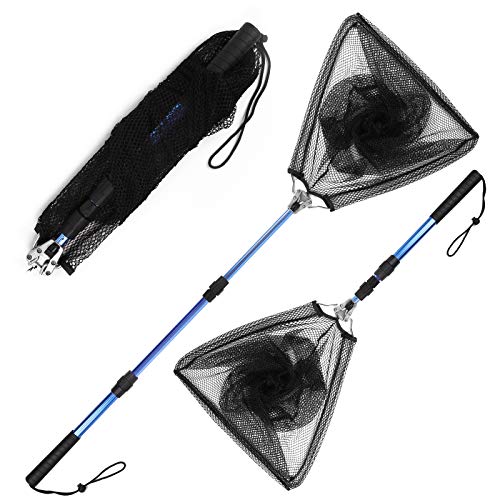
Blue Billow leans into mixed-water convenience with a telescopic handle that extends from 31 to 50.8 inches, plus a foldable nylon mesh design. That kind of range is handy for a dock bag, boat locker, or trunk kit, especially when you fish both freshwater and saltwater and want one net that travels well.
The nylon mesh should feel more familiar to anglers who like a traditional landing-net layout, and the long handle helps when you need a little extra reach from a kayak, boat, pond edge, stream, lake, or ocean setting. The downside is that it does not carry the softer fish-contact feel of the rubber and silicone picks above, so your use case should drive the choice.
Best Bits
- Telescoping handle gives you useful reach in many settings.
- Foldable build makes travel and storage easier.
- Works across freshwater and saltwater trips.
- Long handle suits kayak, boat, and shoreline use.
Points To Note
- Nylon mesh is less gentle than softer-coated alternatives.
- The longer reach can feel bulky in very tight storage spots.
- Multi-environment use is helpful, but it does not specialize deeply in one niche.
Core Details
Perfect Match For
This suits traveling anglers who want one practical net for both freshwater and saltwater outings without a lot of extra gear complexity.
Where A Sibling Pick Shines
Fashionwu Fly Fishing Landing Net is the better fit for trout-focused catch-and-release work where softer mesh matters more than longer reach.
How To Choose The Right Handheld Fishing Nets
Match The Net To The Water
Start with the place you fish most often, because a kayak angler and a tank owner need very different tools. Floating frames matter on the water, while small aquarium nets are built for tight spaces and light cleanup.
Handle length is the other big divider. Shorter nets feel easier in close quarters, while telescoping handles help from a dock, bank, or boat rail.
Choose The Mesh For The Job
Rubber, silicone, PVC, and nylon all behave a little differently. Softer coatings usually feel gentler on fish and are often easier to rinse, while nylon keeps things simpler and more traditional.
Mesh opening size matters too, especially for trout or small fish. Fine openings are better for delicate handling, while wider shapes can make shellfish gathering or general landing easier.
Think About Storage And Care
Foldable frames and telescoping handles help a lot in smaller garages, kayak hatches, and trunk kits. The trade-off is that moving parts need a little more attention after wet use.
Wooden frames add character, but they usually ask for more drying than aluminum. In a busy kitchen-sized storage corner or a damp garage, that difference starts to matter fast.
What To Weigh Before You Choose
Hidden Buying Traps
One common slip-up is matching the net to the fish and ignoring the trip style. A trout-friendly frame can still feel awkward on a kayak, and a big hand-cast cage is not the right tool for everyday landing work.
Another trap is overlooking how the handle stores. Telescoping builds are useful, but they need a place to dry and a little care so grit does not make the mechanism sticky.
The Upgrade Payoff
Higher-tier nets often cost more because of better frame materials, softer mesh, and more adjustable handles. Those details matter most for frequent anglers who want smoother fish handling and less fuss in wet conditions.
That upgrade makes sense when you fish often, land larger catches, or use one net across several environments. For occasional weekend trips, a simpler frame usually does the job without extra complexity.
Closing Thoughts
Your best match depends less on the word “fishing” and more on the way you fish. Kayak users will value floating or telescoping designs, trout anglers usually benefit from softer mesh, and aquarium owners need a compact cleanup tool instead of a landing net. Pick the shape that fits your routine, and the rest becomes much easier.